
What should I consider when selecting a stair lift for outdoor use?
When selecting an outdoor stair lift, consider its weather resistance, safety features, battery performance, staircase design and suitability for the person using it. A professional assessment should confirm that the lift can be securely installed and used safely in your outdoor environment.
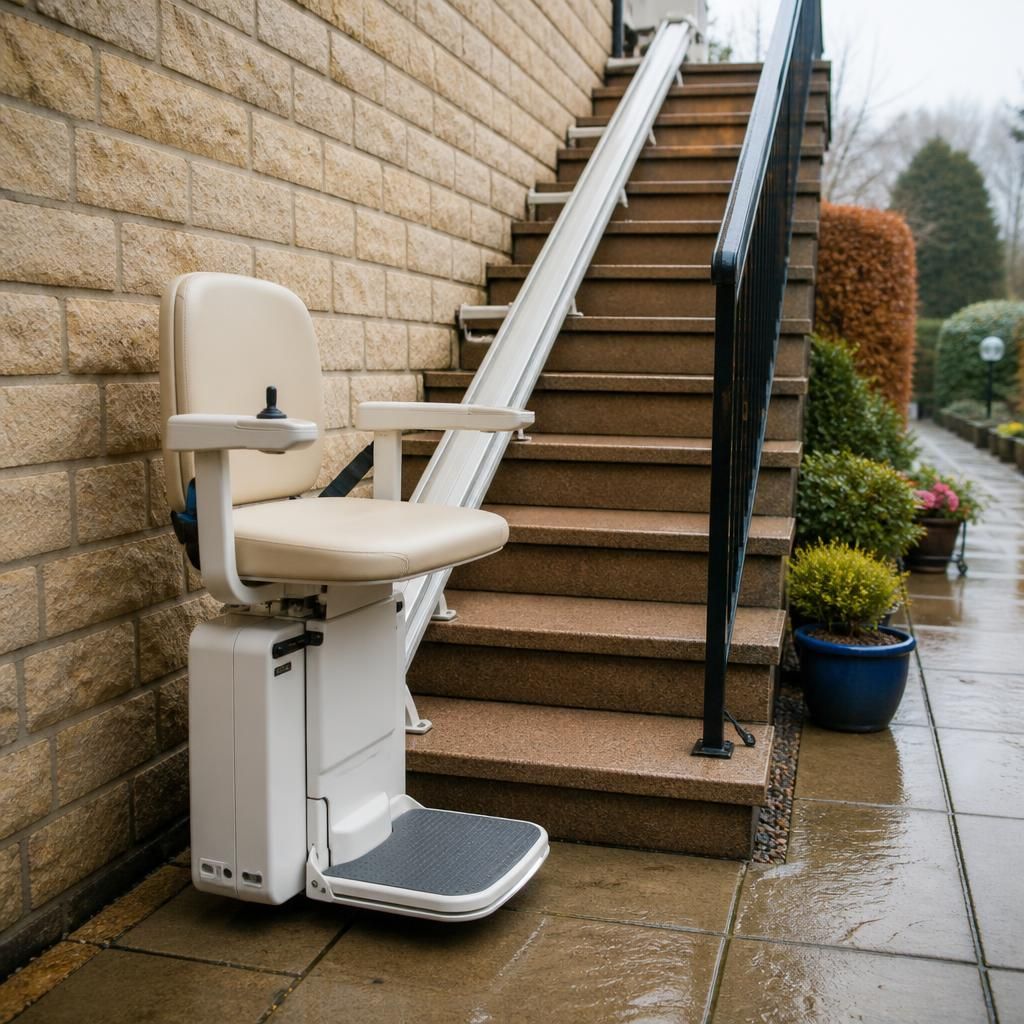
An outdoor stair lift must be designed for external conditions and matched to both the staircase and the person using it. When choosing a model, assess its weather resistance, safety features, battery and charging arrangements, seat and controls, track layout, installation requirements and ongoing maintenance. A professional survey is essential because an outdoor staircase may be exposed to rain, frost, wind, dirt, uneven surfaces and changes in temperature that an indoor lift is not designed to withstand.
Check that it is specifically intended for outdoor use. Outdoor models should have protected electrical components, durable finishes and materials that can withstand moisture, sunlight and temperature changes. Ask how the lift is protected from corrosion and whether the seat, armrests, controls and footrest can be left outside safely. A weatherproof cover can provide additional protection when the lift is not being used, but it does not make an indoor stair lift suitable for external installation.
Consider the position of the staircase and how exposed it is. A sheltered passageway may present fewer challenges than an open garden staircase facing driving rain or strong winds. Water should be able to drain away from the steps and equipment, and the installation should not create areas where leaves, mud or ice can build up. Your installer should also advise whether the lift needs a suitable outdoor power supply, protective isolation equipment or other electrical work.
Safety should be assessed in relation to the whole staircase. Look for a secure seat, a suitable seat belt, stable armrests, a safety edge system and controls that are easy to operate. The lift should stop if its sensors detect an obstruction on the track or steps. Consider how safely the user can get on and off at the top and bottom, particularly if the landing is narrow, sloped, wet or close to a gate. Swivelling or powered seating may help where turning on the staircase would be difficult, but the most suitable option depends on the user’s strength, balance and transfer ability.
The staircase itself affects the design. An outdoor stair lift may be suitable for a straight flight, while a staircase with a bend, intermediate landing or change of direction may require a bespoke curved track. Measure the available width, headroom and landing space, and consider whether the track will leave enough room for other people to use the steps. Gates, doors, paths, handrails, walls and planting may also affect the route and the position of the lift when parked.
Battery performance is particularly important outdoors. Many stair lifts use a rechargeable battery so they can continue to operate during a mains power interruption. Ask where the charging points are located and whether the lift charges at its normal parking positions. The user should be able to park the lift consistently in a charging area, and the electrical connection should be protected from the weather. Cold conditions can affect battery performance, so establish how the lift should be used and maintained during prolonged periods of low temperature.
Think about the person who will use the lift every day. The seat width, seat height, footrest size and weight capacity should be appropriate, and the controls should be manageable if the user has limited grip, dexterity or vision. A powered swivel seat, a retractable or folding footrest, remote controls and adjustable armrests may be useful, but additional features should be selected for a clear practical reason rather than simply added to the specification.
Parking and storage arrangements need as much attention as the journey itself. When parked, the lift should not obstruct a doorway, narrow path or emergency route. If the seat or controls are exposed, use the manufacturer’s recommended cover and follow the instructions for securing it in windy conditions. Do not use improvised covers that could trap moisture, interfere with moving parts or prevent the battery from charging.
Ask about maintenance before agreeing to an installation. Outdoor equipment requires regular cleaning and inspection because dirt, moisture, plant debris and corrosion can affect the track, sensors, charging contacts and moving parts. Keep the steps clear, avoid directing a pressure washer at the lift and report unusual noises, reduced travel speed, charging problems or repeated safety stops promptly. The service schedule should reflect the level of exposure and frequency of use.
A professional assessment should confirm whether the staircase, power supply and surrounding structure are suitable, identify any drainage or access issues and specify the correct track and fixing method. It should also include a practical demonstration so the intended user can try the controls, seat and transfer positions. Before installation, confirm what preparation is required, how long the work is expected to take, where the lift will park and what support is available if a fault occurs.
In summary, choose an outdoor stair lift that is purpose-built for external conditions, securely installed on the particular staircase and simple for the user to operate. Weather protection alone is not enough: reliable charging, safe transfers, appropriate seating, obstruction detection, sensible parking and a clear maintenance plan all contribute to a suitable long-term solution.
An outdoor stair lift must be purpose-built for exposure to rain, frost, sunlight and changing temperatures. An indoor model is not suitable simply because it is fitted beneath a cover; its electrical components, finishes and moving parts may not be protected against moisture or corrosion.
During the assessment, consider how exposed the staircase is and where water, leaves, mud or ice could collect. The lift should have a suitable weather-resistant finish, protected controls and safe drainage around the track and steps. Ask where it will park and charge, and whether a manufacturer-approved cover is recommended. A cover can reduce exposure when the lift is not in use, but it must not trap moisture, interfere with movement or prevent charging.
Regular cleaning and servicing are particularly important outdoors. Keep the track, sensors and charging contacts clear, avoid using a pressure washer, and report corrosion, charging faults, unusual noises or repeated safety stops promptly.
Arrange your outdoor stair lift assessment
Arrange an outdoor stair lift assessment with Independent Stairlifts to check your staircase, power supply and the user’s needs. We can recommend a suitable solution and explain the installation and maintenance requirements.