
What should I consider when deciding between a straight and a curved stair lift?
A straight stair lift is usually suitable for a staircase with one uninterrupted flight, while a curved stair lift is designed for stairs with bends, landings or multiple sections. The right choice depends on your staircase layout, available space, access needs and budget, so a personalised assessment is recommended before deciding.
The main consideration when choosing between a straight and curved stair lift is the shape of your staircase. A straight stair lift is normally suitable for one uninterrupted flight with no bends, intermediate landings or changes of direction. A curved stair lift is made for staircases that turn, include one or more landings, or have several connected flights. The decision should also take account of the available space, how the lift will be used, the needs of the passenger and the overall installation cost.
Start with the staircase layout
A straight stair lift runs along a single, continuous rail. It may be appropriate for a staircase that goes directly from one floor to another, even if the stairs are narrow or steep, provided there is enough room for the seat and for other people to use the staircase safely. A change in direction, a landing or a second flight will usually require a curved design, although the exact solution depends on the dimensions and arrangement of the stairs.
A curved stair lift has a rail manufactured to follow the path of the staircase. It can travel around corners and across landings, allowing the user to remain seated rather than transferring between separate lifts. On more complex staircases, it may be possible to design a single lift for several floors, subject to a detailed survey and the available parking space.
Consider the space at the top and bottom
The position where the stair lift parks is important. At the bottom of the stairs, the seat and rail need to leave a clear route through the hallway or nearby doorway. At the top, the user needs sufficient space to get off safely without standing on the stairs. Folding or powered seat and rail options may help where space is restricted, but their suitability depends on the staircase and the passenger’s strength and dexterity.
On a curved staircase, the rail may extend around a landing or into an adjacent area. This can affect doorways, corridors and access to rooms. A home assessment should check both the stair lift’s travel path and the space required when it is parked, folded or being used by another person on the stairs.
Compare the cost and installation requirements
Straight stair lifts are generally less complex because they use a standard rail for a single flight. They can therefore be more economical and may have a shorter installation process, depending on the property and the chosen specification. A curved stair lift requires a rail designed and manufactured for the individual staircase, so it normally involves more detailed surveying, planning and installation. Its price reflects the bespoke rail and the complexity of the route rather than simply the number of steps.
The condition of the staircase, the position of electrical sockets, the need for additional controls and any required alterations can also affect the quotation. A comparison based on the type of lift alone may not show the full cost, so ask for a site-specific assessment and a clear explanation of what is included.
Think about how the lift will be used
Consider whether the stair lift will be used occasionally or several times a day, and whether the user can stand, turn and sit down reliably. A powered swivel seat can assist with getting on and off, while powered folding features may be useful if the staircase is also used regularly by other household members. Controls should be positioned so they can be operated comfortably and safely.
For a staircase with several flights, a curved stair lift may avoid the need to change seats at a landing. However, a transfer between lifts could be considered in some layouts if it provides a more practical or affordable arrangement. This depends on the user’s mobility, balance, confidence and ability to manage the transfer without assistance.
Also consider whether the user needs to carry a walking aid, small personal items or a walking frame between floors. A stair lift is not normally designed to carry large items, and the available footrest and seat space should be checked against the user’s requirements. If more than one person will use the lift, the controls and seating position should be comfortable for everyone who needs it.
Check safety and comfort features
Both straight and curved stair lifts should provide secure seating, a seat belt, an appropriate footrest and controls that are easy to operate. Sensors can help detect obstructions on the stairs, while armrests and a swivel seat can improve stability when entering or leaving the lift. The most suitable features depend on the user’s mobility and the shape of the staircase.
Where the user has limited movement, reduced grip or difficulty bending, it is particularly important to discuss seat height, armrest position, control type and whether powered adjustments are required. A feature is only helpful if the user can operate it consistently, so practical testing and an assessment of the individual are preferable to choosing from a specification list alone.
Allow for future needs
It is worth considering how the user’s mobility may change. A straight stair lift may meet current needs, but a more supportive seat or powered swivel function could become important later. On a staircase with bends, a curved lift may provide easier continuous access between floors and avoid repeated transfers. Discuss any concerns about balance, strength, memory or coordination during the assessment so that the proposed model is appropriate for both present and likely future use.
Arrange an assessment before making a decision
Photographs and measurements can provide an initial indication, but they cannot always show the clearances, parking requirements and access issues that affect the final design. A home assessment should examine the complete staircase, landings, doorways, electrical supply, seating position and the user’s ability to use the lift. It should also identify whether a straight model is genuinely suitable or whether a curved rail is needed.
In summary, choose a straight stair lift when the stairs form one uninterrupted flight and the available parking space is adequate. Choose a curved stair lift when the staircase changes direction, includes landings or connects multiple flights in a way that requires a continuous route. If the layout is unusual or the user’s needs are changing, a personalised assessment is the most reliable way to compare the practical and financial implications of each option.
The staircase layout is the main factor when choosing between a straight and curved stair lift. A straight model runs along one uninterrupted flight, while a curved model is made to follow stairs with bends, intermediate landings or multiple connected flights.
A curved stair lift can provide continuous access between floors without requiring the user to change seats at a landing. However, its rail may extend into a hallway or around a landing, so the available space at the top and bottom must be checked carefully. Folding features may help preserve access for other household members, depending on the layout.
A home assessment is the most reliable way to confirm which option is suitable. It should consider the staircase, doorways, parking positions, electrical supply and the user’s ability to get on and off safely. On an unusual staircase, a bespoke curved design may be necessary even where parts of the route appear straight.
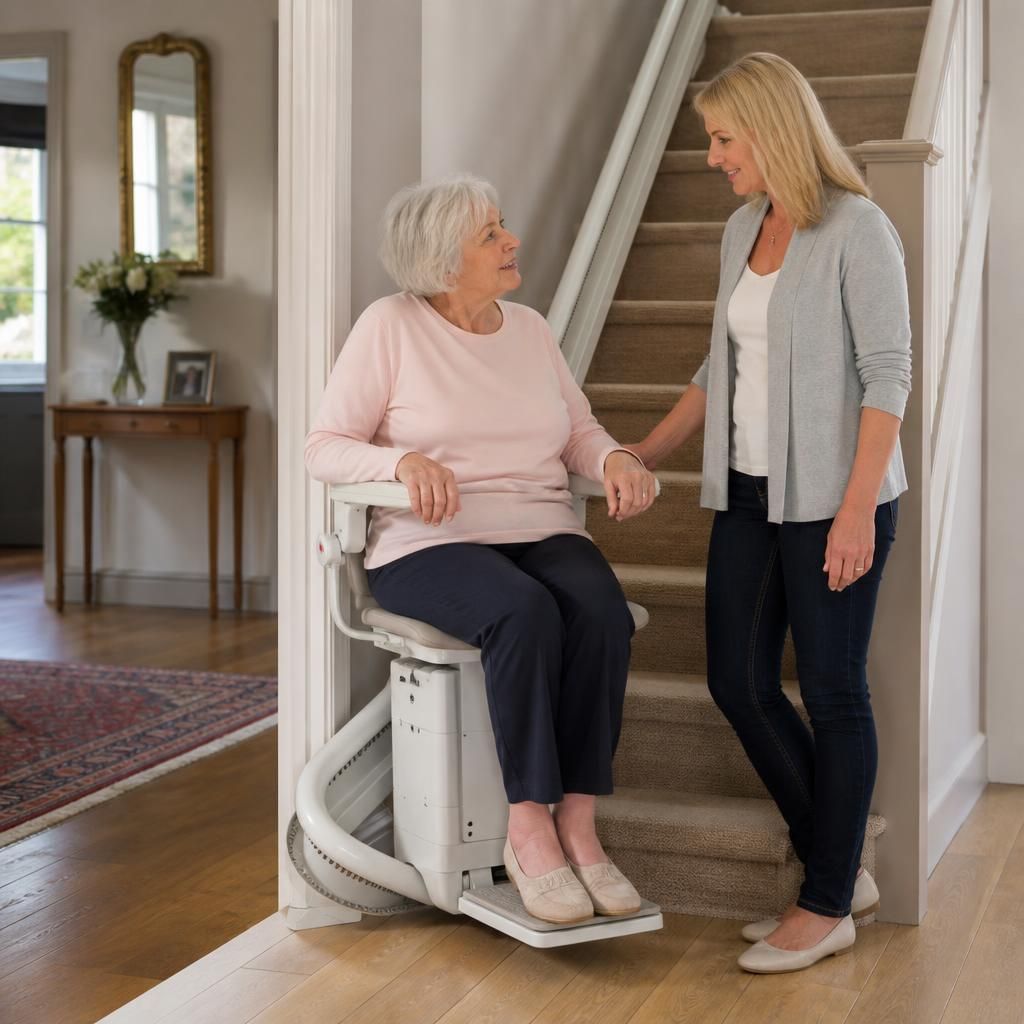
Book Your Straight or Curved Stairlift Assessment
Arrange a home assessment to compare straight and curved stairlift options for your staircase, available space and mobility needs. Independent Stairlifts can confirm the most suitable design and provide a clear, site-specific quotation.