
What safety features should I look for in a stair lift?
Look for a stair lift with a secure seat belt, powered swivel seat, obstruction sensors, reliable braking and battery backup. Safety features should also be assessed against your staircase, mobility needs and transfer ability by a qualified installer.
The most important stairlift safety features are a properly fitted seat belt, a secure swivel seat, obstruction sensors, dependable braking, effective speed control and a battery system that allows safe operation during a power cut. These features must also be suitable for your staircase, transfer ability and the way you use the lift. A qualified installer should assess the complete installation rather than relying on the specification of the stairlift alone.
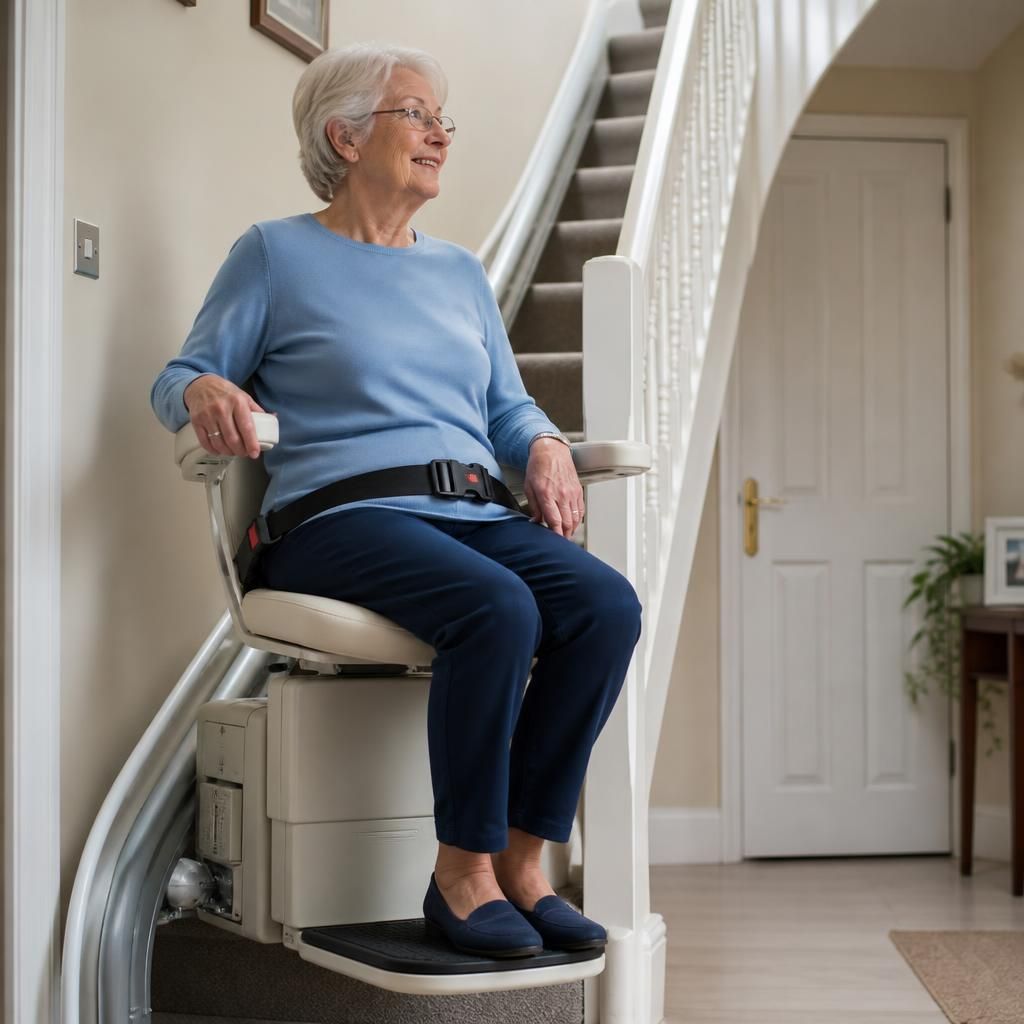
Seat belt and secure seating
A seat belt should hold you securely without restricting normal breathing or making it difficult to fasten. It should be easy to operate, particularly if you have reduced hand strength or limited movement. Some stairlifts offer different belt designs or fastening arrangements, so the most suitable option should be checked during your assessment.
The seat should remain stable while travelling. Look for a seat that locks in its normal riding position and does not allow the lift to operate unless it is correctly positioned. Adjustable armrests can help provide additional support when sitting down or standing up, but they must not make transfers more difficult in a narrow hallway or at the top and bottom of the stairs.
Swivel seat and safe transfers
A powered swivel seat turns towards the landing when the stairlift reaches the top, helping you get on and off without twisting towards the staircase. It should lock firmly in the transfer position and only release when the stairlift is safely stopped. This is particularly important if you have balance difficulties or weakness on one side.
Ask whether the seat swivels manually or is powered, and whether the controls can be used comfortably from your usual position. The installer should also check that there is enough space to transfer safely at both ends of the stairs. A swivel seat cannot compensate for an obstructed landing or an unsuitable transfer position.
Obstruction sensors and safety edges
Sensors around the footrest and other exposed parts of the stairlift should detect objects in the travel path. If an obstruction is detected, the lift should stop promptly rather than forcing its way past it. This reduces the risk of trapping feet, pets, loose rugs or household items.
Keep the stairs clear even when sensors are fitted. They are an additional safeguard, not a replacement for good housekeeping. During installation, ask which areas are protected by sensors and what happens when one is activated.
Reliable braking and controlled movement
A stairlift should start, stop and change speed smoothly, without sudden jolts. Its braking system should hold the lift securely when it stops and prevent uncontrolled movement if the controls are released. A suitable travel speed and smooth acceleration can be especially important if you experience pain, dizziness or reduced balance.
Controls should stop the stairlift as soon as they are released, where the control system is designed for continuous operation. A key switch or similar isolation control can prevent unauthorised use, which may be useful in a home with children or visitors.
Battery backup and charging
Most modern stairlifts use rechargeable batteries so they can continue to operate for a period during a mains power failure. This is an important safety feature, particularly if the lift is your main way of reaching another floor. Charging points should be positioned so that the stairlift can recharge when parked, and the system should provide a clear indication when the batteries need attention.
Battery backup is only dependable when the batteries are maintained and the lift is regularly returned to a charging position. If the stairlift stops because of a fault or depleted battery, you should know how to contact the service team and what alternative arrangements are available. Do not attempt to move or repair the lift yourself unless you have been specifically instructed to do so.
Controls that match your mobility
Hand controls should be simple to understand and usable with the hand or side of the body that gives you the best control. Remote controls at the top and bottom of the stairs can allow a family member or carer to send the stairlift to the required landing. Controls should be positioned so they do not encourage you to lean dangerously from the seat.
Some users benefit from contrasting buttons, tactile controls or a straightforward stop function. If more than one person will use the stairlift, make sure everyone understands the controls, the seat belt and the correct way to board and leave the lift.
Footrest and armrest protection
A stable footrest should support both feet and be appropriate for your footwear and leg position. Safety sensors on the footrest can stop the lift if it meets an obstacle. Armrests should provide useful support without creating a risk of catching clothing or restricting access during transfers.
If you use a walking aid, ask where it will be stored while you travel. Carrying a frame, stick or other item on the stairlift may affect your balance or obstruct the controls, so a safe storage arrangement should be agreed in advance.
Safety features for the staircase and installation
The stairlift rail must be securely fitted and positioned to provide suitable clearance from walls, doors and steps. On a curved staircase, the rail design and stopping positions need particular attention. On a narrow staircase, the folded seat and footrest should leave enough room for other people to use the stairs where this is required.
At the top and bottom, the lift should stop in a position that allows a controlled transfer. Where space is limited, a powered or manual folding rail may be considered, provided it does not create a trip or access hazard. Outdoor stairlifts also need suitable protection from weather, moisture and temperature changes, along with safe electrical arrangements.
Installation, servicing and user checks
Even the best safety features depend on correct installation and maintenance. Use a competent installer who will assess the staircase, check your transfers, explain the controls and demonstrate the emergency procedures. You should receive clear guidance on charging, cleaning, reporting faults and what to do if the lift stops between floors.
Before each journey, check that the seat is locked, the belt is fastened, the footrest and track are clear, and the lift is travelling normally. Do not use the stairlift if it makes an unusual noise, moves erratically, fails to stop correctly or shows a fault warning. Report the problem for professional inspection rather than bypassing a safety device.
When comparing stairlifts, ask for the safety features to be demonstrated on your own staircase. The safest choice is the model and layout that allow you to transfer securely, remain stable throughout the journey, operate the controls confidently and receive appropriate support if a fault occurs.
Battery backup allows a stair lift to keep operating for a limited period if the mains power fails. This can help you reach a landing safely, but it depends on the batteries being charged and maintained.
Ask your installer where the lift charges when parked and how it indicates a low battery or fault. Return the stair lift to its charging position after use, and contact the service team if it stops unexpectedly. Never try to bypass a warning or move the lift manually unless you have been given specific instructions.
Arrange Your Stairlift Safety Assessment
Arrange a stairlift safety assessment with Independent Stairlifts to review your staircase, transfer points and mobility needs. We can demonstrate suitable safety features and explain how to use and maintain your stairlift confidently.