
What features should I look for in a stairlift to ensure maximum safety and comfort?
Look for essential stairlift safety features such as a secure seatbelt, obstruction sensors, reliable braking, safe swivel and locking mechanisms, and battery backup for use during a power cut. For comfort, consider a supportive seat, adjustable controls and footrest, smooth acceleration and stopping, and a design that suits your staircase, posture and mobility needs.
The safest and most comfortable stairlift combines secure seating, dependable stopping and obstruction protection with controls and adjustments that suit the user’s mobility, posture and staircase. At your assessment, check that the lift provides the following features and that the user can operate them confidently.
Essential stairlift safety features
- Secure seatbelt: A simple, easy-to-fasten belt helps keep the user safely positioned while the lift is moving. A retractable or adjustable design can be useful where dexterity is limited. The belt should be comfortable without restricting normal movement.
- Obstruction sensors: Sensors should stop the stairlift if it detects an object on the stairs or in its path. This helps protect people, pets and household items, although the staircase should still be kept clear before use.
- Reliable braking and controlled movement: The stairlift should start smoothly, travel at a steady speed and stop without a sudden jolt. Its braking system must hold the chair securely when it stops, including when approaching the top or bottom landing.
- Swivel and locking mechanisms: A swivel seat allows the user to turn towards the landing rather than stepping off while facing the stairs. It should lock firmly in the intended position, with an interlock preventing travel until the seat is correctly positioned.
- Stable footrest: A supportive, non-slip footrest protects the feet and provides a stable base during travel. Sensors on or around the footrest can stop the lift if it encounters an obstruction.
- Battery backup: Battery-powered operation should allow the stairlift to continue working during a mains power cut, provided the batteries are charged. The lift should give a clear indication when it needs to return to its charging point or when the battery requires attention.
- Safety switches and controls: Controls should be clearly marked and easy to use. A remote control can allow the lift to be called to another floor, while an on-board control should remain accessible from the seated position. A key switch or similar control can prevent unintended use where appropriate.
- Emergency stopping and communication: The user should know how to stop the lift safely if necessary and how to contact assistance. Ask about alarms, diagnostic indicators and the procedure to follow if the lift stops away from a charging point.
Comfort features to assess
- Supportive seat and backrest: The seat should provide enough support for the user to sit upright without leaning into the stairs or relying on the armrests for balance. Consider the seat width, cushioning, backrest angle and the amount of support needed around the hips and shoulders.
- Adjustable armrests: Armrests help with stability when getting on and off. They should be positioned so the user can hold them comfortably and should not make it difficult to approach the seat or transfer from a wheelchair or walking aid.
- Suitable seat height: The user’s feet should rest securely on the footrest and the seat should be at a manageable height for sitting down and standing up. This is particularly important for anyone with knee, hip or balance problems.
- Simple, reachable controls: Controls should require limited force and be usable with the hand the customer relies on most. A joystick, toggle or other control may be preferable depending on grip strength and dexterity. The control should be usable without twisting the body.
- Smooth acceleration and stopping: Gradual movement reduces discomfort and can make the lift easier to use for people with back, joint or balance concerns. During a demonstration, pay attention to how the lift feels when setting off, slowing down and reaching the landings.
- Appropriate footrest and seat folding: A folding seat, armrests and footrest can help preserve stair width when the lift is not in use. They should be light enough for the user or another household member to operate safely, without creating a trapping point.
- Low operating noise: A well-maintained lift should operate without excessive noise or vibration. If the user is sensitive to sound, ask to hear the lift working and discuss whether its position or specification could affect comfort.
Check that the design suits the staircase
Safety depends on the stairlift fitting the staircase correctly, not only on the chair’s features. A straight lift may be suitable for a single uninterrupted flight, while a curved lift may be needed for landings, bends or changes in direction. On narrow or unusually shaped stairs, the rail position, folded dimensions, seat design and access at the top and bottom all need careful assessment.
The user must have enough room to approach the chair, sit down, fasten the belt and swivel safely at the landing. If space is restricted, a powered swivel seat, a compact folded profile or a different rail arrangement may improve access. These options should be assessed in the home rather than selected from specifications alone.
Consider the user’s individual needs
- For limited grip strength, choose large, simple controls and a belt that can be fastened without excessive force.
- For painful hips or knees, prioritise a suitable seat height, supportive cushioning, a powered swivel option where appropriate and a footrest that reduces strain when sitting or standing.
- For reduced balance, look for firm armrests, a stable footrest, a secure belt and a gentle start and stop.
- For visual or cognitive difficulties, choose controls with clear symbols, audible or visual status indicators and a straightforward operating routine.
- For wheelchair users or people using a walking frame, plan where the mobility aid will be left at each end of the stairs and make sure the transfer area remains safe and unobstructed.
Features for outdoor installations
An outdoor stairlift needs weather-resistant materials, protected electrical components and a suitable cover when parked. The controls and seat should remain usable in the conditions at the property, while the charging arrangement must be positioned safely. Regular cleaning and servicing are particularly important outdoors because moisture, dirt and temperature changes can affect moving parts and electrical connections.
Ask about installation, servicing and daily use
Even a well-equipped stairlift is only safe when it is correctly installed and used as intended. Confirm that the lift will be assessed and fitted by a competent installer, tested before handover and supplied with clear operating and emergency instructions. Keep the track, steps and landing clear, use the seatbelt every time and do not carry passengers, pets or heavy items unless the equipment is specifically designed for them.
Arrange servicing in line with the manufacturer’s recommendations and report unusual noises, jerky movement, repeated stops, battery warnings or damaged belts promptly. Do not attempt to bypass sensors, interlocks or other safety devices. If the user’s mobility or health changes, request a further assessment so the seat, controls or operating routine can be reviewed.
The most suitable stairlift is therefore not necessarily the one with the longest feature list. It is the model that provides the required safety systems, fits the staircase accurately and allows the intended user to sit, travel and dismount with minimal assistance. A practical demonstration in the home is the best way to confirm comfort, reach, transfer space and confidence before installation.
A practical home assessment is essential because stairlift safety and comfort depend on how the equipment fits both the staircase and the person using it. The seat, controls, footrest and swivel mechanism should be checked in the intended position, rather than judged from specifications alone.
During the assessment, confirm that the user can:
- Approach the seat, sit down and stand up without overreaching or twisting.
- Fasten and release the seatbelt comfortably.
- Reach and operate the controls with the hand they use most confidently.
- Keep both feet securely supported on the footrest.
- Swivel towards the landing and lock the seat before leaving the lift.
A demonstration should also cover smooth starting and stopping, obstruction sensors, battery operation and the procedure to follow if the lift stops unexpectedly. This helps confirm that the chosen features are practical for the user’s mobility, strength and balance.
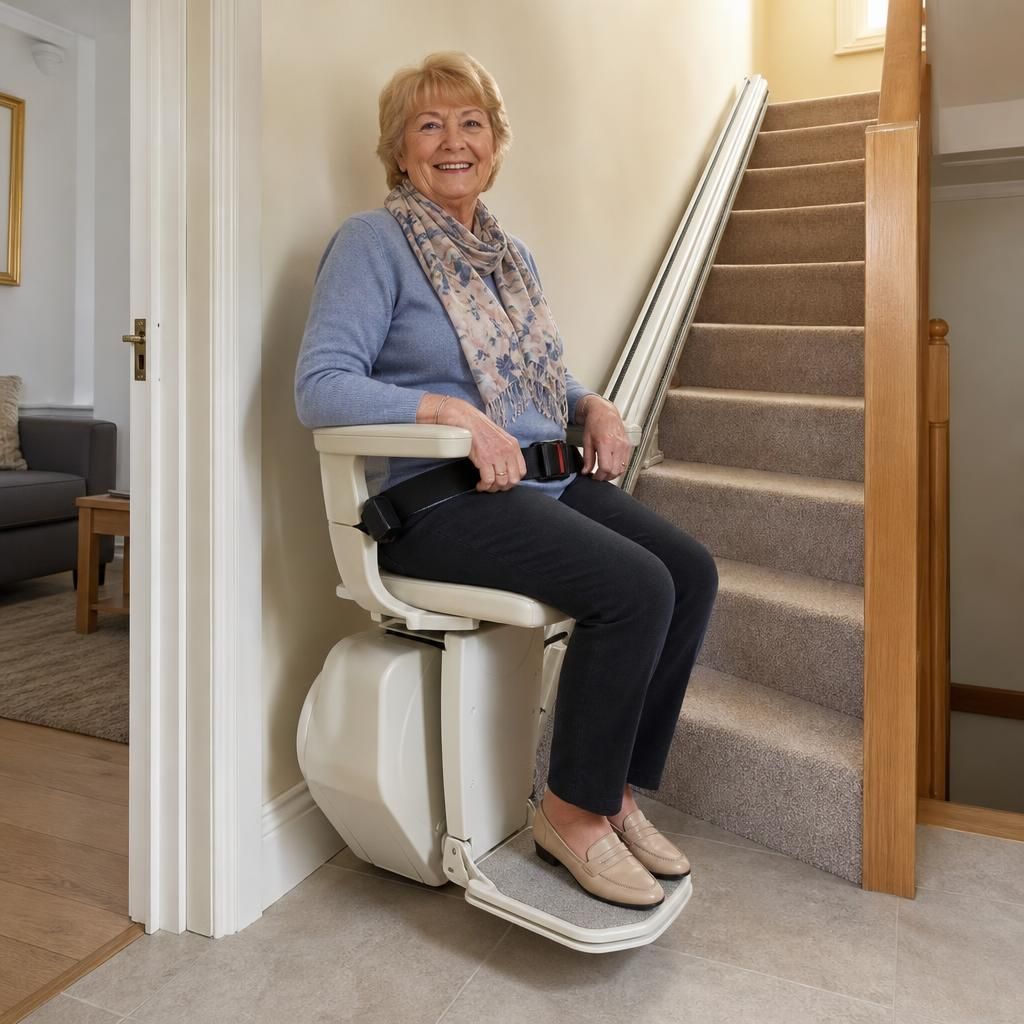
Arrange a Stairlift Safety and Comfort Assessment
Arrange a stairlift safety and comfort assessment to check that the seat, controls, footrest and safety features suit the user and staircase. Contact Independent Stairlifts to discuss your requirements and arrange a convenient home assessment.