
What are the maintenance requirements for keeping my stair lift in optimal condition?
Keeping your stairlift in optimal condition involves regular cleaning, checking the seat, arms, footrest and safety sensors, keeping the track clear, and ensuring the batteries charge correctly. Arrange professional servicing in line with the manufacturer’s guidance, and contact Independent Stairlifts promptly if you notice unusual noises, reduced performance or any fault warning.
Keeping a stairlift in optimal condition requires routine cleaning and visual checks, correct battery charging, a clear staircase and track, and professional servicing in line with the manufacturer’s instructions. These measures help preserve safe operation and identify wear or faults before they affect reliability.
Carry out regular visual checks. Before using the stairlift, look over the seat, armrests, footrest, safety belt and controls. Check that:
- the seat locks securely in its travelling position and swivels correctly where fitted;
- the armrests and footrest are firm and free from damage;
- the safety belt fastens and releases properly;
- the control switches and remote controls respond as expected;
- the carriage and track show no signs of looseness, impact damage or obstruction; and
- there are no loose covers, exposed wiring or unusual marks around the lift.
Do not continue using the stairlift if a safety component is damaged or does not work correctly. Contact Independent Stairlifts or your servicing provider for advice.
Keep the stairlift clean. Wipe the seat, armrests, controls and footrest with a soft, slightly damp cloth. Use a cleaning product suitable for the materials, following the manufacturer’s guidance, and dry surfaces afterwards. Do not pour water or cleaning fluid onto the lift, use abrasive products, or allow moisture into the controls, charging points or electrical components. If the stairlift is installed outdoors, remove dirt, leaves and moisture regularly and use only cleaning methods approved for that model.
Keep the track and staircase clear. Objects left on the stairs can obstruct the lift, create a trip hazard or trigger its safety sensors. Keep clothing, shopping, pet items and other belongings away from the track and footrest. Check that curtains, rugs and trailing cables cannot catch on the moving parts. Never place items on the track or use it as a shelf.
Allow the batteries to charge correctly. Most stairlifts use rechargeable batteries and are designed to remain connected to their charging points when parked. Park the lift where the charger is located, as recommended for your model, and avoid switching off its power unless instructed by the manufacturer or an engineer. A stairlift that is regularly left away from its charging point may have reduced range and could eventually fail to operate. If the lift does not charge, displays a low-battery warning or becomes noticeably slower, arrange an inspection rather than repeatedly trying to use it.
Rechargeable batteries are serviceable parts and will eventually need replacement. Their usable life can be affected by how often the lift is used, how it is stored and whether it is consistently charged. Battery replacement should be carried out by a suitably qualified engineer using compatible parts.
Use the stairlift as intended. Follow the instructions provided for your particular model, including its stated user and load limits. Sit facing the correct direction, use the safety belt where fitted, keep arms and feet within the seat area, and do not carry bulky items that could interfere with the track or sensors. Do not allow anyone to stand on the footrest or travel on the stairs at the same time as the stairlift is moving.
Arrange professional servicing. Servicing should follow the manufacturer’s recommended interval and take account of the model, how frequently it is used and the installation environment. An engineer can inspect and test components that are not suitable for customer maintenance, including the drive system, batteries, charging equipment, safety sensors, limit switches, wiring, track fixings and braking mechanisms. They can also identify wear, tighten or replace parts where appropriate, and confirm that the stairlift stops safely at the relevant points.
Do not remove covers, adjust the track, lubricate internal components or attempt electrical repairs yourself. Some stairlift parts require specific settings, and using the wrong lubricant or replacement component can affect safe operation. For the same reason, do not rely solely on a general household repair service for a stairlift fault.
Pay attention to changes in performance. Contact Independent Stairlifts promptly if you notice unusual grinding, clicking or squealing; jerky movement; unexpected stopping; slower travel; difficulty starting; a seat or armrest that does not lock; repeated safety-sensor activation; a charging fault; a warning light or error tone; or a burning smell. Stop using the lift if it becomes unsafe, emits smoke, has damaged wiring or behaves unpredictably. If someone is stranded on the stairs, follow the emergency procedure in the user guide and seek assistance rather than forcing the lift to move.
Outdoor stairlifts need additional attention because rain, dirt, frost and temperature changes can affect exposed surfaces, sensors, charging points and batteries. Keep the lift covered or parked as instructed, remove accumulated debris and report corrosion, water ingress or deterioration of the upholstery and controls. A professional inspection is particularly important if the lift has been exposed to severe weather.
Reconditioned stairlifts should be maintained in the same way as new installations, with particular attention to the service history, battery condition and any parts identified by the installer as requiring observation. Keep the user manual, installation information and service records available. These details help an engineer diagnose faults accurately and confirm which components have been fitted.
A simple maintenance routine is not a substitute for servicing, but it can reduce avoidable problems. Clean the accessible surfaces, check the safety components and track, keep the lift on charge, follow the operating instructions and report changes early. If you are unsure whether a sound, warning or change in movement is normal for your stairlift, stop using it and contact us for guidance.
Professional servicing is an essential part of stairlift maintenance because it checks components that are not suitable for customer inspection, including the drive system, batteries, charging equipment, safety sensors, wiring, track fixings and braking mechanisms.
Arrange servicing in line with the manufacturer’s guidance and tell the engineer about any changes you have noticed. Between visits, keep the stairlift clean, leave it on its charging point as instructed and keep the track and staircase clear. Contact Independent Stairlifts promptly if you notice:
- jerky, slow or unusually noisy movement;
- unexpected stopping, warning lights or error tones;
- a seat, armrest or safety belt that does not secure correctly; or
- charging problems, damaged wiring or a burning smell.
Do not remove covers, adjust the track or attempt electrical repairs yourself. If the stairlift behaves unpredictably or appears unsafe, stop using it and seek professional advice.
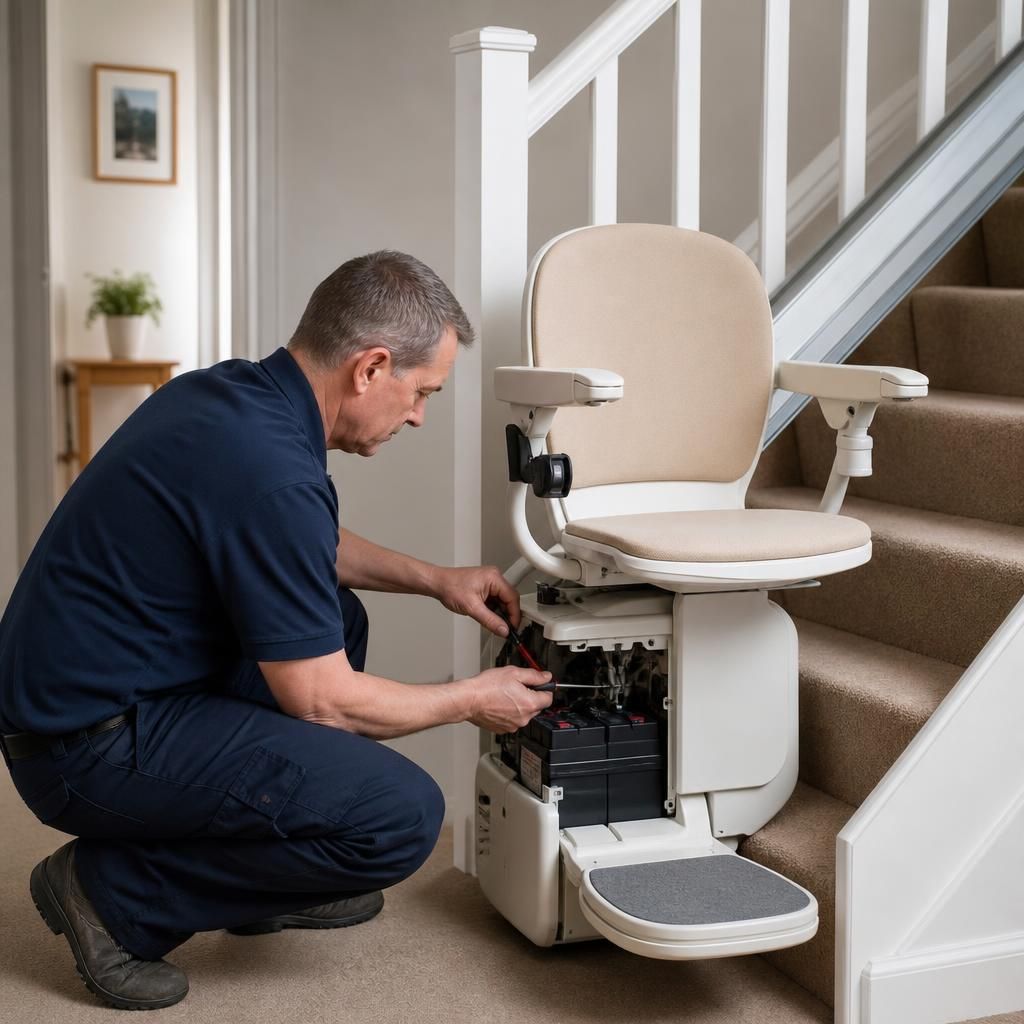
Arrange Professional Stairlift Servicing
Arrange professional stairlift servicing in line with the manufacturer’s guidance to check the drive system, batteries, safety sensors and other essential components. Contact Independent Stairlifts to book a service or discuss any changes in performance.