
Are stair lifts suitable for outdoor use?
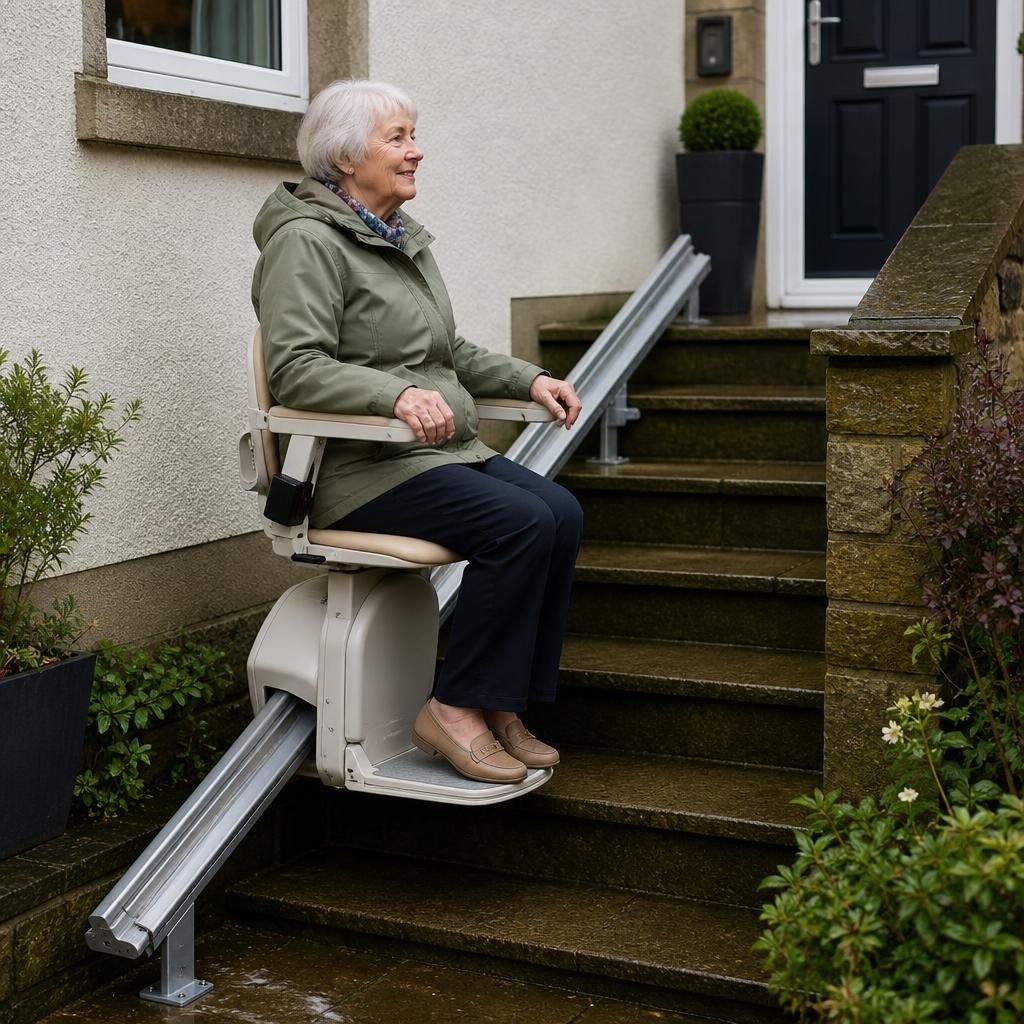
Yes, stair lifts can be suitable for outdoor use when you choose a model designed for external conditions. Outdoor stairlifts use weather-resistant materials and protective features, but the staircase, exposure and available power supply should be assessed before installation.
Yes, stair lifts can be suitable for outdoor use, provided you choose a model specifically designed for external conditions. An outdoor stair lift is built with weather-resistant materials, protective covers and electrical components suited to exposure. However, suitability depends on the staircase, the level of shelter, drainage, available power supply and how the lift will be used.
Outdoor stair lifts are commonly installed on steps leading to a front door, garden, patio, garage or raised terrace. They can help where external stairs are making it difficult or unsafe to enter or move around the property. A standard indoor stair lift should not be installed outside, as its upholstery, controls and electrical parts may not be designed to withstand rain, damp, sunlight, frost or temperature changes.
What makes an outdoor stair lift different?
An outdoor model is designed to tolerate more demanding conditions than an indoor lift. Depending on the model, this may include:
- Weather-resistant seat, armrests and controls
- Materials and finishes that help resist corrosion
- Protective covers for the seat, controls and charging points
- Sealed or protected electrical components
- Safety systems that continue to operate in changing outdoor conditions
- Foldable or compact parts that leave more space on the steps when the lift is parked
Weather-resistant does not mean completely maintenance-free or suitable for permanent exposure without protection. Keeping the lift covered when it is not being used can reduce the effect of rain, frost, dirt and direct sunlight. A sheltered parking position is often beneficial, although the installation still needs to be assessed as an outdoor environment.
The staircase and surrounding area need to be assessed
Outdoor stairs vary considerably. Some are straight and open to the elements, while others have landings, bends, uneven surfaces or limited space at the top and bottom. The condition, width and gradient of the steps are important, as are the position of walls, gates, doors, handrails and nearby paths.
An assessment should establish where the lift can start and finish safely, whether the user can get on and off securely, and whether the track could obstruct access for other people. The installer should also consider water run-off and drainage. Standing water around the track, charging point or lower landing may create avoidable risks and could affect the equipment over time.
Where the stairs are particularly exposed, the assessment may identify practical improvements such as a cover, a more suitable parking position or additional protection around the charging area. The lift should never be positioned where the user has to step onto an unstable surface or where opening a door could create a hazard.
Power and charging arrangements
Outdoor stair lifts require an appropriate electrical supply and a safe charging arrangement. The position of the charging points must suit the installation and protect the electrical equipment from the weather. Any outdoor electrical work should be completed in accordance with applicable safety requirements by a suitably qualified professional.
Many stair lifts use rechargeable batteries, allowing the lift to operate for a period if the mains supply is interrupted. The batteries still need to remain charged, so the lift should normally be parked at its designated charging point when not in use. If the lift is left away from the charger for long periods, it may not be ready when needed.
Safety considerations for outdoor use
Users should keep the steps clear of leaves, moss, snow, ice, standing water and other slippery materials. Outdoor surfaces can become hazardous even when the stair lift itself is working correctly. Good lighting, secure handrails and clearly visible step edges can also improve access around the lift.
Before travelling, check that the seat, footrest and controls are dry and free from debris. Sit fully back in the seat, use the seat belt where provided and keep hands, feet and loose clothing within the lift. Do not carry items that could fall onto the track or interfere with the controls. Children and pets should be kept clear while the lift is moving.
If the lift has been exposed to severe weather, inspect it before use. Do not operate it if there is visible damage, unusual noise, water around electrical components or a control that is not responding normally. Switch it off if appropriate and contact the service team for advice rather than attempting to dismantle or repair it yourself.
Maintenance is especially important outdoors
An outdoor stair lift generally needs the same routine checks as an indoor model, with additional attention to weather-related wear. Keep the track and charging area clear, wipe away dirt when appropriate and use the protective cover supplied for the equipment. Avoid using unsuitable cleaning products or directing a hose or pressure washer at the lift.
Regular servicing allows components such as the batteries, charging points, track, safety sensors, seat and controls to be checked. Battery performance can be affected by age and temperature, while corrosion or debris may affect moving parts. Follow the manufacturer’s instructions and arrange professional servicing at the recommended intervals, or sooner if the lift is used heavily or develops a fault.
When an outdoor stair lift may not be the best option
A stair lift may not be appropriate if the stairs are structurally unsound, too exposed for safe use, regularly affected by flooding or inaccessible at the top or bottom. In some situations, improving the steps, adding lighting or installing a handrail may be sufficient. Where there is a large change in level or the user cannot safely transfer into a seated lift, another access solution may be more suitable.
The right choice should be based on the user’s mobility, transfer ability, weight and height, as well as the layout and condition of the outdoor staircase. A personalised assessment can confirm whether an outdoor stair lift can be installed safely, which features are needed and how the equipment should be protected and maintained.
Outdoor stair lifts are suitable for external steps only when they are designed for weather exposure and professionally assessed for the site. A model intended for indoor use may not protect its upholstery, controls or electrical components against rain, frost, sunlight and damp.
The assessment should consider the staircase, drainage, shelter, charging position and the user’s ability to transfer safely at the top and bottom. A protective cover and sheltered parking point can reduce weather-related wear, but the lift still needs regular cleaning, battery checks and servicing. Keep the steps clear of leaves, moss, ice and standing water, and do not use the lift if water has reached electrical components or it shows signs of damage.
Arrange an outdoor stair lift assessment
Arrange an outdoor stair lift assessment with Independent Stairlifts to check your staircase, access points, drainage and charging requirements. We can recommend a suitable weather-resistant solution based on the layout and your mobility needs.