
What steps does Independent Stairlifts take to ensure my stairlift installation complies with safety standards?
Independent Stairlifts ensures a safe, compliant installation through a detailed site assessment, selection of suitable equipment, and fitting by trained installers in line with the manufacturer’s instructions and applicable UK safety requirements. The completed stairlift is then checked and tested before handover, with guidance provided on safe operation and ongoing support.
Independent Stairlifts supports a safe, compliant installation by assessing the staircase and surrounding area, specifying suitable equipment, fitting it in accordance with the manufacturer’s instructions and applicable UK requirements, and completing documented checks before handover. The process is intended to confirm that the stairlift is suitable for the property, safe for the intended user and operating correctly under normal conditions.
The main safety steps include:
- Carrying out a detailed site assessment. The survey considers the staircase layout, dimensions, landings, turns, entrances, obstruction risks, available parking space and the condition of the structure where the rail will be fixed. The surveyor also considers how the user approaches and leaves the stairlift, whether a swivel seat or powered hinge is appropriate, and whether doors, radiators, furniture or other features could affect safe operation.
- Checking the user’s requirements. The recommended stairlift must suit the user’s mobility, posture, transfer ability and anticipated use. Relevant factors include weight capacity, seat and armrest support, control position, footrest design, seat swivel, belt requirements and the ability to operate the controls safely. A suitable model is not selected on staircase dimensions alone.
- Confirming the equipment is appropriate. Independent Stairlifts matches the stairlift and rail configuration to the measured staircase and the conditions found during the assessment. Equipment is supplied and installed with the manufacturer’s safety features, operating instructions and rated limits intact. Where a reconditioned stairlift is considered, its condition, suitability and safe operation must be checked before it is recommended.
- Planning the fixing and electrical work. The installer identifies suitable fixing points and checks that the proposed installation will not interfere with important household features. Most stairlifts are fixed to the stairs rather than the wall, but the exact method depends on the product and staircase. Any required electrical connection or charging arrangement is planned so that cables, switches and charging points do not create avoidable trip or access hazards.
- Following the manufacturer’s installation requirements. Trained installers assemble and secure the stairlift using the specified components, fixings, clearances and adjustment procedures. They do not rely on a generic fitting method because curved, narrow, steep, open-plan and outdoor staircases can present different installation risks. Any unusual condition identified during the survey is taken into account before work begins.
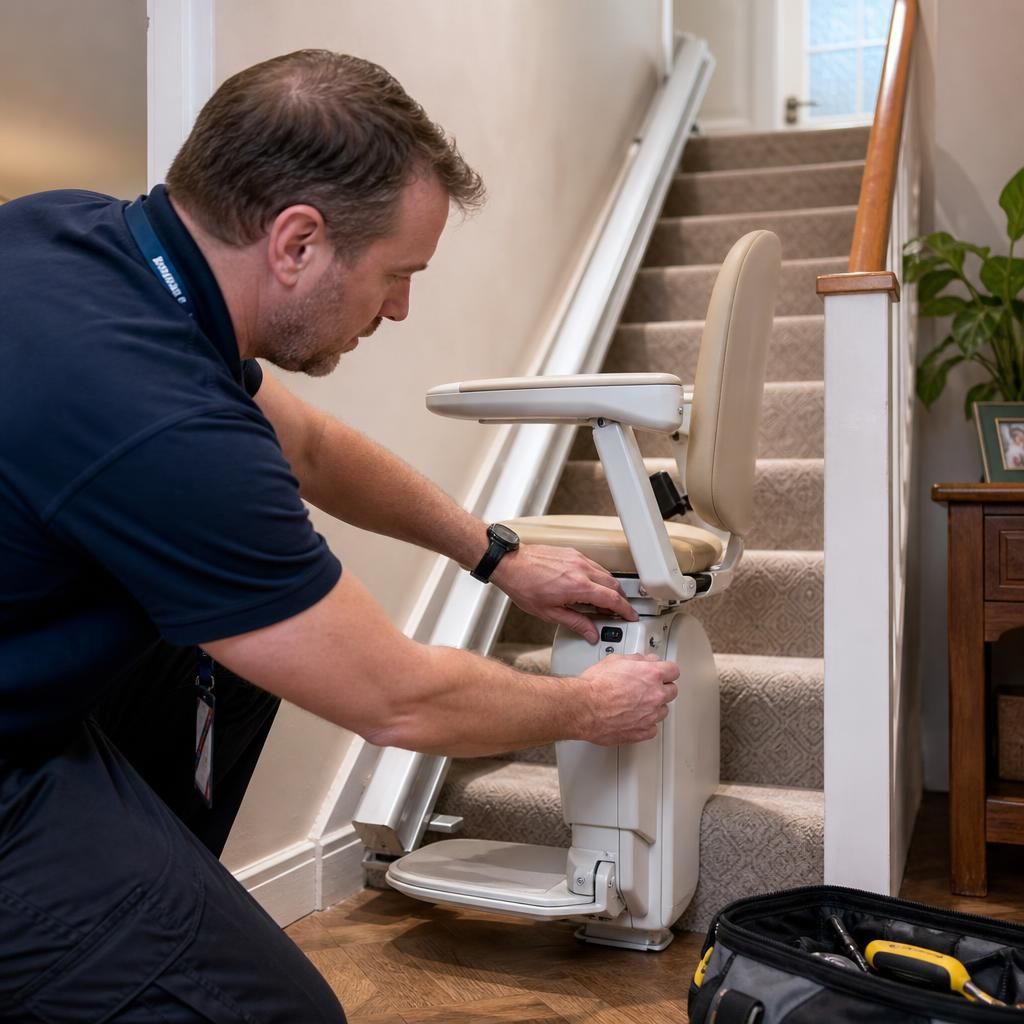
- Testing the completed installation. Once fitted, the stairlift is checked for secure fixings, rail alignment, movement, braking, obstruction sensors, seat and armrest operation, seat-belt function, swivel or folding mechanisms and charging. The installer also checks the controls, safety edges and any powered accessories included in the installation. The stairlift is run through its operating route to identify issues such as unusual movement, noise, restricted clearance or difficulty entering and leaving the seat.
- Checking the surrounding area. The completed installation is reviewed from the bottom and top of the stairs, including the parking position and any intermediate landing. This helps confirm that the stairlift does not unnecessarily obstruct walkways, doors or escape routes and that the user has a practical, safe place to transfer on and off the seat.
- Completing the handover. Before the installation is considered complete, the user or their representative is shown how to use the controls, seat belt, swivel seat, charging system, call or send controls and any other fitted features. The installer explains the operating limits, safe transfer procedure, charging requirements and what to do if the stairlift stops or displays a fault. Instructions and relevant product information are provided for future reference.
Safety compliance is not limited to fitting the rail correctly. It also depends on using the stairlift as intended: the user should remain within the stated capacity, use the seat belt where provided, keep the staircase clear, avoid carrying unsuitable items and follow the operating instructions. Children and other household members should not use the stairlift as a toy, and pets should be kept clear while it is moving.
If the survey identifies a concern that cannot be resolved safely, such as inadequate space, an unsuitable fixing surface or an unsafe transfer position, the proposed installation should be reviewed rather than proceeding without adjustment. Independent Stairlifts can explain the available options, which may include a different configuration, additional safety accessory or an alternative location. Any structural or electrical work outside the standard stairlift installation would be discussed with you before it is undertaken.
After installation, keep the instructions available and report changes such as unusual noises, repeated stopping, damaged belts, reduced braking or charging problems. Do not attempt to alter, bypass or repair safety components yourself. Arrange servicing or inspection in line with the manufacturer’s guidance, and contact Independent Stairlifts if the stairlift no longer appears to operate normally. This combination of careful planning, correct fitting, final testing and informed use helps maintain safe operation throughout the stairlift’s service life.
Independent Stairlifts checks the completed installation before handover to confirm that the stairlift is securely fitted, follows its intended route and operates safely. The installer tests the rail alignment, movement, braking, controls, seat belt, safety sensors, swivel or folding mechanisms and charging system, where fitted.
The surrounding area is also reviewed from the top and bottom of the staircase. This confirms that parking positions, doors, landings and transfer areas remain practical and that the stairlift does not create an avoidable obstruction. You are then shown how to use the stairlift safely, including the controls, belt, charging system and what to do if a fault occurs.
Discuss your stairlift installation with our team
Discuss your stairlift installation with our team to review the survey findings, safety requirements and any questions about fitting your chosen model. We can explain the next steps and arrange further advice where needed.