
Are there any structural modifications needed to install a stairlift in my home?
Most stairlifts can be installed without major structural modifications because the rail is secured to the stair treads rather than the wall. A site survey will identify any minor adjustments needed, such as relocating an obstruction or providing a suitable power supply, while curved, narrow or unusual staircases may require bespoke rail planning.
In most homes, installing a stairlift does not require major structural modifications. The rail is normally fixed to the stair treads, not the wall, so there is usually no need to remove walls, alter the staircase or create extensive building work. During the site survey, the installer checks whether the stairs can safely support the fixing points and identifies any minor changes needed before installation.
The exact requirements depend on the staircase construction, the available space and the stairlift selected. A straight stairlift is often the simplest installation, while a curved stairlift may need a bespoke rail designed around bends, intermediate landings or changes in direction. This affects the rail design and installation process, but it does not usually mean altering the structure of the home.
Typical installation requirements include:
- Secure fixing points: The rail is attached to the stair treads using suitable fixings. The survey checks that the treads are sound, stable and suitable for the proposed fixing positions.
- A suitable power supply: Most stairlifts require a nearby electrical supply to charge the batteries. If there is no suitable socket, an electrician may need to install one. This is generally a small electrical alteration rather than structural building work.
- Clearance around the staircase: The installer checks the width of the stairs, the space beside the rail and the clearance at the top and bottom. Minor changes, such as moving furniture or removing an obstruction, may be needed before installation.
- Safe access at the top and bottom: Where space is restricted, the stairlift may need a particular seat position, rail arrangement or folding component. A hinged or shortened rail can sometimes help avoid blocking a doorway or passage.
- Condition of the staircase: Damaged, loose or unusually shallow treads may need attention before the stairlift is fitted. Any necessary repair should be discussed with you before work begins.
Stair construction can influence the fixing method. Timber, concrete, stone and other stair materials may require different fixings or installation techniques. A staircase with open risers, curved steps, unusually narrow treads or a complex landing may need additional planning. These features do not automatically prevent installation, but they must be measured accurately so that the rail and seat provide safe clearance throughout the journey.
In some homes, existing features may need to be adjusted rather than the staircase itself. Examples include a door that opens directly on to the stairs, a radiator or cupboard close to the rail, a projecting handrail, or furniture that reduces the landing space. The solution might involve repositioning an item, changing the stairlift configuration or selecting a different rail option. Permanent alterations should only be considered where they are necessary and should be agreed with you in advance.
For a curved stairlift, the rail is made to follow the individual staircase. The survey considers every bend, landing and change in gradient, as well as where the seat needs to stop for safe transfers. Bespoke rail planning can accommodate many unusual layouts, although the available space may influence whether the seat folds, swivels or parks in a particular position.
Outdoor stairlifts have additional installation considerations. The stair surface and surrounding structure must be suitable for secure fixing, and the equipment needs protection from weather and water. The installer will also consider drainage, exposed electrical components and the safest position for the lift when it is not in use.
A stairlift should not be installed over a staircase that is unstable or unable to accept secure fixings. If the survey identifies a problem with the stairs, it should be explained clearly, together with any recommended remedial work. In some cases, a qualified builder or electrician may need to complete work before the stairlift installation. This helps ensure that the finished installation is secure, electrically safe and suitable for everyday use.
The site survey is therefore important even when no structural modification is expected. It confirms the staircase dimensions, checks the condition of the fixing surfaces, identifies possible obstructions and determines where the equipment and power supply can be positioned. It also allows the installer to plan access, delivery and installation with minimal disruption.
Before work starts, you should be told about any proposed alteration, why it is needed and whether it is included in the installation plan. In the majority of cases, the work is limited to fixing the stairlift to the stairs, connecting or confirming the charging supply and making minor adjustments to the surrounding area. Major structural changes are unusual, but the final requirements can only be confirmed after an assessment of your particular staircase and home.
Most stairlifts do not need major structural modifications because their rail is secured to the stair treads rather than the wall. This normally avoids removing walls, changing the staircase or carrying out extensive building work.
During the site survey, the installer checks that the treads are sound and suitable for secure fixings, then assesses clearance at the top and bottom of the stairs. Any requirements are usually minor, such as moving an obstruction, repairing a damaged tread or providing a suitable electrical socket for charging. If a doorway, radiator or handrail affects the available space, the stairlift configuration may be adjusted instead of altering the staircase.
Curved, narrow or outdoor staircases require more detailed planning, but bespoke rail design does not usually mean changing the structure of your home. If remedial work by a qualified builder or electrician is necessary, this should be explained and agreed with you before installation begins.
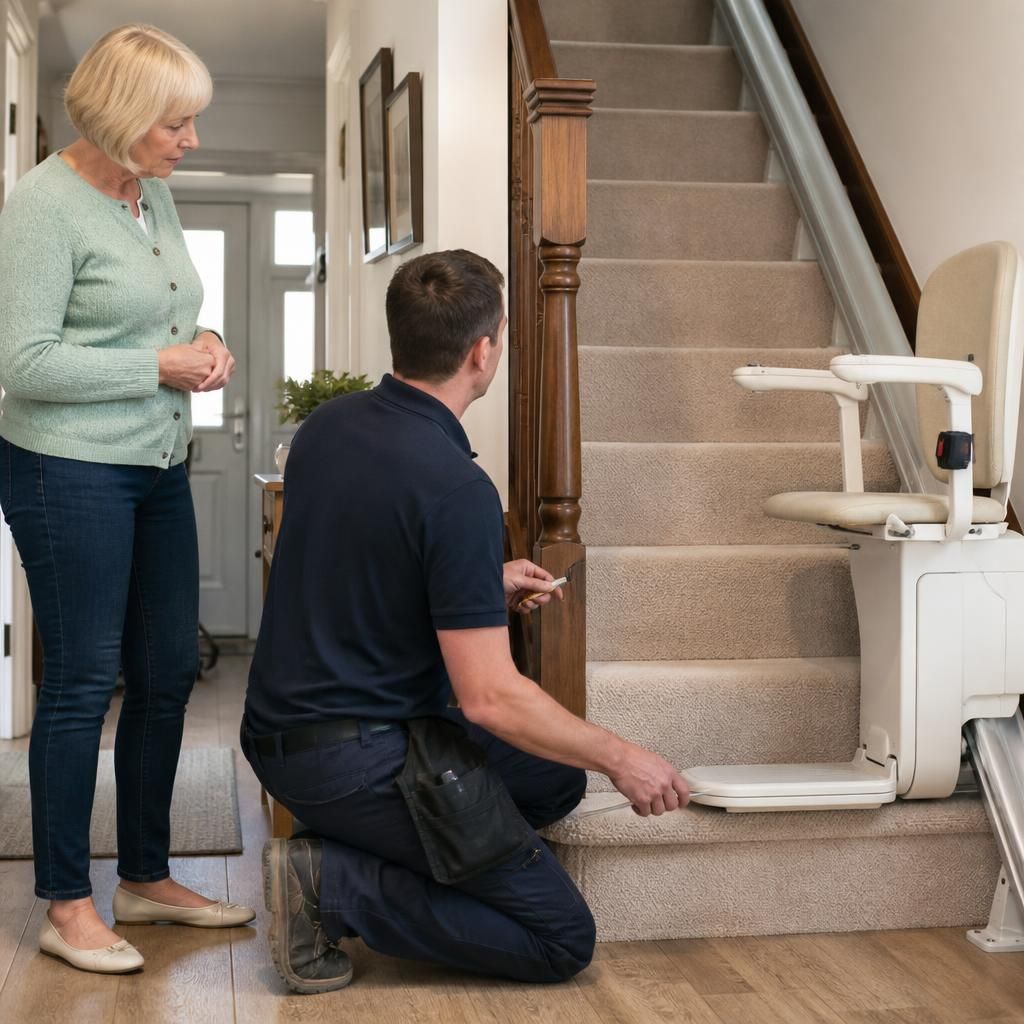
Arrange your stairlift site survey
Arrange your stairlift site survey with Independent Stairlifts so we can assess your staircase, identify any installation requirements and recommend a suitable solution for your home.