
How long does the installation of a stairlift typically take?
A straight stairlift can typically be installed in a few hours, while a curved or bespoke stairlift may take longer because it is made to fit the staircase. The exact time depends on the stairlift type, staircase layout and any preparation identified during the site survey.
A straight stairlift is usually fitted in a few hours, while a curved or bespoke stairlift normally takes longer because its rail is made to suit the individual staircase. The precise installation time depends on the type of lift, the staircase layout, the condition of the stairs, access to the property and any preparation identified during the site survey. Your installer should confirm the expected fitting time before work begins.
The installation time is separate from the overall ordering or lead time. A suitable straight stairlift may be available for installation relatively quickly because the rail follows a standard straight flight. A curved stairlift, however, generally needs a rail manufactured for the specific shape and dimensions of your staircase. This means the fitting appointment takes place after the survey, design and manufacturing stages have been completed.
Straight stairlift installation is often completed within part of a day. The fitter normally installs the rail directly onto the stair treads rather than the wall, attaches the carriage and charging points, and checks that the lift travels smoothly from top to bottom. If the staircase is accessible and no alterations are required, the work is usually straightforward.
Curved stairlift installation can take longer because the rail must follow bends, landings, changes in gradient or more than one flight of stairs. The fitter may need additional time to assemble and align the bespoke rail, position charging points and programme the controls. Where a stairlift serves several levels or includes a particularly complex design, the work may be scheduled as a longer appointment.
Outdoor stairlift fitting varies according to the external staircase and the conditions around it. Weather, uneven surfaces, exposure to water and the need for suitable electrical protection can all affect the work. A stable mounting surface and safe access for the installation team are important, particularly where the stairs are open, narrow or exposed.
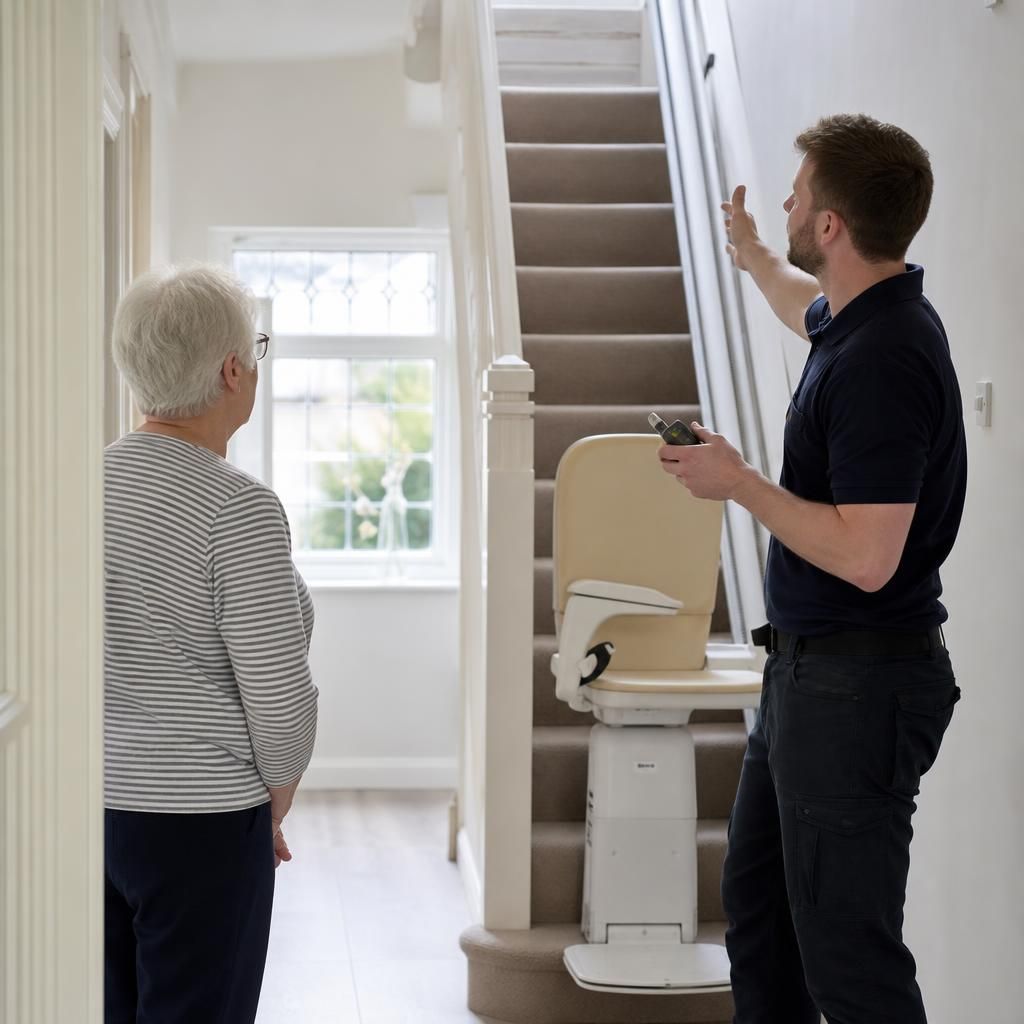
The site survey helps establish a realistic installation timeframe. During the survey, the fitter assesses the staircase dimensions, turns, landings, available space at the top and bottom, power supply and any doors or walkways affected by the lift. They can also identify issues such as damaged treads, restricted access, obstructions or the need to move furniture before the appointment.
On the day of installation, the process will generally include:
- Protecting relevant flooring, walls and nearby furnishings where necessary.
- Checking the staircase and confirming the agreed layout.
- Installing the rail and securing it to the stair treads or other approved fixing points.
- Fitting the carriage, seat, controls, batteries and charging equipment.
- Setting the lift’s stopping positions and safety features.
- Testing its movement, braking, sensors, seat belt and controls.
- Explaining safe operation, charging and basic care before leaving the property.
Most stairlifts are installed with limited structural disruption. A standard fitting normally does not require major building work, and the rail is commonly fixed to the stairs rather than the wall. However, unusual staircases, limited headroom, tight access or electrical requirements may add time. If any remedial work is needed, this should be discussed with you before installation rather than assumed on the day.
You can help the appointment run efficiently by keeping the staircase and surrounding areas clear, ensuring the fitter can reach the electrical supply and making any access arrangements in advance. If the property has shared entrances, security gates or difficult parking, provide the relevant information beforehand. Tell the installer about anyone who may need to use the stairs during the work so that a safe temporary arrangement can be agreed.
The stairlift should not be considered ready for use until the fitter has completed the safety checks and shown you how to operate it. You should be comfortable with starting and stopping the lift, using the swivel or folding seat, fastening the seat belt, responding to an obstruction and charging the batteries. Ask questions at this stage if any part of the operation is unclear.
In practical terms, a simple straight installation may be finished in a few hours, whereas a curved, multi-flight or outdoor installation may need a longer fitting appointment. Independent Stairlifts can provide a more accurate estimate after assessing your staircase, taking account of the design, access and any preparation required. If circumstances change before the appointment, contact the team so the installation plan and expected duration can be reviewed.
The site survey is the best way to establish how long your stairlift installation is likely to take. The fitter checks the staircase layout, access, available space, power supply and any obstructions that could affect the work.
This assessment distinguishes a straightforward straight-stairlift fitting from a more involved curved, multi-flight or outdoor installation. It also identifies preparation needed in advance, such as clearing furniture, repairing damaged stair treads or arranging access to the property. Independent Stairlifts can then confirm the expected appointment duration before installation begins.
Find out how long your stairlift installation will take
Contact Independent Stairlifts to arrange a site survey and confirm how long your stairlift installation is likely to take. We can explain the fitting process and any preparation needed before the appointment.