
How does the stairlift installation process ensure minimal disruption to my home?
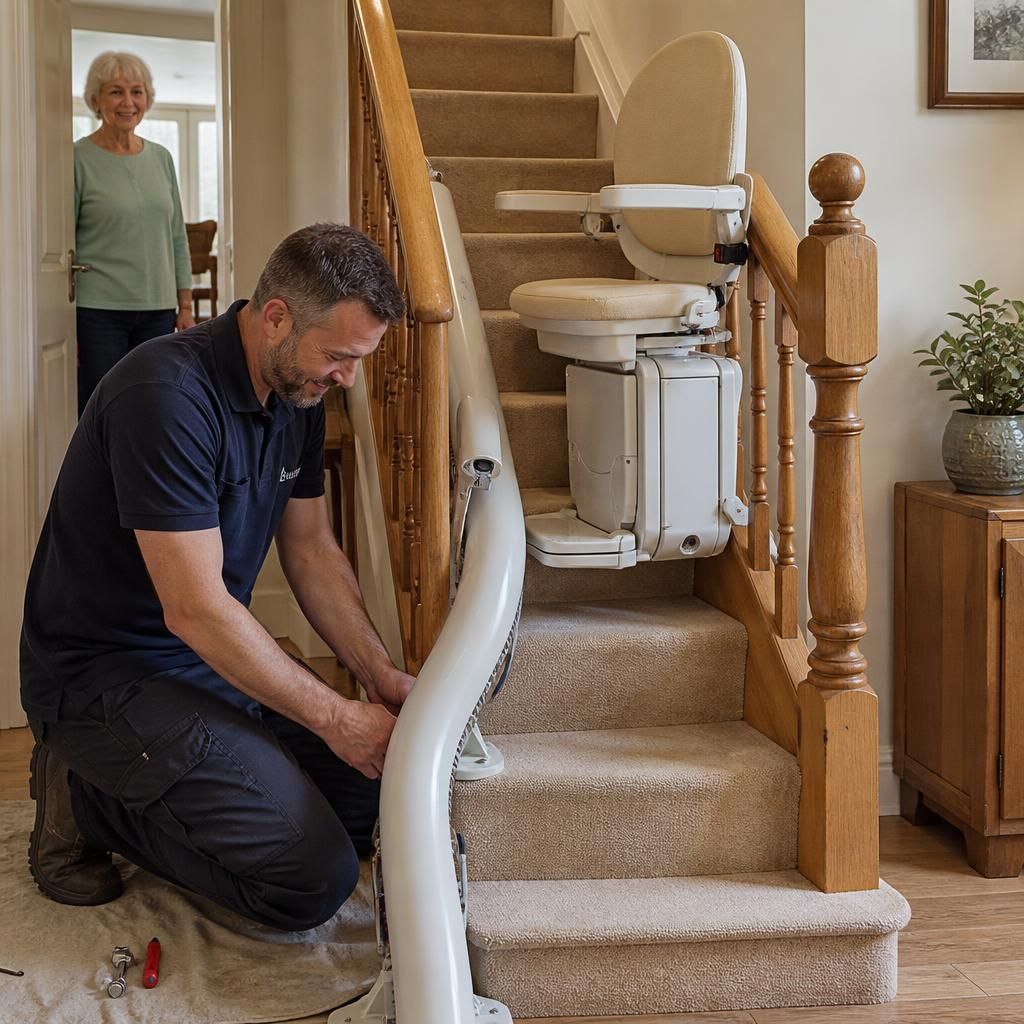
Our stairlift installation process is planned around your home, with a careful site survey, clear preparation and precise fitting to protect walls, flooring and décor. Experienced installers work efficiently, keep the area tidy and explain the finished stairlift before leaving, so disruption is kept to a minimum.
A stairlift installation is designed to be a controlled, low-impact process: the fitting is planned during the site survey, the stairlift is installed onto the staircase rather than the wall, and the work area is protected and cleared before the installer leaves. This approach helps preserve your flooring, walls and décor while keeping access through the home as practical as possible.
Planning starts with the site survey
Before installation, the fitter assesses the staircase, landings, entrances and nearby furniture. They check the available width, the position of doors and radiators, the condition of the steps, and where the stairlift will park at the top and bottom. For a curved stairlift, the survey also establishes the rail route around bends, intermediate landings and changes in level.
This information allows the installer to identify potential difficulties before work begins. It may also determine whether furniture needs to be moved temporarily, whether a door could obstruct the seat, or whether the stairlift should be configured with a particular seat, swivel, rail or parking position. Discussing these points in advance reduces delays and avoids unnecessary changes during fitting.
Preparation protects the surrounding area
Installers normally prepare the work area before bringing equipment into position. This can include protecting flooring and nearby surfaces, keeping tools and components together, and moving only those items that interfere with safe access. You can help by clearing loose objects from the stairs and landings, securing rugs and telling the fitter about any fragile furnishings or areas that need particular care.
The rail is fixed to the stair treads or appropriate structural points, according to the design and the manufacturer’s installation requirements. It is not normally attached to the wall, so the fitting does not require a continuous wall-mounted support. The precise fixing method depends on the staircase and the stairlift model, and the survey identifies the safest arrangement for your home.
Experienced fitting keeps the work focused
A qualified installer brings the stairlift components, positions the rail accurately and secures the fixings before fitting the carriage, seat and controls. Wiring is routed neatly and connected in accordance with the product instructions. Where a power supply is needed, the installer considers its position so that it is accessible for maintenance without creating an avoidable trip hazard.
The work is carried out in a defined area rather than treating the whole home as a work site. Installers should maintain a clear route for you and other household members wherever it is safe to do so. If the stairs need to be kept clear during a particular stage, this should be explained beforehand so that alternative access can be arranged.
Safety checks take place before handover
Once the stairlift is fitted, the installer checks the rail, fixings, seat, footrest, arms, belt and controls. They test movement along the full route, including the stopping positions, charging points, swivel mechanism and any safety sensors fitted to the model. They also check that the stairlift does not obstruct doors, landings or normal movement more than the agreed design requires.
Any necessary adjustments are made before the installation is considered complete. The installer should explain how to operate the stairlift, charge it, use the controls and respond to basic warnings. You should also be shown the emergency stop or safety functions and told who to contact if a fault develops.
Cleaning and reinstatement are part of a professional finish
At the end of the fitting, packaging, unused materials and protective coverings should be removed from the work area. The installer should check the stairs and surrounding surfaces for loose debris, return any moved items where appropriate and leave the route reasonably clean and usable. If an item cannot be returned safely, or if a minor alteration is needed, this should be discussed with you rather than left unexplained.
A stairlift does require permanent fixings and a power connection, so it is not entirely free from physical alteration. However, a suitable survey and careful installation limit the work to what is necessary for a safe, stable and reliable result. In many homes, the main disruption is temporary access restriction while the rail and equipment are being fitted, rather than extensive building work, dust or decoration removal.
How you can help minimise disruption
- Keep the staircase, landings and the planned route into the home clear before the appointment.
- Tell the installer about pets, vulnerable household members, visitors or other access requirements.
- Identify delicate flooring, recently decorated surfaces and furniture that should not be moved without your agreement.
- Ask when the stairs may be unavailable and plan an alternative route if your home has one.
- Make sure the person who will use the stairlift is available for the operating demonstration, where possible.
- Report any concern about marks, obstruction, noise or the finished position before the installer leaves.
If your staircase is unusually narrow, has multiple landings, includes a doorway nearby or is in an outdoor location, the preparation may need to be more detailed. These conditions do not automatically prevent installation, but they make an accurate survey and clear communication especially important. By agreeing the layout, access arrangements and protection measures in advance, the fitting can be completed efficiently while respecting the structure and décor of your home.
Minimal disruption is achieved by planning the installation around the staircase and the way your household uses the home. During the site survey, the fitter identifies the safest rail route, checks nearby doors and furniture, and agrees where the stairlift will park when not in use. This helps avoid unexpected alterations or repositioning during the fitting.
Before work starts, the installer protects nearby flooring and surfaces, clears only the items that affect safe access, and keeps tools and components within the working area. The rail is generally fixed to the stair treads rather than the wall, so installation does not normally require extensive building work or removal of wall decoration.
You can help by clearing loose items from the stairs and landings, securing rugs, and pointing out delicate furnishings or recently decorated surfaces. The fitter should also explain when the stairs will be temporarily unavailable, maintain a safe route where possible, and remove packaging and protective coverings before demonstrating the completed stairlift.
Arrange Your Stairlift Installation Assessment
Arrange your stairlift installation assessment so we can review your staircase, agree the safest layout and plan the fitting around your home. Contact Independent Stairlifts to discuss your requirements and arrange a convenient appointment.