
How does Independent Stairlifts ensure the safety and reliability of their installations?
Independent Stairlifts ensures safe, reliable installations through a careful site assessment, suitable equipment selection and professional fitting by experienced installers. Each stairlift is checked and tested before handover, with clear user guidance and ongoing support available if assistance is needed.
Independent Stairlifts protects the safety and reliability of each installation through careful assessment, appropriate equipment selection, professional fitting, thorough testing and clear user guidance. The stairlift is not treated as a standard appliance: its design and installation must suit the staircase, the person using it and the way the home is arranged.
The process begins with a site survey. An installer assesses the staircase layout, available space, landings, steps, handrails, doors and nearby electrical points. They also discuss the user’s mobility, preferred access, transfer ability and any practical concerns, such as whether the user needs a powered swivel seat or additional support when getting on and off. This information helps determine whether a straight, curved or outdoor stairlift is appropriate and where it should be positioned.
A suitable model is then selected for the environment and the user’s requirements. Factors can include the shape and width of the staircase, the available clearance, the user’s posture and weight capacity, and whether other household members need to use the stairs normally. Where a reconditioned stairlift is considered, its suitability is assessed against the installation and the user’s needs rather than relying solely on its previous use.
Professional fitting is important because the rail, charging points and stairlift controls must be installed securely and accurately. The fitter follows the equipment manufacturer’s installation instructions and takes account of applicable safety requirements. Fixings are made to appropriate structural points, cables are routed safely and the finished installation is checked to ensure that it does not create an unnecessary obstruction or interfere with doors, handrails or normal movement around the staircase.
Safety features are checked as part of commissioning. Depending on the model, these may include the seat belt, swivel or powered swivel mechanism, arm controls, footrest, obstruction sensors, braking system, limit controls and battery charging. The stairlift should start, stop and park correctly, travel smoothly and respond properly when a sensor detects an obstruction. Outdoor installations also require consideration of exposure to weather and the condition of the surrounding access route.
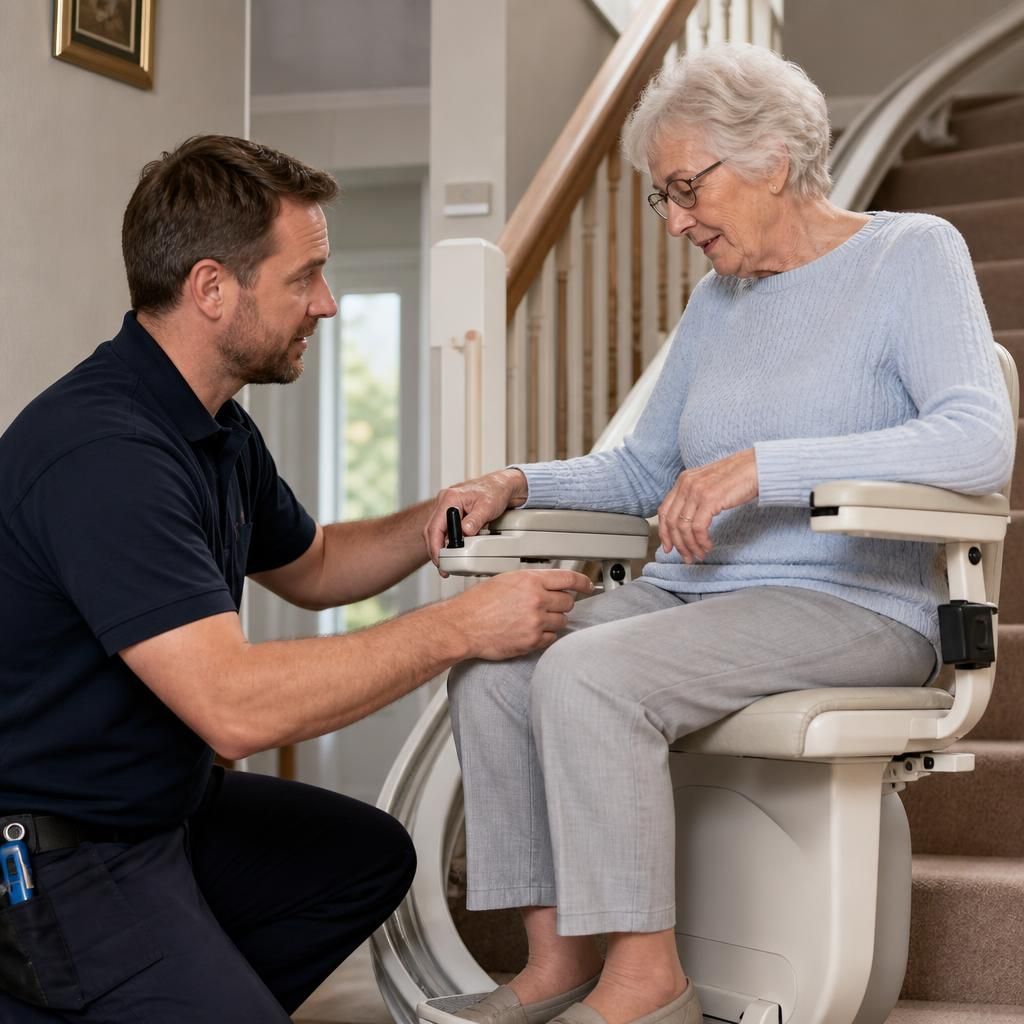
Before handover, the installer operates the stairlift through its full usable route and checks the controls and safety systems. Any relevant adjustments are made so that the seat, footrest and stopping positions work comfortably for the user. The user is then shown how to start and stop the stairlift, use the controls, position the seat, fasten the belt, charge the batteries and respond to a basic obstruction or operating issue.
Clear guidance is particularly important where the user has limited strength, reduced dexterity, sight or hearing, or where a family member will provide assistance. The demonstration can be tailored to the person using the stairlift, with time to practise under supervision. Users should follow the supplied instructions, keep the stairway clear and report unusual noise, movement, warning tones or charging problems rather than continuing to use equipment that may need attention.
Reliability also depends on suitable aftercare. Independent Stairlifts can provide support if you need help understanding the controls or if an issue develops after installation. Keep the product information available and contact the company promptly if the stairlift does not travel smoothly, fails to charge, stops unexpectedly or shows a warning indication. Routine care and any recommended servicing help identify wear or battery-related problems before they affect day-to-day use.
These safeguards work together: an accurate survey reduces the risk of choosing an unsuitable configuration, correct fitting provides a secure installation, commissioning confirms that the equipment operates as intended, and user instruction supports safe everyday use. If your circumstances or mobility have changed since the installation, contact Independent Stairlifts so the equipment and any additional support can be reviewed.
Independent Stairlifts verifies the safety of each installation through commissioning checks and a practical handover. After fitting, the installer runs the stairlift over its full route to confirm that it travels smoothly, stops in the correct positions and parks safely.
The main operating and safety features are checked, including the seat belt, controls, swivel mechanism, footrest, obstruction sensors, braking system and battery charging. The installer also checks that the rail and fixings are secure and that the stairlift does not obstruct doors, handrails or normal movement on the stairs.
Before leaving, the user is shown how to operate the stairlift, fasten the belt, charge the batteries and respond to a basic obstruction or warning. This supervised demonstration helps ensure that the equipment is understood and adjusted appropriately for the person using it.
Arrange a stairlift safety review
Arrange a stairlift safety review with Independent Stairlifts to check that your equipment remains secure, correctly adjusted and suitable for your current needs. Contact our team to discuss any changes in mobility, unusual operation or concerns about day-to-day use.