
What is included in a stairlift warranty and how does it safeguard my purchase?
A stairlift warranty typically covers specified parts and labour for faults caused by manufacturing or installation defects, subject to its terms and exclusions. It safeguards your purchase by helping to limit repair costs during the warranty period, so check what is covered, how long protection lasts and whether servicing or other conditions apply.
A stairlift warranty is the manufacturer’s or installer’s written commitment to repair or replace specified components when a covered fault occurs within an agreed period. It will usually include parts and, where stated, the labour involved in diagnosing and correcting a manufacturing or installation defect. The exact protection depends on the stairlift model, whether it is new or reconditioned, the installer’s terms and any conditions relating to servicing, use and repairs.
What a typical warranty covers
Most stairlift warranties are intended to cover faults that are not caused by normal use or damage. Depending on the terms, this may include:
- Defective electrical or mechanical components.
- Faults with the motor, drive system, controls or charging equipment.
- Problems with the seat, arm controls, safety sensors or swivel mechanism where these result from a covered defect.
- Defects in a straight or curved rail, fixings or installation work.
- Replacement parts and the engineer’s labour for an approved warranty repair.
For a curved stairlift, the warranty may apply to the lift and the bespoke rail as separate elements, so check whether both are covered under the same terms. Outdoor stairlifts can have additional conditions because exposure to rain, frost, damp and temperature changes may affect what the warranty covers.
Parts, labour and call-out charges
A warranty that covers “parts” does not automatically mean that every associated cost is included. Check whether it also covers diagnosis, engineer attendance, labour, travel or call-out charges. Some warranties cover the full repair, while others cover a replacement component but leave certain service or attendance costs payable.
It is also worth checking whether a repair is the only remedy or whether the provider may replace the faulty part with an equivalent component. Replacement parts may be new, refurbished or technically upgraded, depending on the manufacturer’s policy. A repaired or replaced part may have its own warranty period, or it may only be covered for the remainder of the original warranty.
Items that may have limited or no cover
Warranties commonly exclude faults or damage caused by circumstances outside the manufacturer’s or installer’s responsibility. Typical exclusions include:
- Normal wear and tear, particularly to upholstery, armrests, covers, cosmetic finishes and other appearance-related items.
- Batteries and other consumable items, or batteries that have been allowed to discharge repeatedly.
- Accidental damage, misuse, overloading or use that does not follow the operating instructions.
- Damage caused by pets, spills, impact, power surges or unsuitable electrical supplies.
- Water ingress, corrosion or weather damage where an outdoor lift has not been protected or maintained as required.
- Alterations, relocation, dismantling or repairs carried out by someone who has not been authorised by the warranty provider.
- Faults arising because recommended maintenance, safety checks or cleaning have not been completed.
These exclusions do not mean that every battery or maintenance issue will be excluded. They mean that the wording should be checked before assuming that a particular repair is free of charge.
Warranty periods and conditions
The warranty may begin on installation, delivery or another date specified in the documentation. The period can vary between the complete stairlift, individual components and any workmanship guarantee. New and reconditioned stairlifts may also have different warranty terms, so do not assume that a reconditioned lift has the same cover as a new one.
Some warranties require you to report a fault promptly, use the lift in accordance with the instructions and allow an approved engineer to inspect it. Others may require registration or proof of purchase. Keep the warranty certificate, invoice, installation record and user manual together, as these documents can help confirm the model, serial number, installation date and applicable terms.
A warranty is not normally a substitute for routine servicing. Keeping the rail, charging points and accessible moving areas clean, following the operating instructions and reporting unusual noises or repeated charging problems can help identify faults early. Only carry out user-level checks described in the manual; do not remove covers or attempt electrical or mechanical repairs yourself.
How a warranty safeguards your purchase
Its main protection is financial and practical. If a covered defect develops during the warranty period, you should not normally have to pay the full cost of the relevant parts and repair work. This can make the cost of ownership more predictable and gives you a defined process for obtaining technical support.
The warranty also records what the supplier has agreed to provide after installation. This makes it easier to distinguish a covered defect from a chargeable service, accidental damage or routine maintenance. It does not guarantee that a stairlift will never need attention, and it may not cover every breakdown, but it sets out the circumstances in which support is available.
Your legal rights are separate
A manufacturer’s or installer’s warranty does not remove your statutory consumer rights. Under UK consumer law, goods should be of satisfactory quality, fit for their intended purpose and as described. Installation services should be carried out with reasonable care and skill. If the stairlift was not supplied or installed as agreed, you may have rights even where a warranty has expired or an exclusion is being relied upon. The appropriate remedy depends on the circumstances, the contract and the time since purchase.
These rights can be particularly relevant where the problem concerns an incorrect specification, poor installation or a fault that was present when the stairlift was supplied. Keep records of the fault, when it started, any error messages and the steps taken to contact the provider.
What to check before relying on the warranty
- Confirm the start date and length of cover for the stairlift, rail, batteries, charger and workmanship.
- Check whether parts, labour, travel, diagnosis and call-out charges are included.
- Read the exclusions for wear, accidental damage, outdoor exposure, servicing and unauthorised repairs.
- Find out whether the warranty is affected if the stairlift is moved, sold or transferred to another address or user.
- Check how to report a fault, who is authorised to attend and whether support is available outside normal working hours.
- Keep the warranty documents and installation details in an accessible place.
If your stairlift develops a fault, stop using it if it is unsafe, note any warning lights or unusual behaviour and contact the service point identified in your paperwork. Do not arrange repairs or replacement parts independently before checking the warranty terms, because unauthorised work can affect cover. The warranty documents provide the definitive answer for your particular stairlift, and the Independent Stairlifts team can clarify which terms apply to the model installed in your home.
A stairlift warranty safeguards your purchase by covering specified repairs when a fault results from a manufacturing or installation defect. Before relying on it, check whether the cover includes both replacement parts and the engineer’s labour.
Parts-only cover may not include diagnosis, travel or call-out charges. The warranty should also explain how long protection lasts, when it starts and whether batteries, the rail, workmanship or outdoor components have separate terms. Keep your warranty documents and installation record together so the model, serial number and applicable cover can be confirmed quickly if a fault develops.
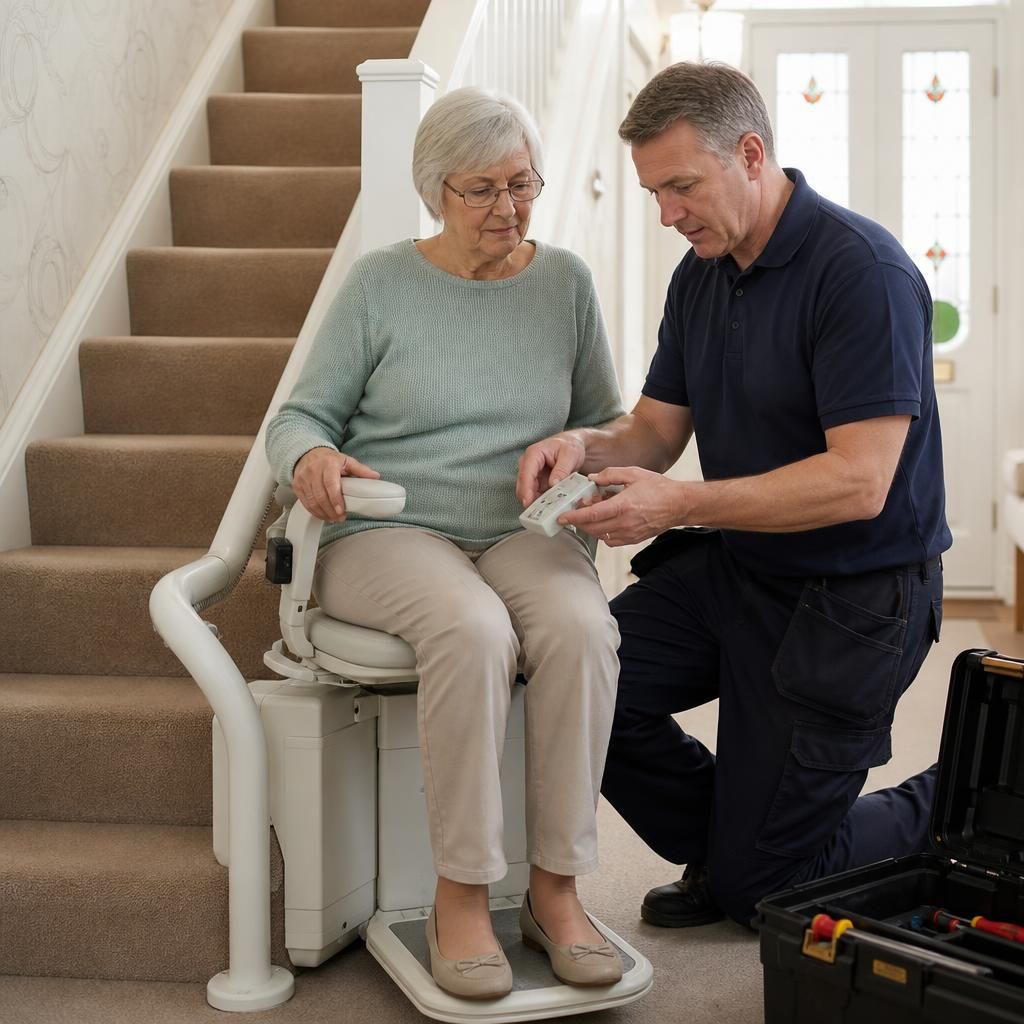
Check what your stairlift warranty covers
Contact Independent Stairlifts to confirm what your stairlift warranty covers, including parts, labour and call-out charges. Keep your warranty documents and installation details available so we can identify the correct terms quickly.