
How long does the installation of a stairlift typically take?
A straight stairlift can often be installed in a few hours, while a bespoke curved stairlift usually takes longer because its rail is made to follow your staircase. The exact installation time depends on the lift type, staircase layout and any preparation needed in your home.
A straight stairlift can often be installed in a few hours, while a bespoke curved stairlift usually takes longer because its rail is manufactured to follow the exact shape of the staircase. The full appointment may also include a final safety check, demonstration and time to answer your questions. The precise duration depends on the stairlift model, staircase layout, access to the property and whether any preparation is required.
Straight stairlift installation
Straight stairlifts are generally the quickest to install because they use a standard rail designed for a staircase with no bends, landings or intermediate flights. Once the lift and rail have been delivered, the installer usually:
- Protects the relevant flooring, walls and furniture.
- Positions and secures the rail to the stair treads rather than normally fixing it to the wall.
- Fits the carriage, seat, controls and charging points.
- Connects and checks the batteries and safety systems.
- Runs the stairlift repeatedly to confirm smooth and safe operation.
- Explains how to use, charge and care for the lift.
In many homes, this work can be completed within a few hours. A straightforward installation may therefore be finished during one part of the day, although the installer will confirm a more useful appointment window after assessing your staircase.
Curved stairlift installation
A curved stairlift normally takes longer because the rail is made to measure. It may need to follow one or more bends, a change of direction, a split-level landing or several flights of stairs. The rail must be accurately aligned so that the lift travels safely while leaving suitable clearance for people using the staircase.
For a new curved stairlift, installation is usually arranged after the staircase has been measured and the rail has been manufactured. The fitting itself may take most of a day or longer, depending on the complexity of the design. If the system includes more than one carriage, a parking arrangement or access to several floors, the installer will explain how these features affect the appointment.
What can affect the installation time?
- The staircase design: Bends, narrow sections, unusual steps, intermediate landings and limited headroom can make fitting more involved.
- The lift specification: Powered swivel seats, powered footrests, folding rails, remote controls and other options may require additional fitting and testing.
- The condition of the stairs: Loose, damaged or uneven treads may need attention before the rail can be installed securely.
- Electrical arrangements: Most stairlifts charge through dedicated charging points on the rail, but the installer will check that the electrical supply and socket arrangements are suitable.
- Access to the property: Restricted parking, difficult access, a shared entrance or the need to carry equipment through several rooms can add time to the appointment.
- Removal of an existing lift: If an old stairlift must be dismantled and removed first, this will need to be included in the schedule.
- Outdoor installations: Weather exposure, external steps and the need for suitable weather-resistant equipment can require additional preparation and checks.
What happens before installation?
A proper assessment helps prevent avoidable delays. During the assessment, the installer considers the staircase dimensions, available landing space, the position of doors and radiators, the user’s mobility needs and where the stairlift can be parked safely. For a curved lift, the staircase is measured in detail so that the rail can be designed accurately.
You should also mention anything that could affect the work, such as planned building work, restricted access, a particularly narrow hallway or concerns about moving furniture. If the installation requires changes to the staircase or nearby fittings, these should be discussed before the appointment rather than discovered on the day.
What to expect on the day
The installer will normally need clear access to the staircase and enough room to bring equipment into the property. Moving small items from the stairs, landings and nearby hallways beforehand can make the work more efficient. You do not usually need to leave the property, but you should allow time for the demonstration and make sure the intended user is available if possible.
Installation should not normally involve major structural alterations. Stairlift rails are commonly secured to the stair treads, allowing the lift to be fitted without removing the staircase. There may be some drilling noise and brief disruption while the rail and components are secured, but the installer should keep the work area controlled and clean it afterwards.
Testing and handover
Time should be allowed after the physical fitting for commissioning and handover. The installer should check the movement of the carriage, charging, safety sensors, seat belt, swivel mechanism, controls and any other fitted features. You should receive a practical demonstration covering:
- Starting and stopping the stairlift safely.
- Using the armrest or remote controls.
- Operating the swivel seat, folding parts or powered options, where fitted.
- Charging the lift and recognising basic warning signals.
- Using the emergency stop or other safety controls.
- Keeping the stairway clear and reporting a fault.
Do not feel pressured to end the appointment as soon as the lift moves. Ask the installer to repeat any part of the demonstration and make sure the user can operate the controls comfortably. If the lift is being installed for someone who is frail, has limited dexterity or is unfamiliar with new equipment, extra instruction may be helpful.
Could installation take longer than planned?
Occasionally, the installer may identify an issue that needs resolving before the work can be completed, such as a damaged tread, an unsuitable electrical arrangement or an obstruction that was not visible during the initial assessment. A curved rail may also require a design adjustment if the staircase measurements or site conditions differ from the original information. In these situations, safety and correct installation should take priority over completing the work quickly.
If your appointment involves a reconditioned stairlift, the fitting may be relatively quick where the equipment is suitable for the staircase and has already been prepared. However, the installer still needs to complete the same essential safety checks and explain the controls. The age and specification of the equipment should not reduce the standard of installation.
How to prepare for a smooth installation
- Keep the stairs, landings and access route free from clutter.
- Tell us about restricted access, parking limitations or building work in advance.
- Arrange for pets and children to be away from the work area.
- Ensure the intended user is available for the handover where possible.
- Have any questions about daily use, charging or maintenance ready for the demonstration.
The installer should give you a realistic appointment time after assessing the property and stairlift specification. As a general guide, a standard straight lift may be ready for use within a few hours, whereas a curved lift requires more planning and may take most of a day or longer to fit. If your staircase or installation has unusual requirements, the assessment is the most reliable way to establish the expected duration.
Most straight stairlift installations are completed within a few hours, but the appointment also includes safety testing and a handover demonstration. A curved stairlift generally takes longer because its made-to-measure rail must be accurately fitted to the staircase.
To help the installation run smoothly, keep the stairs, landings and access route clear, and tell us in advance about parking restrictions, building work or an existing stairlift that needs removing. After fitting, the installer will check the controls, seat belt, safety sensors, charging points and any powered features, then show the intended user how to operate and charge the lift safely.
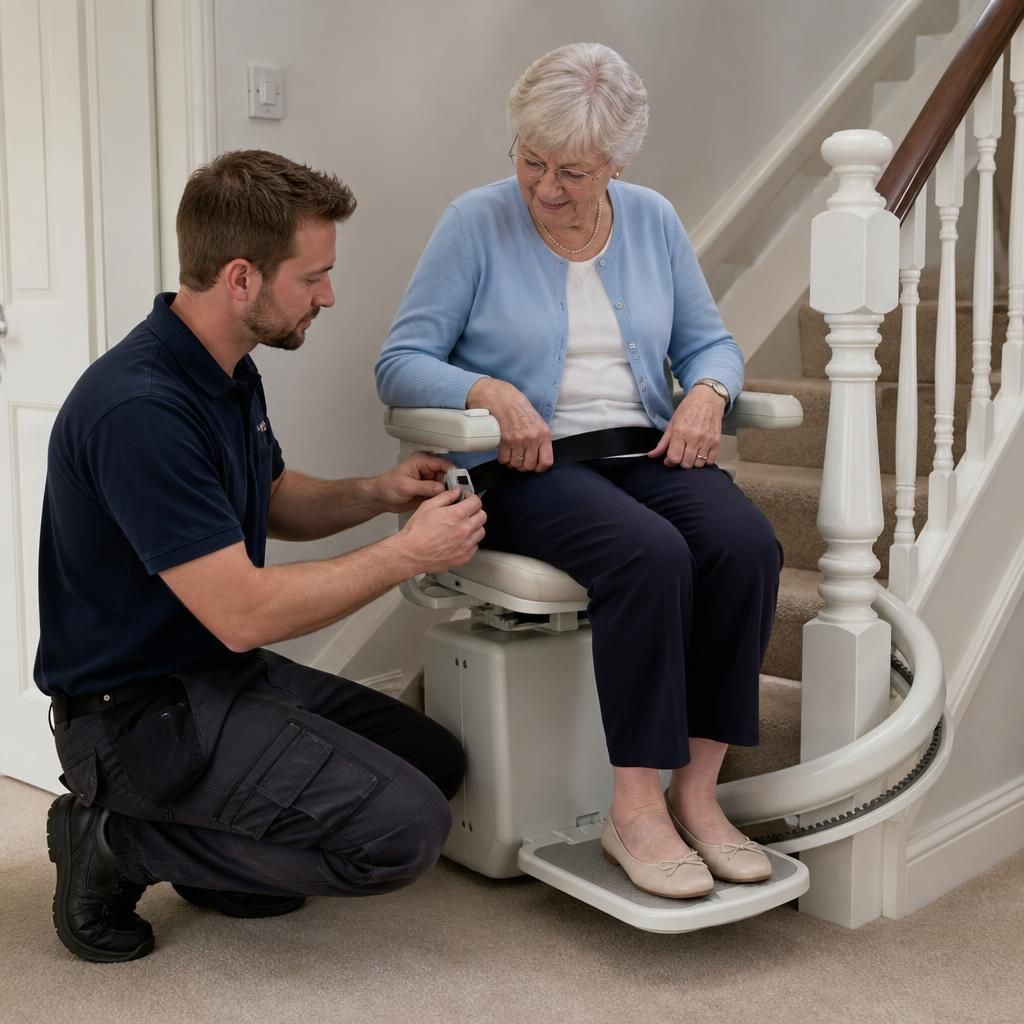
Arrange Your Stairlift Installation Assessment
Arrange your stairlift installation assessment with Independent Stairlifts to confirm the right solution and receive a realistic fitting timescale for your staircase.