
Are there any specific maintenance requirements or ongoing costs associated with owning a stairlift?
A stairlift generally requires routine cleaning, safety checks and periodic servicing to keep it reliable, with particular attention to the track, seat, controls and batteries. Ongoing costs may include scheduled servicing, replacement batteries, repairs outside the warranty and optional cover, although the exact requirements depend on the model and how often it is used.
A stairlift does not usually require complicated maintenance, but it does need regular cleaning, sensible day-to-day checks and periodic servicing. Ongoing costs may include servicing, replacement batteries, repairs outside the warranty period and optional cover. The exact requirements depend on the stairlift model, its age, how frequently it is used and the conditions in which it operates.
Routine checks you can carry out
Before using the stairlift, check that the seat, footrest, armrests and seat belt are secure and that there are no objects on the stairs or track. Pay attention to changes in operation, such as unusual noises, jolting, slower movement or difficulty starting and stopping. These can indicate that the stairlift needs professional attention.
- Keep the track, seat and footrest free from dust, pet hair and other debris.
- Wipe surfaces with a slightly damp cloth and use only cleaning products recommended for the materials. Do not spray liquid into the controls, motor or charging points.
- Keep the charging points and electrical connections dry and unobstructed.
- Make sure the stairlift is left at a designated charging point when it is not in use, where the model’s instructions require this.
- Test the remote controls occasionally and replace their batteries when needed.
- Do not place heavy items on the stairlift or use it to carry loads for which it was not designed.
Do not remove covers, lubricate internal components or attempt electrical repairs yourself. Stairlift mechanisms and safety systems should be inspected by a suitably trained engineer.
Professional servicing
A service normally involves checking the drive system, track, batteries, charging equipment, seat belt, swivel and folding mechanisms, sensors, controls and safety edges. The engineer may also check that the stairlift is securely fixed and that it stops correctly at the top and bottom of the stairs. Any faults, wear or parts requiring attention should be explained before chargeable work is carried out.
The recommended service interval is set by the manufacturer or installation company and should be recorded in the operating instructions or service documentation. Servicing may be particularly important for a heavily used stairlift, a lift that is several years old, or an outdoor model exposed to rain, temperature changes and dirt. Keeping service records can also help demonstrate that the stairlift has been maintained correctly if you need to make a warranty claim.
Batteries and charging
Most stairlifts use rechargeable batteries, so they can continue operating during a temporary power cut. Batteries gradually lose capacity and are consumable parts, meaning they may eventually need replacing even when the rest of the stairlift is working properly. Warning signs include a shortened travel range, repeated low-battery alerts, failure to hold charge or the lift stopping away from a charging point.
Battery life varies according to the model, usage, charging arrangements and the condition of the charging system. Do not fit an unapproved battery or try to bypass a charging fault. A qualified engineer should test the batteries and charger together, as a fault with the charging points can produce symptoms similar to a failed battery.
What ongoing costs should you expect?
- Routine servicing: You may choose a one-off service or an ongoing service plan, depending on the age and condition of the stairlift.
- Replacement batteries: These are among the more common wear-and-tear costs over the life of a stairlift.
- Repairs and replacement parts: Costs can arise if components such as sensors, controls, rollers, belts or drive-system parts wear out or are damaged.
- Call-out charges: A breakdown visit may be chargeable if the stairlift is outside its warranty or service agreement. Confirm what is included before arranging the visit.
- Optional cover: An extended warranty or maintenance plan may cover some labour, call-out and parts costs, subject to its terms and exclusions.
There is no single standard ownership cost. Ask for a clear explanation of the service price, what parts and labour are included, whether emergency call-outs are covered and what happens when the warranty ends. A lower initial price may not represent the lowest long-term cost if the stairlift is older, heavily used or supplied without accessible servicing support.
Warranty and service-plan conditions
Read the warranty documents alongside the manufacturer’s instructions. Warranties commonly distinguish between manufacturing faults and normal wear, accidental damage, misuse and consumable items such as batteries. Some cover may also require the stairlift to be serviced by an approved or suitably qualified provider. Failing to follow the maintenance instructions does not automatically mean every claim will be rejected, but it can affect cover where poor maintenance has contributed to the fault.
Keep the installation paperwork, warranty details, service reports and records of repairs in one place. If ownership changes or the stairlift is moved, these records help the engineer understand its history and establish whether any cover remains.
When to stop using the stairlift
Stop using the stairlift and contact the service team if it moves unpredictably, makes a new grinding or knocking noise, fails to stop accurately, shows a persistent fault message, has damaged wiring or a loose seat belt, or smells of burning. Do not continue using it after a collision or if a safety feature appears not to be working. If someone is left on the stairs or in the chair, follow the emergency instructions supplied with the stairlift and contact the appropriate support service.
Regular cleaning, correct charging and prompt reporting of faults will prevent many avoidable problems. Your installation documentation remains the best source for the model-specific servicing schedule, approved cleaning methods and warranty requirements; contact us if you need help checking these details or arranging a professional service.
Rechargeable batteries are a routine maintenance item on most stairlifts and will eventually need replacing as their capacity reduces. Leaving the lift at its designated charging point when it is not in use helps maintain battery performance and ensures it is ready when needed.
Arrange a professional check if you notice repeated low-battery warnings, reduced travel, the stairlift stopping away from a charging point or batteries failing to hold charge. These symptoms can also indicate a problem with the charger or charging contacts, so an engineer should test the complete charging system rather than replacing parts unnecessarily. Use only approved replacement batteries and keep the charging points clean and dry.
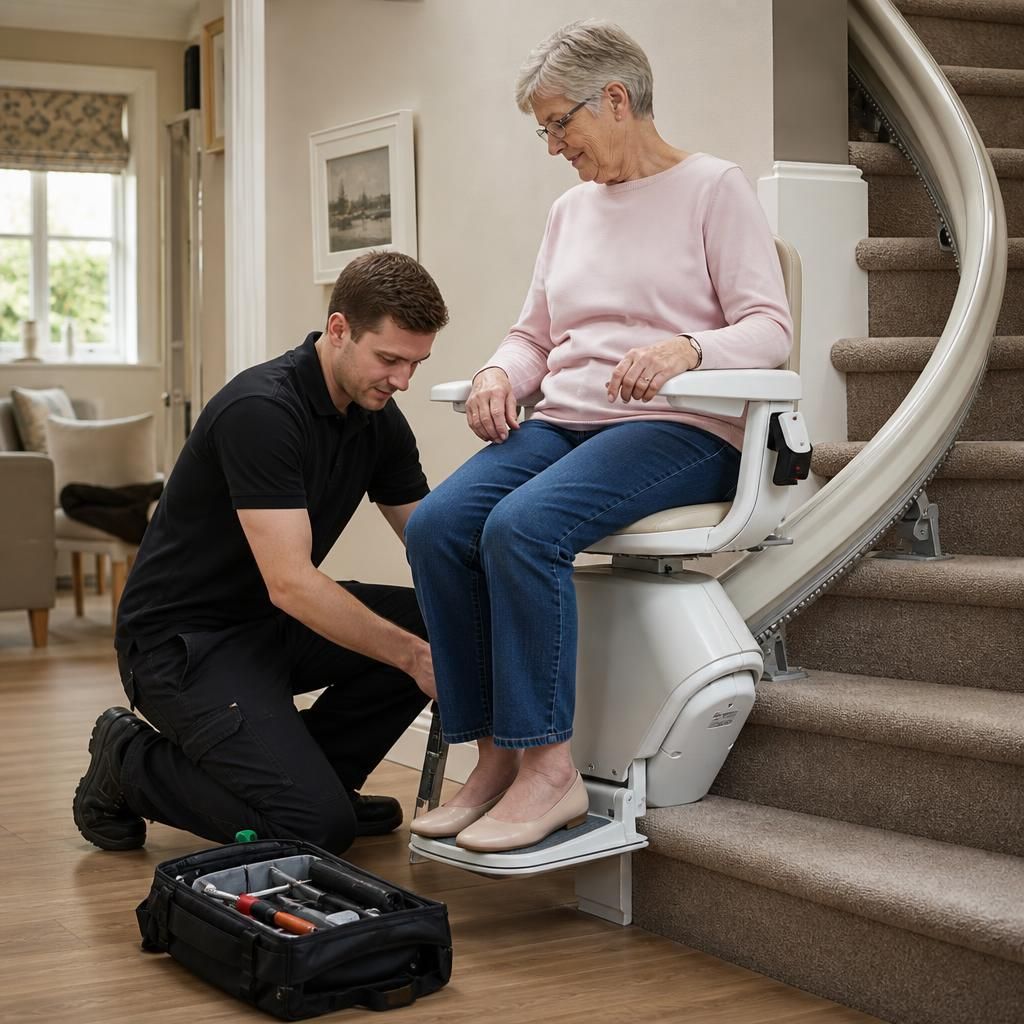
Book a professional stairlift maintenance check
If your stairlift is due a service or showing signs of reduced performance, contact Independent Stairlifts to arrange a professional maintenance check. We can assess the lift, identify wear and advise on any servicing or replacement parts required.