
What steps are involved in preparing my stairlift for sale?
Preparing your stairlift for sale involves checking its condition, gathering its details and service history, cleaning it without dismantling anything, and arranging a professional assessment and safe removal. You should also confirm whether the lift is suitable for reuse and agree how its value, collection and any removal costs will be handled before accepting an offer.
Preparing a stairlift for sale involves confirming its condition and ownership, collecting its technical and service information, cleaning it without interfering with safety-critical parts, and arranging a professional assessment and removal plan. Before accepting an offer, establish whether the lift is suitable for reuse, what is included in the sale, how it will be removed, and whether any collection or dismantling costs will be deducted from the price.
1. Confirm that you have the right to sell it
Check your original paperwork or invoice to confirm that the stairlift belongs to you and is not rented, leased or subject to a finance agreement. If it was supplied as part of a package, contact the original provider if you are unsure about ownership. You should also check whether there are any outstanding service, finance or warranty arrangements that could affect its resale.
If the stairlift was installed for someone else, make sure the relevant owner or their authorised representative agrees to the sale. Keeping a record of this permission can help avoid difficulties later, particularly if the property is being cleared or sold.
2. Record the stairlift’s details
Gather as much information as possible about the lift before requesting a valuation. Useful details include:
- The make and model
- Whether it is a straight, curved or outdoor stairlift
- The approximate installation date and how long it has been in use
- The type and length of the rail
- The number of bends, landings or floors served by a curved rail
- The user’s side of the staircase, where relevant
- The condition of the seat, armrests, footplate, controls and safety belt
- Available manuals, installation records and service history
- Any replacement parts, chargers, remotes or keys that will be included
For a curved stairlift, the rail is normally made for a particular staircase. Its shape and dimensions are important when assessing whether it can be reused elsewhere, so photographs and a site assessment may be needed before a firm valuation can be given.
3. Check and describe its condition honestly
Test the lift only if it is safe to do so and you are familiar with its normal operation. Note whether it starts, stops and charges correctly, and whether there are warning lights, unusual noises, jerky movement or visible damage. Check the condition of the upholstery, armrests, footrest, swivel mechanism, seat belt and remote controls. For an outdoor model, inspect for signs of weather damage or corrosion.
Do not conceal faults or assume that a minor issue will not affect the valuation. A clear description of known problems allows the buyer or professional company to assess the lift accurately and prevents disagreement after the sale. If the lift is currently not working, state this when requesting an assessment rather than repeatedly attempting to operate it.
4. Gather service and maintenance records
Service records help establish how the stairlift has been maintained and whether any parts have been replaced. Include records of inspections, repairs, battery changes and fault call-outs if available. The absence of paperwork does not necessarily prevent a sale, but it may mean that the lift needs a more detailed inspection before its condition and reuse potential can be confirmed.
Do not describe the stairlift as serviced, tested or refurbished unless that work has actually been completed by a suitably qualified person. A professional assessment can identify safety or wear issues that are not obvious during normal use.
5. Clean the lift without dismantling it
Cleaning improves its presentation and makes its condition easier to inspect. Wipe the seat, armrests, controls, footplate and accessible sections of the rail with a suitable lightly damp cloth, following any instructions supplied with the lift. Remove dust and debris from around the footplate and charging points without allowing liquid to enter electrical components.
Do not remove covers, disconnect batteries, alter wiring or dismantle the rail yourself. Stairlifts contain electrical and mechanical parts that require safe isolation and correct handling. Unauthorised dismantling may create a safety risk, damage components or make it harder to establish whether the lift remains suitable for reuse.
6. Take clear photographs and measurements where appropriate
Photographs should show the complete installed lift, the seat, controls, footplate, rail, charging points and any visible damage. For a curved stairlift, include the staircase layout and all bends or landings. Avoid photographing personal documents or private information that may be visible in the property.
Measurements can be useful, particularly for a straight rail, but they should not replace a professional assessment. The buyer or installer may need to confirm the rail length, staircase configuration, access to the property and the practical requirements for safe removal.
7. Decide what is included in the sale
Make a list of every item that will be transferred with the stairlift. This may include the rail, seat, charger, remote controls, keys, batteries and user documentation. If an item is missing or faulty, identify it before agreeing the price. Clarify whether the sale is for the complete installed system or specific components only.
Accessories and spare parts should not be treated as serviceable simply because they are present. A professional assessor can advise whether they are usable and whether they add value. If the stairlift has been adapted, explain what was changed and whether the original parts are available.
8. Arrange a professional assessment
A professional assessment is important because resale value depends on more than the age or original purchase price. The assessment may consider the model, condition, maintenance history, availability of replacement parts, rail configuration, battery condition and whether the lift can be safely removed and installed again.
For a curved stairlift, the assessment should establish whether the existing rail could be adapted for another staircase or whether its value is mainly in its components. A straight stairlift may be more straightforward to reuse, but compatibility still depends on the new staircase and the condition of the equipment. Outdoor lifts require checks for corrosion, weather exposure and the condition of protective components.
9. Agree the valuation and sale terms in writing
Before accepting an offer, confirm whether the quoted amount is subject to a final inspection and what could cause it to change. Ask whether the price includes dismantling, collection, transport and any other associated work. Some arrangements may involve a payment for the equipment, while others may reduce or waive removal costs. The important point is to understand the total financial outcome rather than considering the headline offer alone.
Record the agreed description of the stairlift, included accessories, payment method, collection date, responsibility for removal and what happens if the lift is found to be unsafe or unsuitable for reuse. If you are selling privately, use a written receipt and make clear whether the equipment is sold as seen. Do not make safety or suitability claims that you cannot substantiate.
10. Plan safe removal and access
Removal should be carried out by a competent stairlift technician or an appropriately qualified professional. Do not attempt to lift the carriage off the rail, cut the rail, disconnect wiring or remove batteries unless you have been specifically instructed and are competent to do so. Incorrect removal can injure people, damage the property or make the equipment unsafe to reuse.
Agree how the installer will access the staircase, where the vehicle can park and whether someone needs to be present. Remove ornaments, rugs and other obstacles from the stairs and landing, but leave the stairlift itself untouched. If the property is occupied, arrange an alternative way to move between floors while the work is taking place.
11. Protect personal information and close the arrangement
Remove personal items from the seat, storage areas and any documents attached to the equipment. Reset or hand over remote controls as agreed, and avoid passing on paperwork containing unnecessary personal information. Keep copies of the valuation, receipt, payment confirmation and removal agreement.
Once the stairlift has been removed, check the staircase and surrounding area for any damage or items left behind. If the property is being sold or rented, confirm with the relevant person whether wall fixings, charging points or other associated equipment should remain. A professional removal company can explain what will be taken away and what, if anything, will be made good.
Preparing the stairlift carefully gives the buyer accurate information, supports a fair assessment and reduces the risk of unexpected removal or transport costs. If you are unsure about its condition, ownership, compatibility or safe removal, arrange an assessment before advertising or agreeing a private sale.
A professional assessment is an important part of preparing a stairlift for sale because its resale value depends on its condition, model, maintenance history and suitability for safe reuse. A technician can also check whether the rail, carriage and accessories are complete and identify any issues that may affect the valuation.
Do not dismantle the stairlift or disconnect its electrical components yourself. Agree in advance whether the offer includes removal, collection and transport, and ask what happens if the lift is found to be unsuitable for reuse. Professional removal helps protect the equipment, the staircase and anyone carrying out the work.
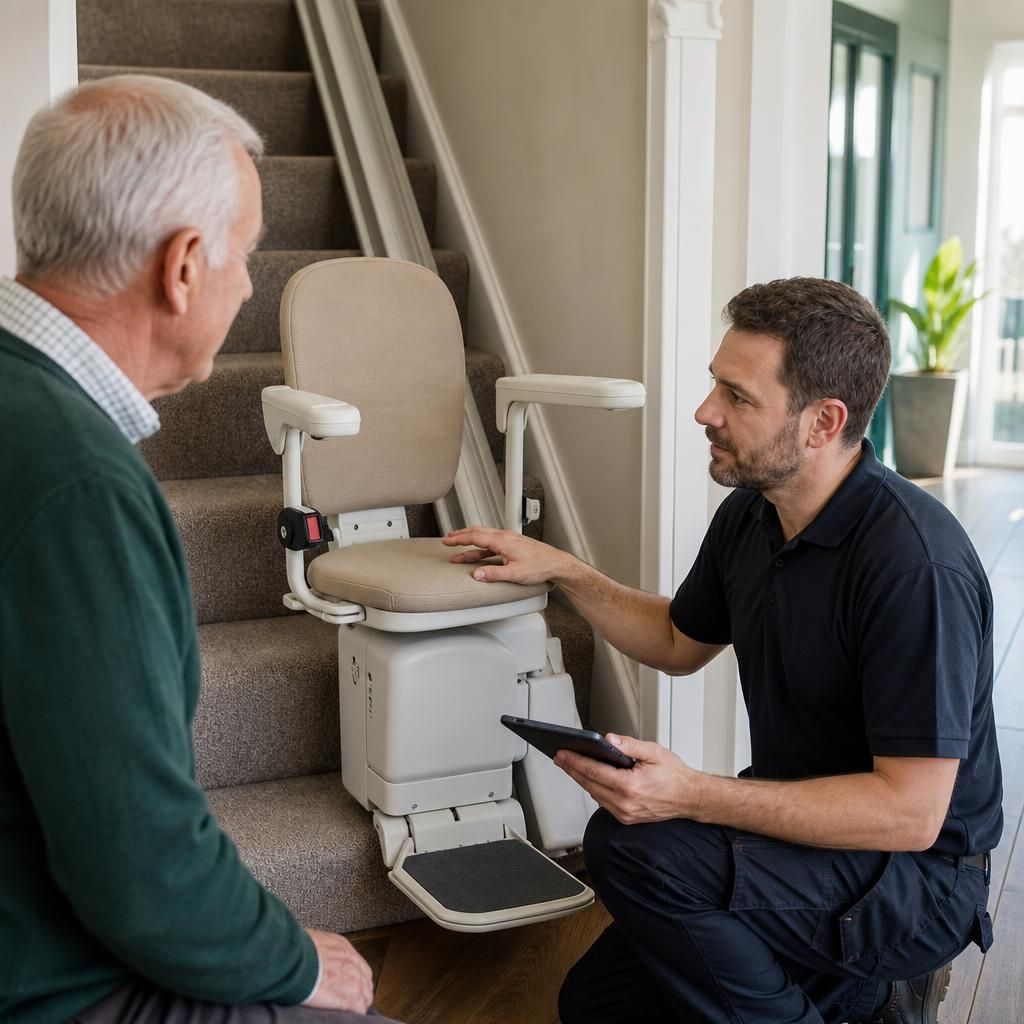
Arrange a professional stairlift assessment
Arrange a professional stairlift assessment with Independent Stairlifts to confirm its condition, reuse potential and likely value before agreeing a sale. We can also explain the removal and collection arrangements.