
What should I consider when pricing my second hand stairlift for sale?
Price a second hand stairlift according to its age, condition, make and model, stair configuration, remaining warranty and the likely cost of professional removal and reinstallation. Compare similar used stairlifts locally, but allow for the fact that a professional valuation may account for safety checks, compatibility and installation requirements more accurately than a private listing.
The right price for a second hand stairlift is based on its current condition, age, make and model, stair configuration, included equipment and the cost of making it safe to remove and install elsewhere. A realistic asking price should reflect what a buyer can use, not simply the original purchase price. In many cases, a professional valuation will also take account of compatibility, testing, transport and installation costs that are easy to overlook in a private sale.
Start with the stairlift’s age and history. Find the model details, date of installation and any service records. A relatively recent stairlift with evidence of regular servicing is generally easier to value than one with an unknown history. Keep the purchase invoice, user manual, maintenance paperwork, warranty documents and details of any previous repairs together, as these may help demonstrate how the stairlift has been maintained.
Age does not determine the price on its own. A well-maintained older stairlift may be more useful than a newer model that has been heavily used, stored incorrectly or allowed to develop faults. However, older models may have less readily available replacement parts, an outdated battery system or limited compatibility with current components. These issues can reduce the amount a buyer or professional company is prepared to offer.
Assess the condition honestly. Consider the condition of the seat, armrests, footrest, control buttons, swivel mechanism, safety belt, covers and charging equipment. Check for unusual noises, jerky movement, warning lights, damaged upholstery, corrosion or signs of water exposure. For an outdoor stairlift, pay particular attention to weathering, seals, the rail, charging points and battery condition.
A stairlift should not be priced as fully operational if it has not been tested recently. Batteries can lose capacity when a stairlift is left unused, even if the unit appears clean. It is also important to distinguish between cosmetic wear and safety-critical faults. A small mark on the upholstery may have limited effect on value, while a faulty safety sensor, damaged belt or unreliable charging system can make the stairlift unsuitable for sale until professionally inspected and repaired.
Identify the exact model and specification. Include the manufacturer, model name, serial number where available, rail type, seat configuration and any options fitted. Features such as a powered swivel seat, powered or hinged rail, adjustable seat height, folding footrest or outdoor protection may affect the valuation. Do not assume that every feature adds the full amount originally paid for it; value depends on whether the feature is needed by the next user and whether it remains in good working order.
Take the stair layout into account. Straight stairlifts usually have a wider potential market because their rails are designed for a straight flight and may be easier to match with another staircase. Curved stairlifts are made for a particular route, so the rail may not be suitable for a different property. Even when two staircases look similar, differences in the number and direction of bends, landings, steps, access points and available clearance can prevent reuse.
For a curved stairlift, provide clear photographs of the full rail, including each bend and landing, together with measurements and details of the staircase layout. A curved rail may still have resale value, but its price should reflect the smaller pool of compatible buyers and the need for a site assessment. A professional buyer may value the lift and rail separately, particularly if the rail cannot be reused elsewhere.
Deduct the costs associated with reuse. The sale price is not the same as the total cost of a new stairlift. A buyer may need to pay for:
- professional removal from the current staircase;
- transport and secure storage;
- inspection, cleaning and safety testing;
- replacement batteries, chargers, belts or other worn components;
- adaptation or replacement of the rail;
- installation at the new property; and
- after-sales support or a warranty, where offered.
If you advertise a stairlift without accounting for these costs, the asking price may appear attractive but still be too high for the buyer’s overall budget. Agree in advance who will pay for removal, transport, repairs and installation. A professional company may offer a lower purchase price than a private buyer expects, but that offer may include removal and may avoid you having to arrange and fund those services separately.
Compare like with like. Look at current listings for the same or a closely comparable model, rather than using the original retail price as your main guide. Compare the stairlift’s age, condition, specification, warranty position and whether the advertised price includes removal or installation. A listing price is not necessarily the final sale price, so use several relevant examples and allow for negotiation.
Local comparisons can be useful, but they do not always provide a reliable valuation. A straight stairlift may attract interest from a wider area, whereas a curved stairlift is more dependent on an exact match. Prices can also differ according to whether the seller is offering a tested, removed and supported unit or simply the equipment as seen in the home.
Consider warranty and support. If any manufacturer or installer warranty remains, check whether it can be transferred to another owner. Do not describe a warranty as transferable unless the terms confirm this. If no warranty remains, state that clearly. A professional inspection, written condition report or limited warranty may support a higher price, but these should only be offered where the relevant work and terms are clear.
Prepare accurate information for a valuation. Provide photographs of the stairlift in position, the full rail, the charging point, the seat and controls, and any visible damage. Include the staircase configuration, the floor or floors served, the direction of travel, the model details, known faults and the date the lift was last used. Mention whether access is available for removal and whether there are narrow hallways, external steps or other restrictions that could affect the work.
Do not remove the stairlift before a price and removal arrangement have been agreed. Unauthorised or unsuitable removal can damage the lift, rail or staircase and may make it harder to establish whether the equipment was working correctly. It can also leave wiring, fixings or charging equipment requiring attention. A qualified stairlift engineer should assess the equipment and complete removal safely.
Set a sensible asking price. If selling privately, leave reasonable room for negotiation but avoid setting a price based only on what the stairlift cost when new. Be clear about what is included and excluded, whether the lift has been tested, and whether the buyer must arrange removal and installation. A lower but realistic price may attract more suitable enquiries than an inflated figure that does not reflect the costs of reuse.
If selling to an established stairlift company, ask for the valuation to be explained. Check whether the offer includes removal, transport, inspection, outstanding warranty obligations and any charges that could be deducted later. A written quotation or clear written breakdown helps you compare a professional offer with the likely net amount from a private sale.
Finally, do not allow the price discussion to override safety. A second hand stairlift must be suitable for the intended staircase and user, correctly installed and checked before use. If the model, condition or rail configuration makes safe reuse uncertain, the equipment may have little resale value even if it originally cost a substantial amount. An accurate assessment of the likely net value—after removal, testing, repairs and installation—is the most reliable basis for deciding how much to ask.
The resale price of a second hand stairlift should reflect its net value after removal, inspection, transport and reinstallation, not just the amount it originally cost. These additional costs can significantly affect what a buyer is prepared to pay.
Before agreeing a price, confirm who will arrange and pay for:
- professional removal from the existing staircase;
- transport and secure storage;
- cleaning, safety checks and any necessary repairs;
- replacement batteries or other worn components; and
- installation and testing at the buyer’s property.
A professional offer may be lower than a private asking price but could include removal and reduce the work you need to arrange yourself. Compare the likely amount you will actually receive with the full cost and responsibility of a private sale, and ask for any deductions or included services to be confirmed in writing.
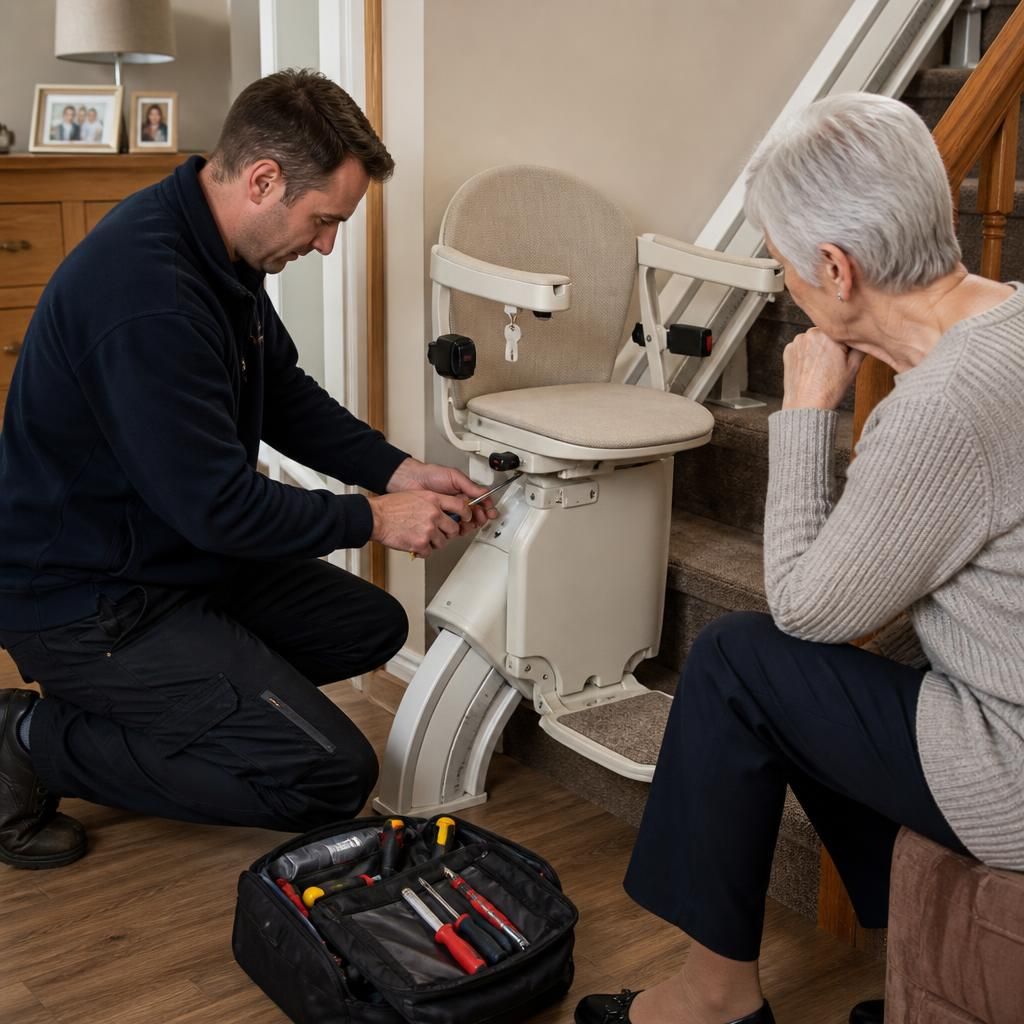
Get a professional valuation for your second hand stairlift
Ask Independent Stairlifts for a professional valuation of your second hand stairlift, taking its condition, model, staircase configuration and removal requirements into account. We can explain the likely resale value and clarify which removal or associated services are included in the offer.