
What is the process for safely removing my stairlift once it has been sold?
Once your stairlift has been sold, a qualified installer should disconnect the power, dismantle the lift and remove the rail, carriage and associated parts using the correct tools and procedures. The installer should protect your stairs and flooring during removal, check for any remaining fixings or electrical connections, and leave the staircase safe and clear.
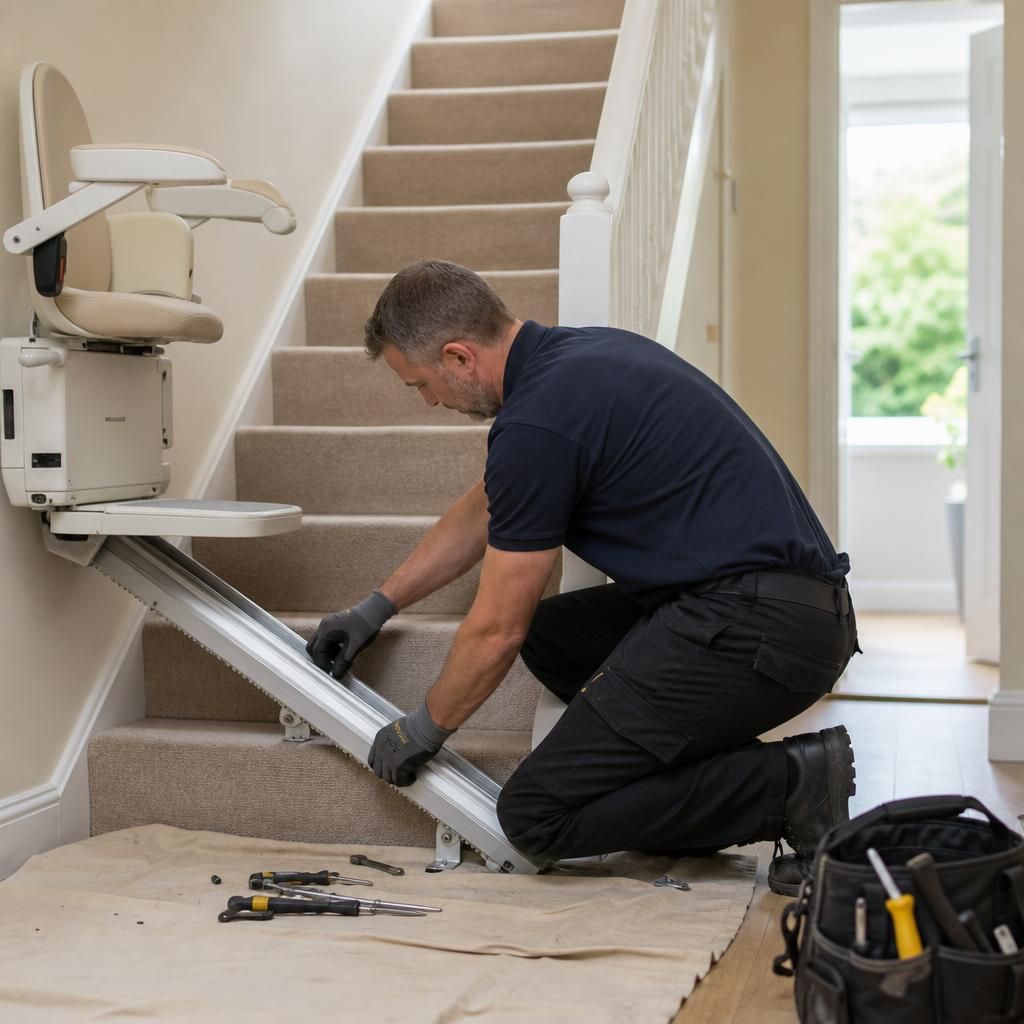
A stairlift should be removed by a qualified stairlift installer, rather than dismantled as a DIY task. Once the sale has been agreed, the installer will assess the lift and staircase, isolate the power supply, remove the stairlift safely and leave the stairs clear and secure. The exact method depends on whether the lift is straight, curved, outdoor or fitted with additional equipment.
Before removal, confirm what is included in the sale. This may include the rail, carriage, seat, batteries, charging equipment, remote controls, hinged or powered track sections and any brackets. Agree in advance who is responsible for arranging and paying for removal, when the work will take place, and whether the buyer or their installer will collect the equipment. A stairlift should not be removed until payment and collection arrangements are clear.
The usual removal process includes:
- Inspection and preparation: The installer checks the stairlift, its fixing points, charging position and electrical connection. They also identify any unusual features, such as a tight bend, a hinged rail or a connection to an external charging point.
- Power isolation: The lift is parked safely and disconnected from its charging supply. If it is connected to a fused spur or another fixed electrical connection, the installer must isolate it correctly. Battery-powered components are handled in accordance with the manufacturer’s instructions.
- Protection of the property: Suitable precautions are taken to protect stairs, flooring, walls and surrounding furniture while the rail and carriage are being removed. Curved rails and heavier components may need to be separated into manageable sections.
- Dismantling: The seat or carriage is removed first where appropriate, followed by the rail, brackets, charging points and other associated parts. The installer uses the correct tools and supports the components to prevent them striking the staircase or walls.
- Removal of fixings and connections: Brackets, screws, cable clips and redundant electrical connections are removed or made safe. Parts that are intended to remain in place are only left with the owner’s agreement.
- Final inspection: The staircase is checked to ensure it is clear, stable and safe to use. The installer should also explain any remaining marks, holes or electrical work that may need attention.
Most stairlifts are installed using fixings attached to the stairs rather than the wall. Removing those fixings can leave small holes or marks in the tread, riser or adjacent surface. These are not usually repaired as part of standard stairlift removal, so establish beforehand whether filling, decorating or other making-good work is included. Do not assume that removing the lift will restore the staircase to its original appearance.
Electrical connections require particular care. A lift that plugs into a standard socket can usually be disconnected by the installer as part of the removal. A hard-wired connection, fused spur or damaged cable may require attention from a suitably qualified electrician. Never cut cables, remove a fused spur or disconnect a charging point yourself unless you are competent and the work is safe and appropriate.
If the stairlift is being sold for reuse, keep all removable items together and label them where useful. Remote controls, chargers, keys, batteries, user instructions and installation information can affect whether the lift can be assessed and installed elsewhere. The buyer’s installer should inspect the equipment before reuse, because a stairlift may need servicing, replacement batteries, compatible parts or a new rail to suit the destination staircase.
Do not attempt to slide the carriage down the stairs, lift a curved rail without assistance or remove brackets while the rail is unsupported. Stairlift components can be heavy and awkward, and an incorrectly isolated lift may move unexpectedly. DIY removal can also damage the equipment, create an electrical risk or affect the buyer’s ability to install it safely.
After removal, retain any paperwork that identifies the model, installation history or servicing carried out. If the stairlift is being collected by another company or installer, record which parts were handed over and keep confirmation of collection. If you are unsure who should arrange removal, contact the company handling the sale before making any changes to the lift. This helps ensure that the equipment is removed safely, the property is left usable and responsibility for transport and future installation is clear.
Safe stairlift removal means isolating the power, supporting and dismantling the lift correctly, and protecting the staircase while the rail, carriage, seat and fixings are taken away. A qualified stairlift installer should carry out the work, particularly where the lift has a curved rail, hinged track or fixed electrical connection.
Before removal, confirm which parts are included in the sale and who is responsible for dismantling and collection. The installer should check the staircase after removal, make any remaining electrical connections safe and explain whether screw holes, marks or other making-good work are excluded. Do not attempt to slide the carriage down the stairs, cut cables or remove unsupported rail sections yourself.
Need help arranging safe stairlift removal?
Need help arranging safe stairlift removal? Contact Independent Stairlifts to discuss the equipment, removal responsibilities and a suitable appointment with a qualified installer.