
What aspects should I consider when deciding between a private sale and selling to an established stairlift company?
When choosing between a private sale and selling to an established stairlift company, compare the likely price with the convenience, safety, removal arrangements and support included. A private sale may offer more control over the asking price, while a professional company can usually provide a clearer process, experienced removal and less responsibility for finding a buyer.
The main choice is between greater control and potentially a higher asking price through a private sale, or a more straightforward, professionally managed process when selling to an established stairlift company. Compare the expected payment with the work involved, the certainty of finding a suitable buyer, safe removal, responsibility for the equipment and the support provided before deciding.
Price and valuation
A private sale allows you to set the asking price and negotiate directly with potential buyers. This may be worthwhile if the stairlift is a sought-after model, is relatively recent, has been well maintained and can be removed and installed in another property without extensive adaptation. However, the advertised price is not necessarily the amount you will receive. You may need to reduce it to attract a buyer, particularly if the stairlift has unusual dimensions, limited remaining manufacturer support or requires specialist removal.
An established stairlift company will normally assess the equipment, its condition and the likelihood that it can be safely reused. The offer may be lower than a private asking price because the company has to account for assessment, removal, transport, storage, refurbishment, installation and any after-sales support. Ask what is included in the valuation and whether removal costs, administrative charges or other deductions apply. A written breakdown makes the comparison more meaningful.
Convenience and timescale
With a private sale, you are responsible for creating the advert, answering questions, checking that enquiries are genuine, arranging viewings and agreeing collection or removal. You may also wait some time for a buyer whose staircase and requirements are compatible with the equipment. A buyer could withdraw after viewing the stairlift or after discovering that it is not suitable for their property.
Selling to an established company usually gives you a defined point of contact and a clearer process. The company may be able to assess the stairlift, arrange its removal and explain when payment will be made. Confirm the expected timescale rather than assuming that an offer means the stairlift will be removed immediately. If the equipment is still being used, make sure it remains available until a confirmed removal appointment has been arranged.
Removal and safety
Safe removal is one of the most important differences between the two options. A stairlift is connected to the staircase and may include electrical connections, charging points, a seat, carriage, track and other components. Removing it without suitable knowledge can cause damage to the property, leave wiring unsafe or make the stairlift unsuitable for future use.
In a private sale, agree in writing who will dismantle and remove the stairlift. Do not assume that the buyer is qualified simply because they intend to reuse it. Establish whether the buyer will repair damage caused during removal and whether they have appropriate insurance. If you are arranging removal yourself, use a competent stairlift professional rather than attempting the work without the necessary experience.
An established company will generally be familiar with assessing whether a stairlift can be removed without avoidable damage and whether its parts are complete. Even so, ask what the removal service covers, including any fixings, charging equipment, remote controls and changes to the staircase or electrical supply. Keep confirmation of the agreed condition of the property after removal.
Suitability, condition and documentation
Before accepting an offer, gather the information a buyer or company will need. This can include:
- the make, model and approximate age of the stairlift;
- whether it is straight, curved or outdoor;
- the direction and layout of the staircase;
- the condition of the seat, carriage, track, batteries, controls and charging equipment;
- any known faults, repairs or replacement parts;
- whether manuals, keys, remote controls and service records are available; and
- whether the stairlift is still installed and operating.
For a curved stairlift, the track is normally made for a particular staircase, so it may have limited value to a private buyer unless the layout is sufficiently similar. A straight stairlift may be easier to match to another staircase, but its length, fixing points, seat configuration and electrical arrangements still need to be checked. An outdoor stairlift also needs assessment for weather exposure and the condition of its protective components.
Be accurate about the condition. Disclose warning lights, battery problems, unusual noises, intermittent operation or missing parts before agreeing a sale. This reduces the risk of a dispute and allows the buyer to make a realistic assessment. Photographs of the full installation, labels and any visible damage can help, but they do not replace an on-site assessment where suitability is uncertain.
Responsibility after a private sale
A private sale can involve more responsibility than simply exchanging payment for the equipment. The buyer may expect the description to be accurate and the stairlift to be in the condition stated. If you know of a fault or missing component, explain it clearly. Do not describe the stairlift as serviced, safe or suitable for reuse unless that has been properly established.
Agree the terms of the sale before removal. The written agreement should identify the stairlift, state its known condition, confirm the price, explain who is responsible for removal and record whether any refund or return arrangement applies. Retain messages, photographs and payment records. Avoid handing over the equipment or allowing removal until the agreed payment arrangements are clear.
A private buyer may also need a qualified professional to install and check the stairlift in its new location. Make clear that successful use in your home does not prove that it is suitable for another staircase or user. The buyer is responsible for arranging an appropriate assessment and installation unless you have explicitly agreed otherwise.
Support and assurance from an established company
A professional company may be able to manage valuation, removal, assessment and onward preparation as part of one process. It may also be better placed to identify whether the stairlift can be refurbished or whether particular parts are no longer available. Ask what happens after the company takes possession and whether the offer depends on a final inspection.
Check the company’s terms carefully. Important points include whether the valuation is conditional, when ownership transfers, how payment is made, what happens if the equipment is found to differ from its description and whether any guarantee applies to the removal work. A reputable process should explain these points before you commit rather than leaving them unclear.
Privacy and access to your home
Private advertising can require photographs, contact with unknown people and visits to your home. Remove personal information from manuals, service records or photographs, and do not share unnecessary details about your address or when the property is unoccupied. Arrange visits with another person present where possible.
When using a company, verify who will attend and what identification or appointment confirmation will be provided. You should still avoid sharing information that is not needed for the assessment and should keep paperwork containing personal details secure.
How to make the decision
A private sale may suit you if you are prepared to market the stairlift, answer enquiries, check the buyer’s arrangements, negotiate the price and organise safe removal. It may be less suitable where you need a dependable timescale, do not want strangers visiting your home or are uncertain about the equipment’s condition and resale potential.
Selling to an established stairlift company may be preferable when you value a single managed process, experienced removal and clearer responsibility for assessment and onward handling. The offer should still be compared carefully with the realistic net amount from a private sale, not just its headline asking price.
Before choosing, obtain a written private-sale estimate and a written company valuation where possible. Compare the amount you would actually keep, the removal arrangements, the payment timing, the handling of faults, the paperwork required and the support available if something goes wrong. This gives you a practical basis for deciding whether maximum control or reduced responsibility is more important in your circumstances.
The most useful comparison is between the realistic amount you would keep from each option, rather than the private sale asking price and the company offer alone. A private sale may appear more valuable, but you may still need to pay for advertising, professional removal, transport or repairs, and spend time finding a suitable buyer.
Before deciding, ask an established stairlift company for a written valuation that explains what is included. Compare it with the likely net amount from a private sale, including removal arrangements, payment timing, responsibility for faults and any support after collection. This makes it easier to decide whether a potentially higher price is worth the additional work and responsibility.
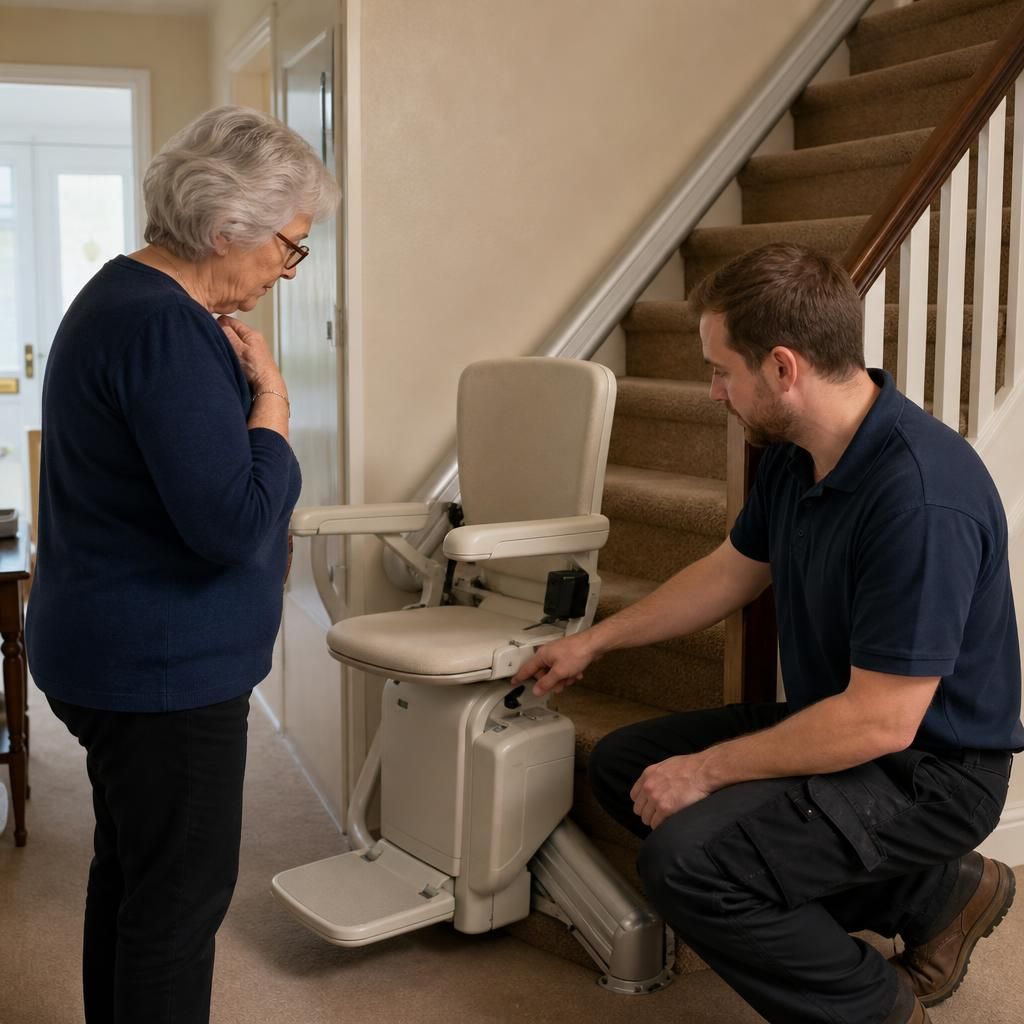
Request a stairlift valuation and removal assessment
Request a stairlift valuation and removal assessment to understand what your used stairlift may be worth and how it can be removed safely. We can explain what is included in the process and answer any questions before you decide how to sell.