
What are the benefits of selling my second hand stairlift to a professional company rather than privately?
Selling your second hand stairlift to a professional company can provide a clearer valuation, safer removal and a simpler process than arranging a private sale. The company can assess whether the lift is suitable for reuse, manage its removal and explain any paperwork or safety considerations.
Selling your second hand stairlift to a professional stairlift company is usually safer and simpler than arranging a private sale. A professional company can assess whether the lift is suitable for reuse, provide a valuation based on its make, model, age and condition, arrange appropriate removal, and explain what happens to the equipment afterwards. This avoids many of the practical and safety issues involved in finding a buyer and organising the sale yourself.
A professional assessment helps establish a realistic value
The value of a used stairlift depends on more than its original purchase price. The company will normally consider the stairlift’s model, age, condition, battery performance, available rail length, configuration, service history and whether replacement parts remain available. Curved stairlifts are also assessed according to the design and suitability of the existing rail, while outdoor stairlifts may require consideration of weather exposure and corrosion.
This provides a more informed valuation than simply comparing online adverts. It also helps avoid pricing the lift too high and receiving no suitable enquiries, or pricing it too low because important features have been overlooked. A professional valuation should be explained clearly, including whether the offer accounts for removal or any other associated work.
Removal can be completed with the correct equipment and knowledge
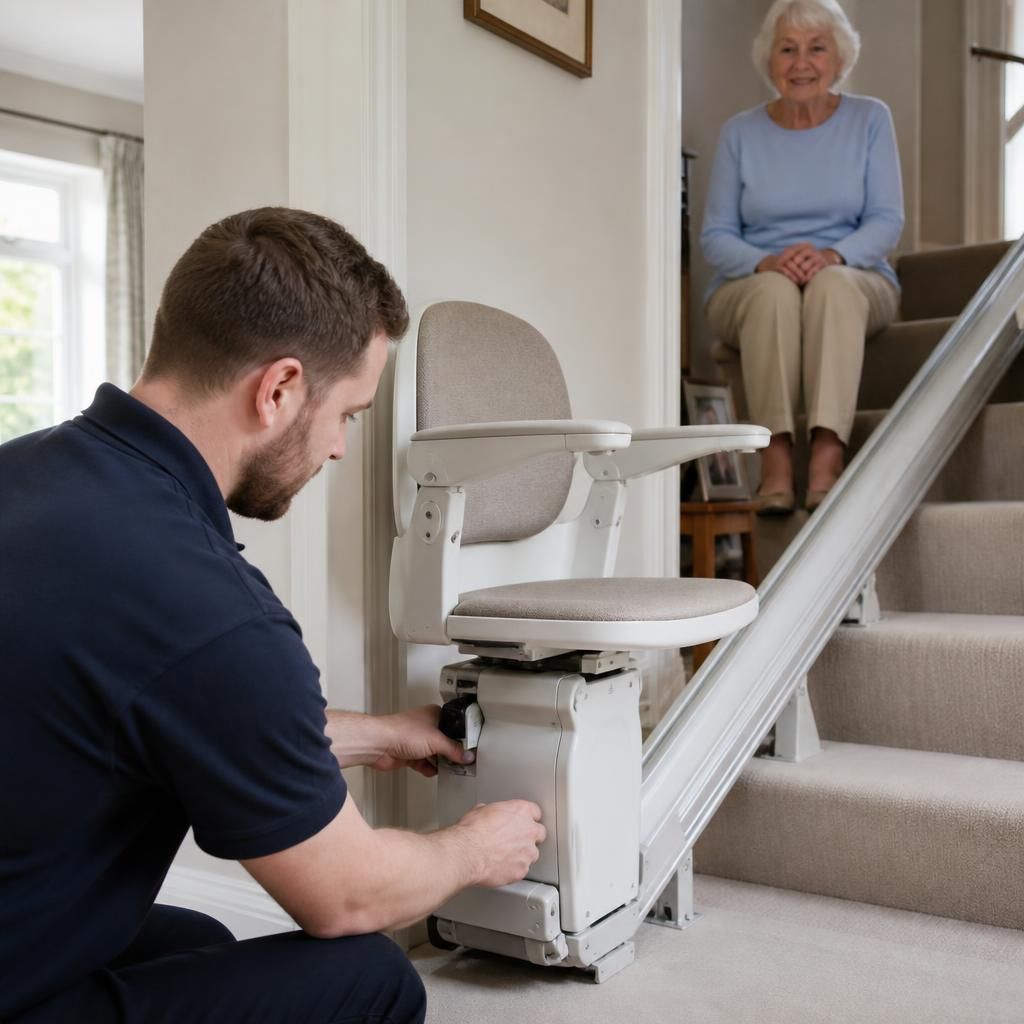
Stairlift removal is not always a matter of undoing a few visible fixings. The installer needs to disconnect the power safely, remove the carriage and rail in the correct order, and take account of the stair design, charging point and any equipment attached to the wall or steps. A curved rail can be particularly difficult to handle because it is made for a specific staircase and may be heavy or awkward to manoeuvre.
Using a professional installer reduces the risk of damage to the stairlift, staircase, walls, flooring and electrical connections. It also avoids placing the responsibility for dismantling a mobility aid on the buyer or a relative who may not have the right tools or experience. If the lift is no longer required because of a change in circumstances, arranging removal through a company can make the process more manageable for everyone involved.
Safety responsibilities are easier to manage
A stairlift is a powered mobility device, so its condition and installation affect the safety of the person who may use it. A professional company can identify worn components, damaged wiring, poor battery condition or other faults before deciding whether the equipment is suitable for resale. It may also determine that some parts should be replaced, recycled or disposed of rather than passed to another user.
When a stairlift is sold privately, the buyer may have difficulty judging its condition and may expect to install it without specialist support. A professional assessment helps set appropriate expectations about what can be reused and what work may be needed. It does not make every older stairlift suitable for another installation, particularly where parts are obsolete or the equipment has been poorly maintained.
The process involves less administration
A private sale usually involves writing an advert, taking photographs, responding to enquiries, answering technical questions, checking whether potential buyers are genuine, agreeing a price and arranging collection. You may also need to explain the lift’s history, provide manuals or service records and deal with questions about whether it will fit another staircase.
A professional company can handle much of this process directly. You can provide the information available, such as the model, installation date and service history, and the company can advise on the next steps. This is particularly useful where the stairlift is still installed and you need its removal coordinated with a house move, a change in care arrangements or other work at the property.
There is less uncertainty about collection and payment
Private buyers may change their mind after viewing the stairlift, discover that it is unsuitable for their staircase or expect the seller to arrange transport. A professional company is more likely to understand the practical requirements from the outset, including whether the lift can be removed in its current condition and how it will be transported.
Before agreeing to a sale, confirm the amount offered, when payment will be made, what is included in the arrangement and whether removal is included or charged separately. Ask for any conditions to be set out clearly. This prevents misunderstandings about items such as the rail, charging equipment, remote controls, batteries, manuals and any remaining warranty documentation.
Professional reuse and recycling can be considered
Not every used stairlift can be resold. A professional company can decide whether it is suitable for reuse, whether it can be used for parts, or whether it should be recycled. This assessment may take account of the lift’s age, condition, serviceability and the availability of compatible components.
That means you do not have to find a private buyer for equipment that may not be safe or economical to reinstall. It also avoids advertising a stairlift as suitable when its condition or compatibility has not been properly checked.
A private sale may sometimes produce a different result
Selling privately can appear attractive if you believe you have found a buyer who needs the same model or rail configuration. However, the buyer will still need to establish whether the stairlift fits their staircase and how it will be safely removed, transported, installed and maintained. These arrangements must be agreed between both parties, and the seller may remain involved if problems arise.
A private sale may therefore require more time and coordination, even where the agreed price is higher. Compare the likely private-sale price with the work involved, removal costs, transport, delays and the responsibility for answering technical questions. A professional offer may be more convenient because it combines valuation and removal, although you should check the full terms before accepting it.
What to ask before accepting an offer
- How was the valuation calculated?
- Is removal included, and are there any additional charges?
- Will the company inspect the stairlift before confirming the offer?
- What happens if the lift is found to be unsuitable for reuse?
- Who is responsible for disconnecting the power supply and removing the equipment?
- When and how will payment be made?
- Will you receive confirmation of the agreed arrangement?
Have the stairlift’s make, model, installation details and service records available if you have them. Photographs of the carriage, rail, batteries and any visible damage can also help with an initial assessment, although a final valuation may depend on an inspection. Do not attempt to dismantle the lift yourself simply to prepare it for sale; leave electrical disconnection and removal to someone suitably qualified.
Overall, selling to a professional company can offer a clearer valuation, safer removal, fewer administrative tasks and a more appropriate route for equipment that may be reused, stripped for parts or recycled. The key is to obtain a transparent offer, understand what is included and ensure that the stairlift is assessed rather than presented as suitable for another person without expert checks.
Selling your second hand stairlift to a professional company can make removal safer because the lift is assessed and dismantled by people familiar with powered mobility equipment. They can disconnect the electrical supply, remove the carriage and rail in the correct order, and check whether the equipment is suitable for reuse, parts or recycling.
This also reduces the risk of damage to the staircase, walls, flooring or stairlift. Before agreeing to the sale, confirm whether removal is included in the offer, whether any charges apply and what will happen if the lift is unsuitable after inspection. A clear agreement should also specify which items are included, such as the rail, batteries, charger, remote controls and manuals.
Request a Professional Stairlift Valuation
Request a professional valuation for your second hand stairlift and receive clear advice on its condition, removal and potential reuse. Contact Independent Stairlifts to discuss the details of your stairlift and what is included in the offer.