
How do I handle the logistics of stairlift removal and sale?
Handle stairlift removal and sale by agreeing the buyer, valuation and removal arrangements before the lift is disconnected. Use a suitably qualified stairlift engineer to safely isolate and remove it, confirm what happens to the fittings and any damage to the stairs, and arrange payment and collection in writing.
Handle stairlift removal and sale by agreeing the buyer, price, removal method and responsibilities before the lift is disconnected. A suitably qualified stairlift engineer should isolate and remove the equipment, while the sale paperwork should clearly state its condition, what is included, who pays for removal and how collection will take place.
Start by deciding how you will sell the stairlift. Your options usually include selling it privately, asking an established stairlift company to assess it, or arranging a trade-in or removal service where available. The best option depends on the lift’s age, model, condition, installation, whether replacement parts remain available and whether a buyer can be found for that particular configuration.
A private buyer may offer more flexibility over the price, but you will normally need to handle enquiries, provide accurate information, agree payment and organise removal. A professional buyer may make the process more straightforward, particularly where removal, assessment and transport are included, although the offer may reflect the costs of testing, refurbishment, storage and resale.
Obtain an accurate assessment before agreeing a sale. Record the manufacturer, model, serial number, rail type, approximate installation date and whether the stairlift is straight, curved or outdoor. Note the condition of the seat, controls, batteries, charging points, safety sensors, swivel mechanism and rail. Keep any user manuals, service records, installation documents, keys, remote controls and spare parts together.
Be clear about faults or limitations. For example, tell the buyer if the batteries do not hold charge, the lift has been unused for a long period, a remote control is missing, the upholstery is damaged or the rail was made for a particularly narrow or unusual staircase. A stairlift that works correctly on your stairs may not be suitable for another property, especially if it is a curved model, so the buyer may need a survey before confirming its value.
Agree the sale terms in writing. The agreement should cover:
- the make, model and items being sold;
- the agreed price and when payment is due;
- whether the price includes removal, transport, testing or storage;
- who is responsible for arranging and paying for an engineer;
- the date or timescale for removal;
- what happens if the stairlift is found to be unsuitable or materially different from its description;
- responsibility for damage to the staircase, walls, flooring or decoration during removal; and
- whether any fittings, brackets, charging equipment or remotes remain with the lift.
Do not assume that a buyer will remove the lift safely simply because they intend to reuse it. Confirm the removal arrangements before accepting payment or committing to a collection date. If a company is involved, ask whether its valuation is conditional on inspection and whether removal is included in the written offer.
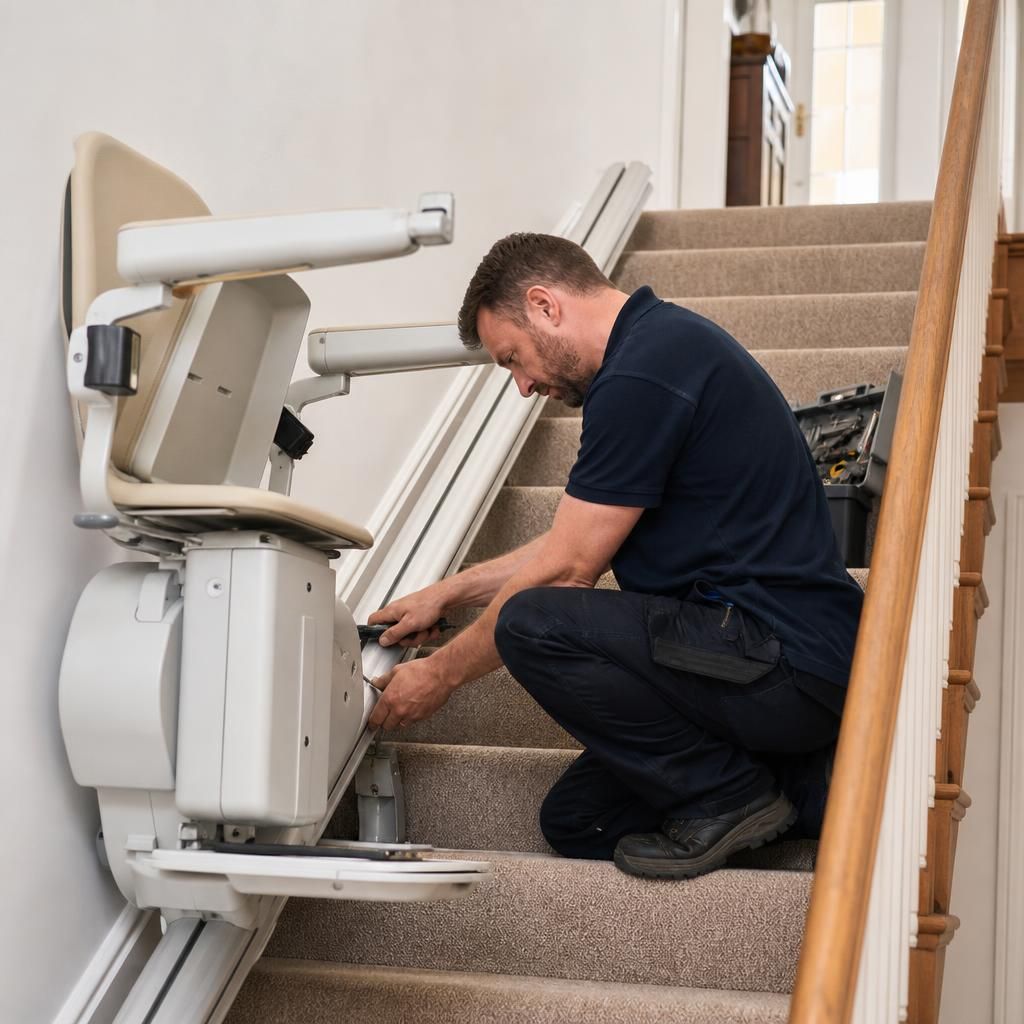
Use a qualified stairlift engineer for disconnection and removal. The engineer should make the lift safe, isolate its power supply, remove the carriage and rail in the correct sequence, and deal appropriately with batteries and other components. Removing a stairlift without the right knowledge can create electrical, manual-handling and trip hazards, and may damage the stair treads, banister, walls or flooring.
Ask the engineer what will happen to the fixing points. Most stairlifts are secured to the stairs rather than the wall, but removal can still leave holes, marks or impressions in the tread or nosing. Curved rails and some specialised installations may require more careful dismantling. Agree in advance whether the engineer will make good any damage or whether this will be your responsibility after removal.
Plan the removal visit around the person using the stairlift. If the lift is still needed, arrange alternative access before it is taken out. Keep the staircase clear of furniture, rugs, ornaments and other obstacles, and make sure the engineer has safe access to the property. If the lift is being removed from an upper floor, confirm how the rail and carriage will be carried out without causing damage. Do not allow anyone to use the stairlift while it is partly disconnected or being dismantled.
Before the engineer arrives, take photographs of the stairlift, rail, controls, batteries and any existing marks around the installation. These provide a useful record of the condition and can help resolve disagreements about damage or missing components. Remove personal items from the seat, pouch and storage areas, but do not dismantle any part of the lift yourself unless the engineer has specifically instructed you to do so.
Deal with payment and collection securely. For a private sale, use a payment method that gives you a clear record and do not release the stairlift until the agreed payment has been received, unless you have deliberately agreed different terms in writing. Avoid relying on screenshots or unverified payment notifications. If a company is buying the lift, check the payment terms, any deductions following inspection and whether payment is made before or after removal.
Keep copies of the sale agreement, valuation, correspondence, photographs, payment record and engineer’s removal details. If the stairlift is being sold as used equipment, describe it honestly and avoid suggesting that it is suitable for every staircase or user. The purchaser may need a new survey, installation and safety checks before it can be used elsewhere.
Prepare the staircase after removal. Once the lift has gone, inspect the treads, flooring, wall, skirting and handrail for remaining fixings, exposed edges or damage. Have holes repaired and surfaces made safe before normal use, particularly if the person who previously used the stairlift is likely to use the stairs again. Any electrical connection or charging point that is no longer required should be dealt with by an appropriately competent person.
If the lift cannot be sold, ask about responsible disposal rather than leaving batteries or electrical components with general household waste. A removal company may be able to arrange recycling or disposal, but confirm this before the collection. Keep any parts that have been excluded from the sale separate and label them clearly.
A practical order of events is:
- Assess the stairlift and gather its documents, controls and service information.
- Obtain a valuation or agree a private-sale price based on its model, condition and likely suitability.
- Choose the buyer and confirm the removal, payment and collection terms in writing.
- Book a qualified stairlift engineer and agree responsibility for any damage or making good.
- Prepare the staircase and property for safe access on the removal day.
- Photograph the lift and surrounding area before disconnection.
- Have the lift isolated and removed professionally.
- Confirm payment, collect the paperwork and inspect the staircase after removal.
If you are unsure whether your stairlift has resale value, or whether removal is included in an offer, ask for those points to be explained before proceeding. A proper assessment should distinguish between the value of the equipment itself and the separate costs of engineering, transport, refurbishment, storage and installation.
Arrange stairlift removal with the buyer before the sale is finalised. A qualified stairlift engineer should isolate the power, dismantle the lift safely and remove the rail without creating electrical, trip or manual-handling hazards. Confirm in writing who pays for removal, transport and any repairs to fixing points or surrounding decoration.
Photograph the stairlift and staircase before work begins, keep the payment and collection arrangements clear, and inspect the stairs after removal. If the lift is being sold for reuse, the purchaser should arrange a suitability survey, testing and professional installation at its next location.
Ask Us About Stairlift Removal and Resale
Contact Independent Stairlifts to discuss stairlift removal, valuation and resale options, including how the lift can be safely assessed and removed. We can explain the process and clarify what is included in any offer.