
How do I ensure I receive a fair valuation for my used stairlift during the sale?
To receive a fair valuation for your used stairlift, provide accurate details about its make, model, age, condition, stair configuration, servicing history and whether it is still installed and working. Compare valuations from established stairlift specialists, making sure you understand whether removal, transport and any required parts or refurbishment are included in the offer.
A fair valuation for a used stairlift depends on its make, model, age, condition, suitability for another staircase and the costs involved in removing, transporting, checking and reinstalling it. To assess the offer properly, provide complete and accurate information, obtain more than one professional opinion where practical, and confirm exactly what is included in the quoted price.
Give the valuer accurate details
A valuation can be unreliable if important information is missing. Prepare the following details before requesting an assessment:
- The manufacturer, model and approximate installation date.
- Whether the stairlift is straight, curved, outdoor or installed on a staircase with unusual access requirements.
- Whether it is currently installed and working.
- The condition of the seat, armrests, footrest, controls, carriage, rail, batteries and charging equipment.
- Any known faults, warning lights, unusual noises or previous repairs.
- Its servicing history and whether maintenance records, manuals or original paperwork are available.
- Whether the stairlift was bought outright, supplied under a rental arrangement or is subject to finance or another ownership agreement.
Clear photographs can help with an initial indication, but they do not always reveal battery deterioration, carriage wear, installation issues or faults under load. A physical inspection or technical assessment may therefore be needed before a firm offer is made.
Understand how the type of stairlift affects its value
Straight stairlifts are often easier to assess because the rail is designed for a relatively standard staircase and may be suitable for reuse elsewhere. However, compatibility still depends on the rail length, charging arrangement, seat design and the layout of the prospective staircase.
Curved stairlifts are made to follow an individual staircase. Their value is affected by the possibility of adapting or reusing the rail, the complexity of the original installation and the demand for a compatible system. A curved stairlift may not have the same resale value as a straight model, even if it has been well maintained, because the rail may not suit another property without alteration.
Outdoor stairlifts require particular attention to weather exposure, corrosion, covers, seals, controls and battery condition. A lift that has been kept sheltered and maintained correctly may be more attractive to a buyer than one showing signs of water ingress or rust.
Assess condition rather than appearance alone
A clean seat and tidy rail are useful, but the technical condition has greater importance. The valuer may consider whether the stairlift starts, stops and charges correctly; travels smoothly; responds to the controls; operates its safety sensors; and has a carriage, seat swivel and footrest that function as intended.
Batteries are a common valuation consideration. A stairlift can appear to work while its batteries are nearing the end of their serviceable life. If replacement batteries, a new handset, safety components or other parts are likely to be required, the cost may be reflected in the offer. Be open about any fault rather than presenting the stairlift as fully working when it is not.
Keep evidence of servicing and repairs where possible. Records do not guarantee a particular price, but they help demonstrate how the stairlift has been maintained and make it easier for a professional buyer to assess its history.
Separate the equipment value from the removal costs
A quoted amount may be a gross valuation or the amount you will actually receive after costs. Ask whether the offer includes:
- Safe removal from the staircase.
- Disconnection of the electrical supply where required.
- Transport from your property.
- Inspection, cleaning and refurbishment.
- Replacement parts or batteries.
- Storage and preparation for resale.
- Any alterations needed to make the stairlift suitable for another staircase.
Removal is a skilled task. It can involve working on stairs, handling heavy components and disconnecting equipment safely. A professional company may deduct the cost of this work from the valuation, while a private buyer may expect the seller to arrange and pay for it separately. Neither approach is necessarily unfair, but the final amount and the responsibilities of each party must be clear.
Compare like-for-like valuations
When comparing offers, do not look only at the headline figure. Check whether each valuation is based on the same information and whether the same services are included. One company may offer more for the equipment but charge separately for removal; another may provide a lower net payment but include removal and transport.
Ask each valuer to confirm:
- Whether the valuation is provisional or final.
- How long the offer remains valid.
- What could cause the amount to change after inspection.
- When payment will be made.
- Who is responsible for removal and any damage caused during the process.
- What happens if the stairlift is found to be unsafe, incomplete or unsuitable for reuse.
Written information is preferable because it allows you to compare the net value and conditions without relying on different verbal descriptions.
Consider demand and reusability
Used stairlift values are influenced by whether the equipment can be reused safely and economically. A recent model with available parts, a complete set of components and a configuration that is commonly required may attract more interest. Older or discontinued models can be harder to resell if technical support and replacement parts are limited.
For a curved stairlift, provide measurements or details of the original staircase if available. The rail may be reusable only in a particular layout, or it may require professional modification. For any stairlift, missing keys, chargers, handsets, brackets, covers or safety components can reduce its practical value.
Check ownership before agreeing a sale
Only sell equipment that you own and have the right to transfer. If the stairlift was rented, supplied as part of a care arrangement or bought using finance, check the agreement before advertising or accepting an offer. The supplier or finance provider may retain ownership or require the equipment to be returned.
Also check whether removal affects another person in the property. If the stairlift is still needed by a resident, arrange an alternative mobility solution before it is taken out. Do not remove or disable a working stairlift without considering the safety and access needs of everyone who uses it.
Be cautious about unusually high or low offers
An unusually high initial valuation may be revised after inspection if the condition, model or removal requirements differ from the information supplied. Conversely, a very low offer may not reflect the equipment’s full potential if it includes substantial deductions that have not been explained. Ask for the reasons behind the figure and whether the offer is for the stairlift alone or for a complete removal-and-purchase service.
Do not pay a buyer to take the stairlift unless the arrangement is fully explained and you have independently considered the alternatives. If you choose a private sale, remember that the advertised price is not necessarily the amount you will receive after removal, transport, advertising and any work needed to prepare the stairlift for reuse.
Use a professional assessment when the installation is complex
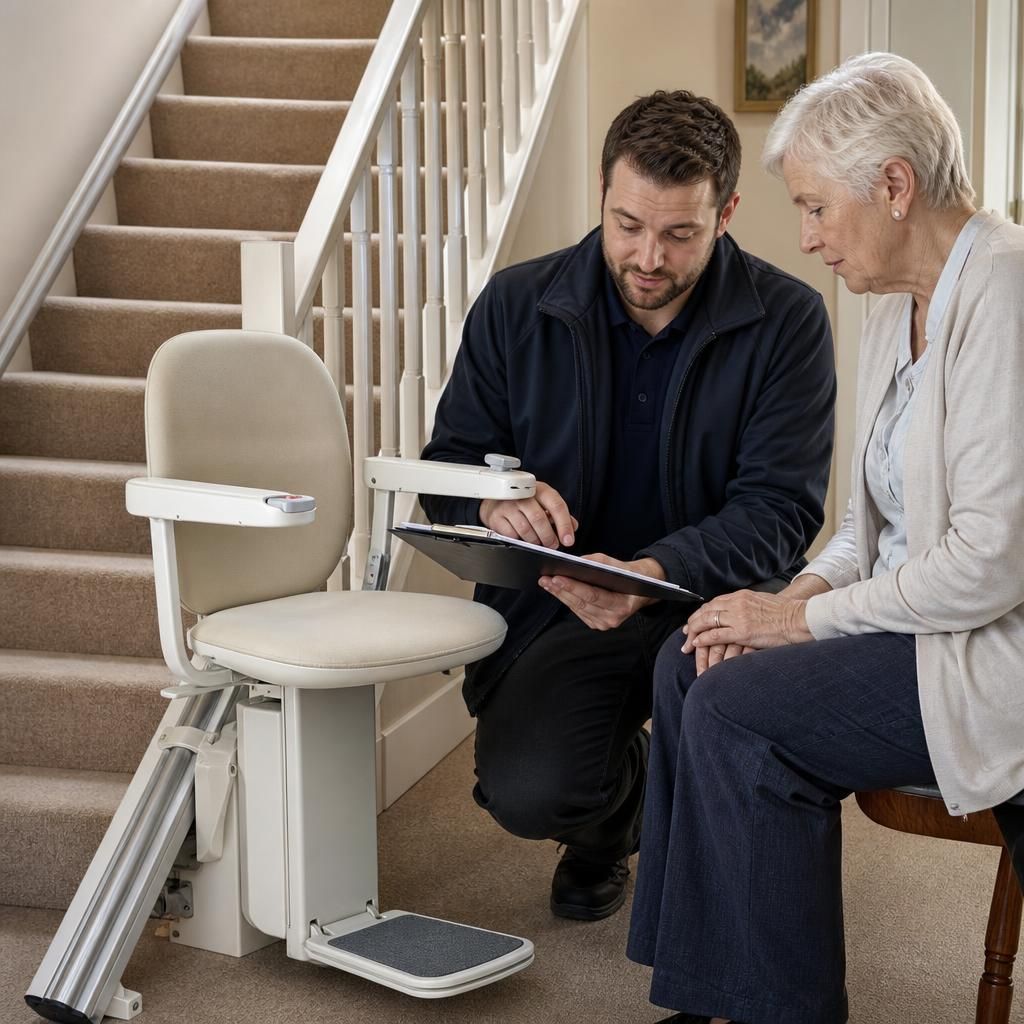
A specialist assessment is particularly useful for curved, outdoor or unusual installations, stairlifts with known faults, and equipment that has been in service for a long period. The assessor can consider safe removal, compatibility, condition and likely refurbishment requirements together, rather than valuing the equipment from photographs alone.
To receive the fairest practical valuation, provide honest details, retain service documentation, make the stairlift available for inspection, compare the net offers and confirm all removal conditions in writing. This gives you a realistic understanding of what the stairlift is worth and reduces the risk of unexpected deductions or disputes during the sale.
A fair used stairlift valuation is the amount you are likely to receive after any agreed removal, transport, inspection and refurbishment costs—not simply the highest headline offer.
Ask each prospective buyer to confirm in writing whether the quoted amount is provisional and what could change it after inspection. Check whether the offer includes safe removal, collection, replacement parts and payment arrangements. Comparing the final amount and conditions on a like-for-like basis helps you identify genuine value and avoid unexpected deductions.
Request a Professional Stairlift Valuation
Request a professional stairlift valuation to assess your model, condition and removal requirements accurately. We can explain the likely value and confirm what is included in the offer before you proceed with the sale.