
What maintenance is required for a stairlift to ensure it remains in optimal working condition?
Regular stairlift maintenance includes keeping the rail and seat clean, checking the lift charges correctly, and reporting unusual noises, movement or fault warnings promptly. A qualified technician should also carry out periodic servicing and safety checks in line with the manufacturer’s guidance to keep the stairlift reliable and safe to use.
Stairlift maintenance consists of regular user checks, correct charging, cleaning of the main components and periodic servicing by a qualified technician. These measures help preserve safe movement, reliable braking, battery performance and the condition of the rail, seat and controls. Always follow the maintenance instructions supplied with your particular stairlift, as servicing requirements vary between models and installations.
Checks you can carry out routinely
- Keep the rail clear: Remove dust, pet hair and small objects from the rail and the area around the carriage. Do not place items on the rail or allow curtains, clothing, toys or other obstructions to catch on the moving parts.
- Keep the seat and controls clean: Wipe the seat, armrests, footrest, joystick and remote controls with a slightly damp cloth. Avoid excess water, abrasive products and household sprays around switches, sensors or electrical components.
- Check the footrest and seat: Make sure the footrest is secure and that the seat, arms, swivel mechanism and safety belt operate as intended. Do not use the lift if a component feels loose, does not lock correctly or has become damaged.
- Check charging: Park the stairlift on its designated charging point when it is not in use, unless your model has different instructions. If the lift repeatedly reports a low battery, fails to charge or only travels a short distance, arrange an assessment rather than repeatedly resetting it.
- Keep the staircase and landings clear: The lift needs unobstructed space at the top and bottom of the stairs. This is particularly important where the rail folds, swivels or extends onto a landing.
- Observe its operation: Listen for new grinding, squeaking, clicking or knocking sounds and watch for hesitation, unusual vibration, uneven movement or changes in stopping position.
Professional servicing and safety checks
A qualified stairlift technician should service the equipment in line with the manufacturer’s guidance and the conditions of your service agreement. A service normally includes inspecting the rail, carriage, drive system, seat mechanism, safety belt, sensors, controls, charging system and batteries. The technician may also check the lift’s travel, stopping, braking and obstruction-detection functions, then clean, lubricate or adjust components where the model permits this.
During a service, the technician can identify wear that may not be obvious during normal use. This can include deterioration in the batteries, loose fixings, worn rollers, damaged wiring, contaminated sensors or changes in the rail and carriage alignment. Batteries and other consumable or wear-related parts may eventually need replacement, even when the stairlift appears to be operating normally.
Battery care
Most domestic stairlifts use rechargeable batteries and are designed to charge automatically when parked in the correct position. Regularly leaving the lift away from its charging point can reduce battery performance and may leave it unable to complete a journey. If the stairlift has more than one parking position, use the position recommended for charging by the installer or manufacturer.
Do not attempt to replace batteries or alter the charging equipment unless you have been specifically instructed and are competent to do so. Battery faults can affect the lift’s reliability and may involve electrical connections that require professional attention.
Outdoor and less frequently used stairlifts
Outdoor stairlifts need additional attention because rain, damp, cold temperatures, sunlight, dirt and plant debris can affect exposed components. Use the supplied cover where appropriate, keep drainage areas clear and report corrosion, water ingress or deterioration of seals. A stairlift installed in a second home or used only occasionally should still be checked regularly, including its battery charge and remote controls, rather than being left unattended for long periods.
Reconditioned stairlifts also require the same careful servicing and safety checks as any other stairlift. The relevant maintenance schedule is determined by the equipment and its installation, not simply by whether the lift was new or previously used.
When to stop using the stairlift
Stop using the lift and contact Independent Stairlifts or the appointed service provider if it stops unexpectedly, moves unevenly, fails to stop in the correct position, gives repeated fault warnings or makes an unfamiliar noise. You should also report a damaged seat belt, loose seat or armrest, failed swivel lock, faulty control, exposed wiring, burning smell or visible fluid leakage. Keep the staircase clear while the issue is being investigated and do not ask another person to push, pull or manually move the stairlift unless the manufacturer’s emergency procedure specifically allows it.
Do not bypass safety sensors, remove covers, modify the rail or lubricate components without checking the instructions. Incorrect adjustments or unsuitable lubricant can damage the drive system, interfere with safety devices or affect warranty and service arrangements.
Keeping maintenance records
Keep the installation details, model information, user manual, service reports and records of repairs together. Note recurring fault messages and the circumstances in which they occur, such as after charging or at a particular point on the stairs. This information helps a technician diagnose intermittent problems more efficiently and supports decisions about repair or replacement parts.
Regular cleaning and correct charging will deal with much of the routine care, but they do not replace professional servicing. If you are unsure how often your stairlift should be serviced, check the manufacturer’s guidance or contact us so the maintenance plan can be matched to the model, installation and level of use.
Professional stairlift servicing is a scheduled inspection by a qualified technician to confirm that the lift’s drive system, rail, seat, controls, safety belt, sensors, brakes, batteries and charging points are operating correctly. It complements routine cleaning and charging, but does not replace them.
During the service, the technician can identify wear or faults that may not be obvious during normal use, then clean, adjust or replace suitable components where necessary. Follow the servicing interval recommended for your model and keep the service records with the user manual. Arrange an earlier inspection if the stairlift develops unusual noises, uneven movement, repeated fault warnings, charging problems or changes in its stopping position.
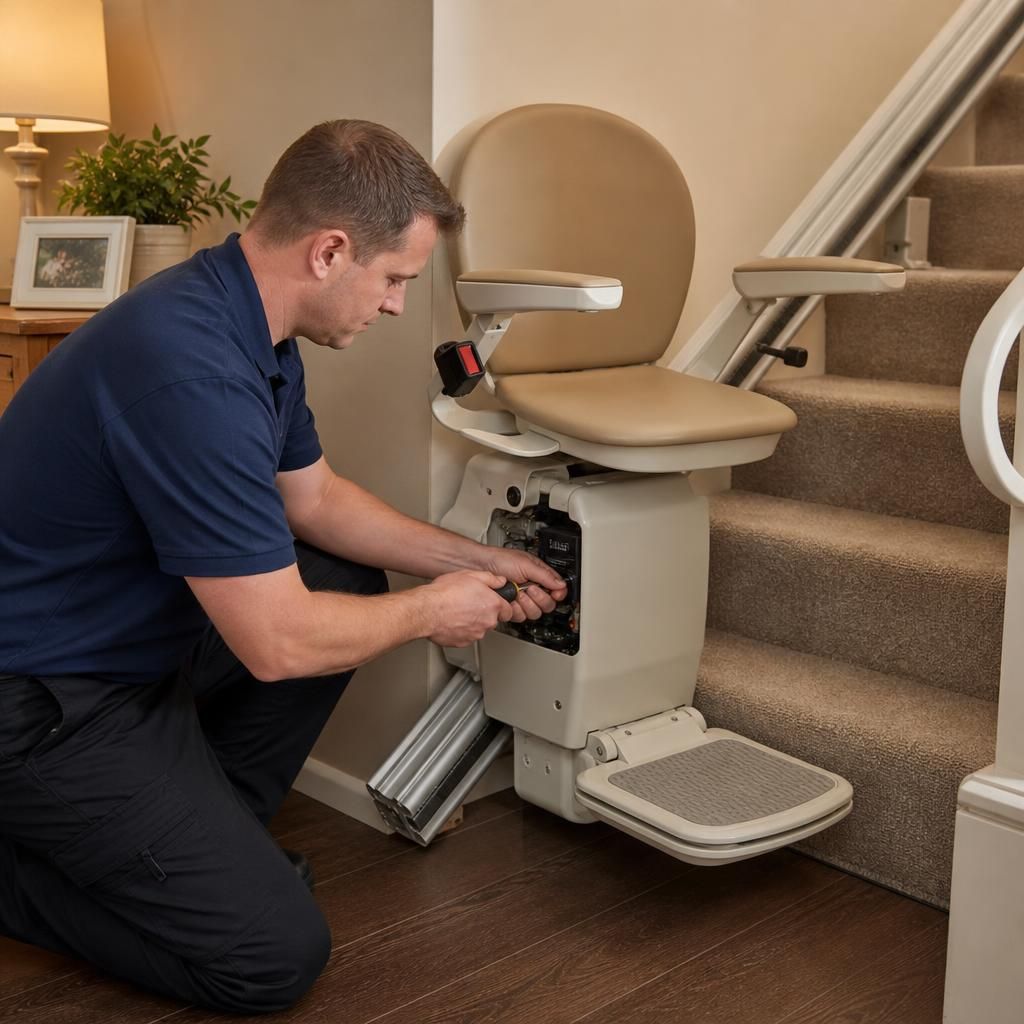
Arrange your stairlift service or maintenance check
If your stairlift is due a service or has developed unusual noises, movement or charging problems, contact Independent Stairlifts to arrange a maintenance check with a qualified technician.