
What are the maintenance requirements for a stairlift in a terraced home?
A stairlift in a terraced home needs regular servicing, battery checks, cleaning and safety inspections, with particular attention to compact or narrow installations where dust and obstructions can affect operation. Follow the manufacturer’s guidance, keep the rail and footrest clear, report unusual noises or movement promptly, and arrange repairs or servicing through a qualified stairlift engineer.
A stairlift in a terraced home requires routine cleaning, battery and charging checks, safety inspections and servicing in line with the manufacturer’s instructions. Narrow staircases, compact rails and heavier household traffic can make it especially important to keep the stairway clear and report changes in performance promptly. Regular maintenance helps the lift operate reliably and allows worn components to be identified before they affect safety or availability.
Follow the recommended servicing schedule
Arrange servicing through a qualified stairlift engineer at the intervals specified for your model. A service normally includes checks of the drive system, rail, electrical connections, batteries, charging points, seat, armrests, footrest, safety sensors, swivel mechanism and seat belt. The engineer may also test the lift under operating conditions and check that it stops correctly at the top and bottom of the staircase.
Keep the installation and service records available. They can help an engineer identify recurring faults, confirm which parts have been replaced and advise whether a component needs adjustment or renewal. If the stairlift is covered by a warranty or service agreement, use the approved process for reporting faults and arranging work.
Keep the rail and staircase clear
- Remove shoes, toys, bags, rugs and other items from the steps and landings.
- Keep curtains, trailing cables and clothing away from the rail, carriage and footrest.
- Check that doors, cupboards and furniture do not obstruct the lift at any point in its travel.
- Take extra care in a narrow terraced-house staircase, where a small obstruction can interfere with the footrest, sensors or passenger position.
Clean the rail and accessible surfaces with a soft, slightly damp cloth, following the manufacturer’s instructions. Do not pour water onto the lift, use abrasive products or apply oil and grease unless an engineer specifically advises it. Incorrect lubrication can attract dust or affect components that are designed to operate without user-applied lubricant.
Check charging and battery behaviour
Most domestic stairlifts use rechargeable batteries and charge when parked in a designated charging position. Follow the instructions for leaving the lift at its charging point when it is not in use. If the lift is regularly left away from a charging position, the batteries may discharge and the lift may eventually stop operating.
Contact an engineer if the lift does not charge, the charger indicator changes unexpectedly, the batteries lose charge quickly, or the lift only works intermittently. Batteries are wearing components and should be replaced with suitable parts by a competent person. Do not attempt to open the battery compartment or alter electrical connections yourself.
Inspect everyday safety features
Before use, make sure the seat is secure, the seat belt fastens correctly and the swivel seat locks in the intended position. Check that the armrests and footrest move as expected and that the controls respond consistently. On models with sensors, keep the edges of the footrest and carriage free from dust and obstructions.
Stop using the stairlift and seek advice if you notice unusual noise, juddering, delayed movement, uneven travel, repeated stopping, a burning smell, loose fittings or a fault warning. Do not bypass a safety sensor or continue using the lift if the seat belt, swivel lock or stop control is not working correctly.
Consider the conditions in a terraced home
Terraced homes commonly have compact staircases, limited landing space and stairlift components positioned close to walls, banisters or doorways. During a service, the engineer can check that the rail fixings remain secure and that clearances have not changed after decorating, moving furniture or installing flooring. If the stairlift has a folding seat or footrest, check that it can be folded safely without catching on nearby fixtures.
Where the stairlift serves more than one floor or has a curved rail, keep every landing and parking position clear. A lift should be parked only where the manufacturer permits, particularly if a doorway, radiator or narrow passage is nearby. Changes to the staircase or surrounding area should be discussed with a qualified engineer before work begins.
What the user can and cannot maintain
Routine user maintenance is limited to keeping the lift clean and unobstructed, using the controls correctly, checking visible safety features and ensuring that it is parked for charging. Electrical repairs, battery replacement, rail adjustment, sensor testing and removal of covers should be left to a qualified stairlift engineer. Stairlift components can remain electrically live even when the lift is not moving.
If the lift stops during a journey, follow the model’s instructions and use the emergency lowering or call-out procedure only as directed. Avoid forcing the lift, repeatedly resetting it or trying to move it manually. When reporting a fault, describe any warning lights, noises, where the lift stopped and whether the problem occurs in one direction or at a particular point on the staircase. This information can help the engineer prepare for the visit.
For a terraced-home stairlift, consistent cleaning, correct charging, clear access and professional servicing are the main maintenance requirements. If you are unsure whether a noise, battery issue or change in movement is normal, contact Independent Stairlifts for advice rather than waiting for the problem to worsen.
Regular professional servicing is a key maintenance requirement for a stairlift in a terraced home. A qualified stairlift engineer can inspect the rail fixings, drive system, batteries, charging points, safety sensors, seat belt, swivel mechanism and stopping points, including areas that are difficult for a user to assess safely.
This is particularly important on a narrow staircase, where small changes after decorating, flooring or moving furniture can affect clearances around the rail, footrest or landing. Arrange servicing according to the manufacturer’s guidance and report unusual noises, juddering, repeated stopping or battery problems promptly. Do not adjust the rail, bypass sensors or remove covers yourself; these tasks should be completed by a competent engineer.
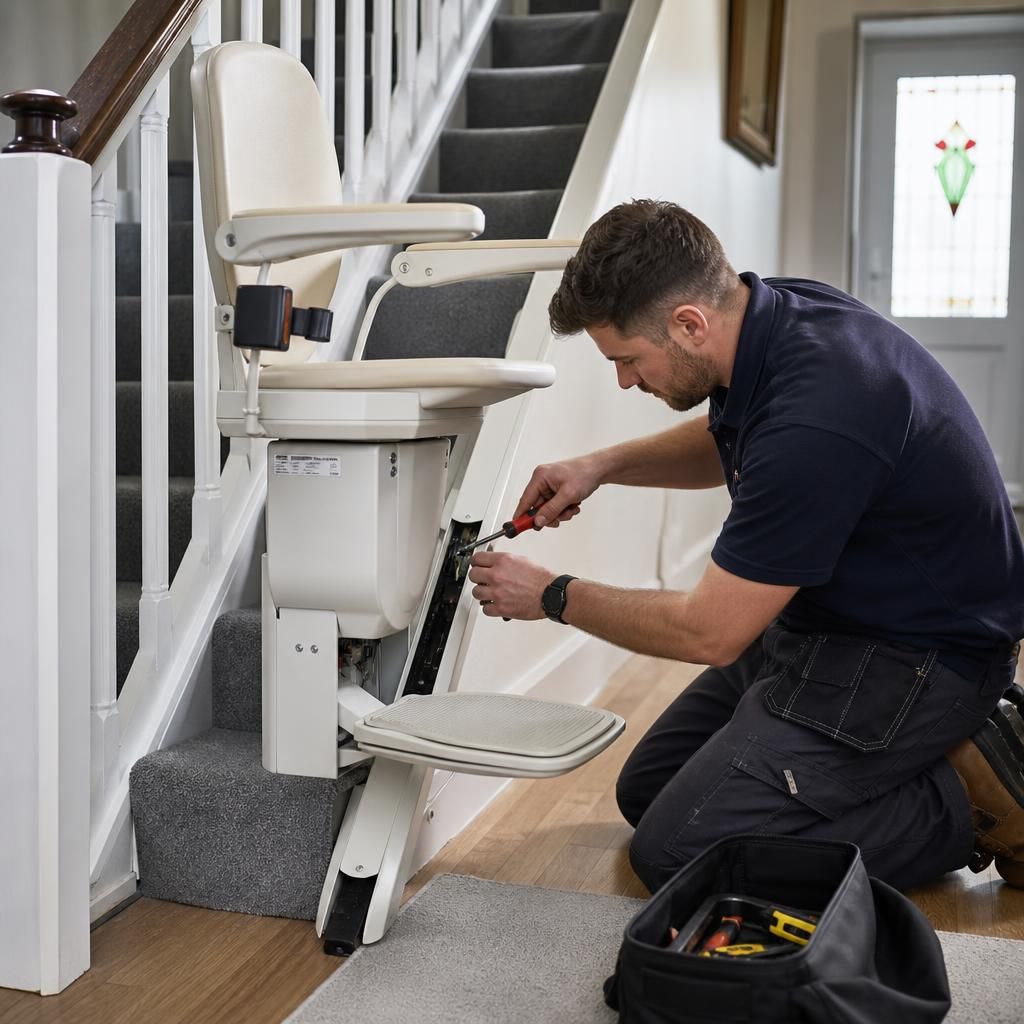
Arrange Professional Stairlift Maintenance
Arrange professional stairlift servicing with Independent Stairlifts to check the rail, batteries, charging points and safety features in your terraced home. Contact us if you notice unusual noise, juddering, repeated stopping or reduced battery performance.