
What maintenance is required to keep a stair lift in optimal condition?
Regular stair lift maintenance includes keeping the rail, seat and controls clean, checking for visible damage, ensuring the batteries are charging correctly and arranging servicing by a qualified engineer in line with the manufacturer’s guidance. Do not attempt electrical or mechanical repairs yourself; contact Independent Stairlifts if the lift becomes noisy, jerky, slow or fails to charge.
Keeping a stair lift in optimal condition involves regular cleaning and visual checks, correct charging, prompt reporting of faults and professional servicing in line with the manufacturer’s guidance. Routine maintenance helps preserve safe, smooth operation and can identify wear before it develops into a more serious problem. Electrical, battery and mechanical repairs should always be carried out by a qualified stairlift engineer.
Everyday care and user checks
- Keep the rail, seat, armrests, footrest and controls free from dust, dirt and household items.
- Wipe surfaces with a soft, slightly damp cloth and a mild cleaning product suitable for the material. Do not pour or spray liquid directly onto the lift, controls or charging points.
- Check that the seat swivels, folds and locks correctly, if these features are fitted.
- Make sure the footrest is clear and that nothing can catch in the rail, carriage or moving parts.
- Check that the safety belt fastens securely and that the armrests, seat and footrest do not feel loose or damaged.
- Keep the remote controls in their normal locations and replace their batteries when they no longer operate reliably.
Before each journey, check that the stairway is clear and that doors, pets and other obstacles will not interfere with the lift. Use the stairlift only as intended and do not exceed its specified weight capacity.
Rail and moving parts
The rail should be kept clean and free from obstructions. Dust or debris can affect the carriage’s movement, particularly on a regularly used lift. Do not apply oil, grease or other lubricant unless the manufacturer or service engineer specifically instructs you to do so. Using the wrong product can attract dirt or affect sensors, rollers and other components.
Pay attention to changes in performance. A lift that becomes noisy, jerky, slower than usual or less smooth may need professional attention. Do not remove covers or try to adjust the rail, drive system, limit switches or safety sensors yourself.
Batteries and charging
Most stairlifts use rechargeable batteries and are designed to charge when parked at an appropriate charging point. Park the lift as instructed after use, rather than leaving it partway up the stairs unless your installation guidance says otherwise. Check that the charging point is accessible, clean and not visibly damaged, and look for any charging indicator or fault light provided on your model.
If the lift regularly fails to charge, stops sooner than expected, gives a low-battery warning or needs repeated resets, contact us or your servicing provider. Batteries are consumable components and eventually need replacement. Do not attempt to test, disconnect or replace them unless you have been instructed and equipped to do so by a qualified engineer.
Professional servicing
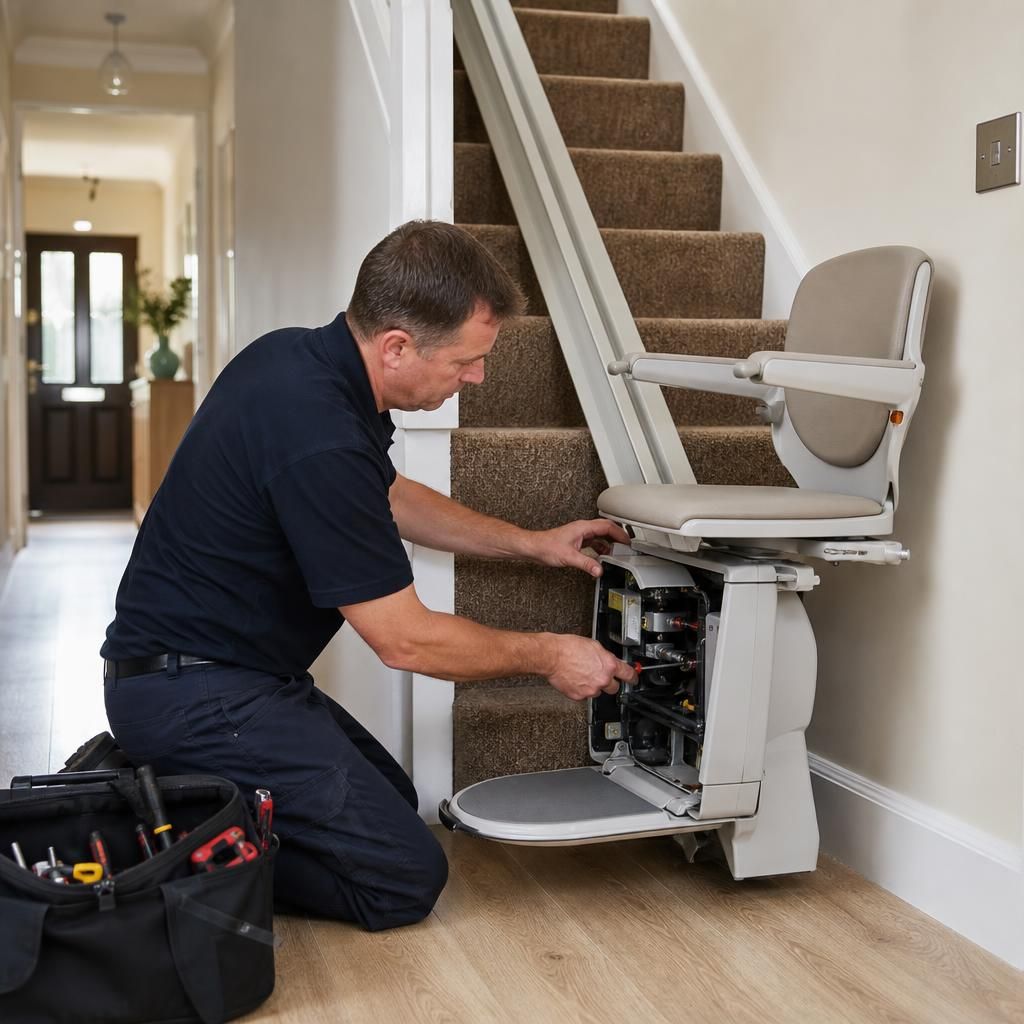
Arrange servicing at the interval recommended for your specific stairlift and use. The appropriate schedule can depend on the model, age, level of use and whether the lift is installed indoors or outdoors. During a service, an engineer may inspect and test the rail, carriage, drive system, batteries, charging equipment, seat, belt, armrests, footrest, sensors, controls and safety features. They can also identify components that are wearing and advise whether adjustment or replacement is required.
Keep the service record and any information supplied with the lift. This helps an engineer understand its history and confirms which parts have been checked. If you have a reconditioned stairlift, follow the servicing guidance provided for that particular model rather than assuming it has the same requirements as a new installation.
Outdoor stairlift maintenance
Outdoor models need additional attention because rain, damp, dirt, frost and temperature changes can affect exposed surfaces and electrical components. Keep the lift as sheltered as the installation allows, use its protective cover when supplied, and remove standing water or accumulated debris. Inspect the rail and seat for corrosion or damage, but do not dismantle weatherproof covers or electrical housings. Report deterioration promptly so it can be assessed safely.
When to stop using the lift
Stop using the stairlift and contact a qualified engineer if it stops unexpectedly, moves unevenly, makes an unusual sound, smells of burning, shows visible damage, fails to charge, or displays a warning light that does not clear in accordance with the user instructions. If the stairlift stops while occupied, follow the supplied emergency procedure and contact the appropriate support number. Do not force the lift, bypass a safety feature or allow another person to carry out an improvised repair.
Regular user checks cannot replace professional servicing. If you are unsure when your next service is due, or you notice a change in operation, contact Independent Stairlifts for advice and arrange an assessment rather than waiting for the problem to worsen.
Professional servicing is required to check the stairlift’s mechanical, electrical and safety systems beyond what can be assessed during everyday cleaning. Arrange servicing at the interval recommended for your model, taking into account its age, usage and whether it is installed indoors or outdoors.
A qualified engineer can inspect and test the rail, carriage, drive system, batteries, charging points, seat, belt, footrest, controls and safety sensors. They can also identify worn components before they affect reliability. Keep the service record with your stairlift documents, and contact Independent Stairlifts if you are unsure when the next service is due or notice unusual noise, jerky movement, slower operation or charging problems.
Arrange your stairlift service with Independent Stairlifts
Contact Independent Stairlifts to arrange a professional service or discuss any changes in your stairlift’s performance. We can advise on the appropriate maintenance for your model and help keep it operating safely and reliably.