
What factors should be considered when choosing a stair lift for a house?
Choosing a stair lift for your house involves assessing the staircase design, available space, user’s mobility needs, comfort, safety features, power supply and budget. A professional assessment can confirm which model and options will provide a safe, practical fit for the home.
Choosing a stair lift for a house means matching the equipment to the staircase, the person using it and the way the home is occupied. The main factors are the staircase layout, available space, the user’s mobility and transfer ability, seat comfort, safety controls, power requirements, installation conditions, future needs and overall cost. A professional home assessment is the most reliable way to confirm which configuration will provide a safe and practical fit.
Staircase design and available space
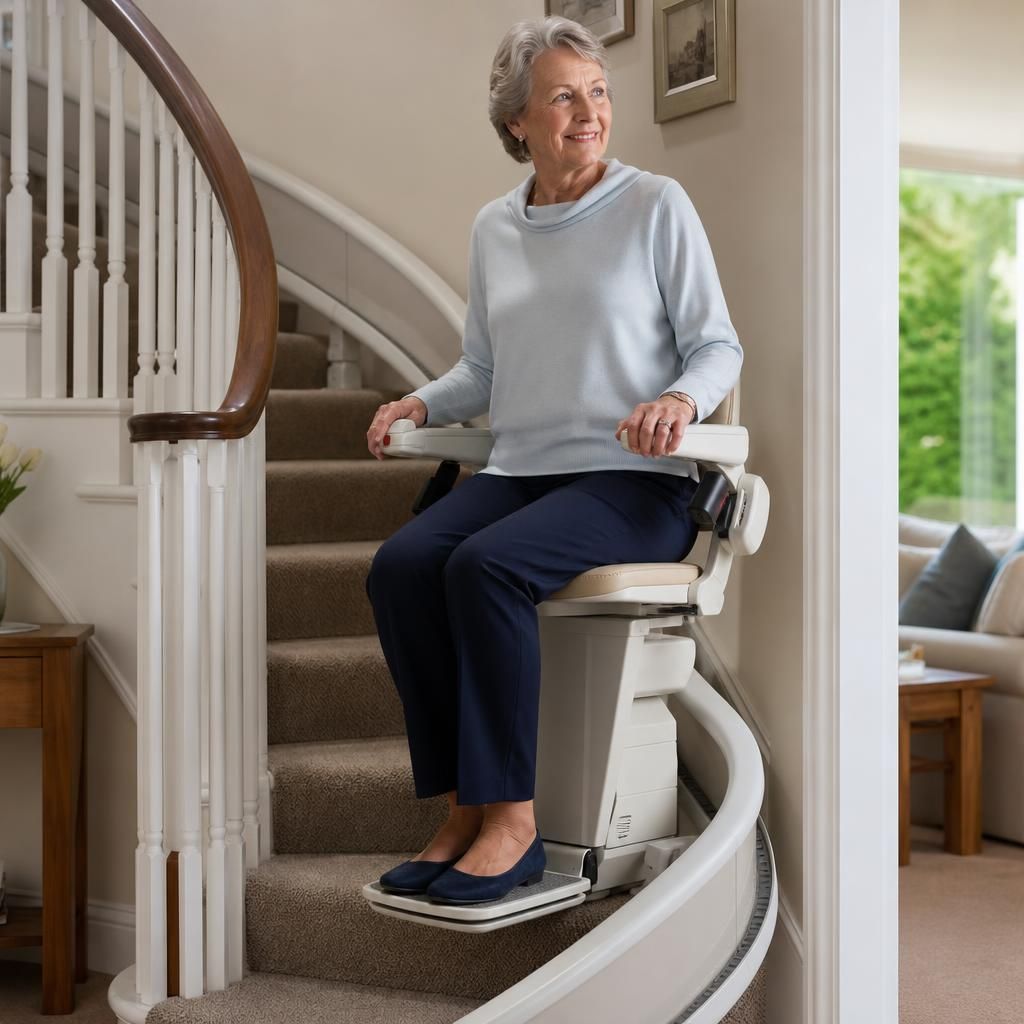
The shape and construction of the stairs determine which stair lift can be installed. A straight stair lift may be suitable where the staircase runs directly between floors. A staircase with a bend, landing, intermediate turn or more complex route generally requires a rail made to follow its individual shape. Outdoor stairs and staircases exposed to damp or changing temperatures need equipment designed for external use rather than a standard indoor model.
The assessment should consider more than the rail itself. The installer will need to check the width of the stairs, the position of doors, hallways and landings, the height of the steps, available headroom and whether there is enough space to get on and off safely. A folded seat, footrest and armrests may reduce the usable width of the staircase, so it is important to consider how other people will pass the lift and whether household doors or cupboards can still be used.
Where space is restricted, options such as a powered swivel seat, folding components or a different parking position may help. These choices depend on the layout and should be assessed in the home rather than assumed from photographs or standard measurements.
The user’s mobility and transfer ability
The most suitable lift is the one the user can operate confidently and use without unnecessary strain. Consider whether the user can stand long enough to reach the seat, turn and sit down, bend their knees, use the controls and leave the seat safely at the top or bottom of the stairs. Balance, joint movement, grip strength, vision and memory can all affect the choice of features.
If the user has difficulty turning on the stairs, a swivel seat may make transfers safer. If they cannot bend their knees comfortably, seat height, footrest position and the angle of the ride need careful consideration. Someone who needs help from a carer may require controls that can be operated by the person accompanying them, as well as controls on the armrest. The lift should not be selected solely on the basis of the current condition if a progressive illness or changing mobility is involved; possible future requirements should be discussed during the assessment.
Seat design and comfort
The seat needs to support the user in a stable, comfortable position for the full journey. Check the seat width, depth, height and cushioning, together with the position of the armrests, footrest and seat belt. A user who is tall, heavier, stiff in the hips or unable to sit upright comfortably may need a different seat configuration from the standard option.
Controls should be easy to see and operate. A simple control on the armrest is common, while a remote control at each end of the stairs can allow the lift to be called or sent when it is parked elsewhere. The control should be usable with the user’s available hand strength and movement. If several people use the lift, consider whether the settings and controls are suitable for everyone.
Safety features and safe use
Look for features that address the risks associated with travelling on stairs and transferring at the landings. These can include a seat belt, obstruction sensors, a swivel or powered swivel seat, an interlock that prevents movement unless the seat is correctly positioned, and controls that require continuous pressure while travelling. Foldable parts can help reduce obstruction when the lift is parked.
Safety also depends on correct installation and everyday use. The user should be able to sit fully back in the seat, keep their feet on the footrest and use the belt as instructed. Items such as shopping bags, blankets or walking aids should not interfere with the moving parts or sensors. Ask for a demonstration and make sure the user, family members and carers understand the controls, charging position, emergency procedure and any manual lowering or release arrangements provided with the model.
Power supply and operation during an outage
Most domestic stair lifts use rechargeable batteries and charge at designated points on the rail or through a connected charging system. Confirm where the lift charges and whether it will remain charged when parked at either end of the staircase. Battery-powered operation can allow a user to complete a journey or return to a landing during a mains power cut, but the exact behaviour depends on the model and the condition of the batteries.
Ask how the lift indicates a low battery, what happens if it is left away from its charging point and how battery replacement is handled. The home assessment should also identify whether the electrical supply and charging arrangements are suitable. Never rely on a lift that is showing a fault or low-charge warning without seeking advice.
Installation conditions and alterations
Most stair lifts are fitted to the stairs rather than fixed to the wall, but the installer still needs to inspect the condition and structure of the staircase. Loose, damaged or uneven steps, unusual flooring, restricted landings and nearby radiators or doors may affect the installation. Minor adjustments, such as moving an obstruction or agreeing a different parking position, may be needed.
Ask what preparation is required before the installation and whether any structural work is anticipated. A clear explanation should cover where the rail, charging points and controls will be placed, how the installation will affect access to the stairs and whether the equipment can be removed later without unnecessary damage. The installation time and lead time can vary according to the staircase, the chosen design and whether the lift is new or reconditioned.
New or reconditioned equipment
A reconditioned stair lift may be appropriate where a suitable model is available and the priority is a practical solution for a particular staircase or budget. Its suitability still depends on the user’s needs, the condition of the equipment and whether it can be configured correctly for the home. Ask what inspection, servicing, replacement of worn parts and warranty cover are included.
A new stair lift may provide a wider choice of rail design, seating and controls, especially for a curved or unusually arranged staircase. The important comparison is not simply new against reconditioned; it is whether the equipment is safe, reliable, properly fitted and appropriate for the person who will use it.
Cost and ongoing ownership
The total cost can be affected by the staircase shape, rail length, number of landings, seating options, outdoor protection, installation requirements and whether the equipment is new or reconditioned. Request a clear quotation that explains what is included, such as the assessment, installation, demonstration, warranty, servicing and removal or alteration costs where relevant.
Also consider ongoing ownership. Ask about routine maintenance, battery and wearable-part replacement, fault reporting, call-out arrangements and the availability of support after installation. The least expensive initial option may not be the most suitable if it lacks a feature the user needs or creates difficulties with transfers and daily operation.
Future use of the home
Think about how the house may be used in the future. The stair lift may need to accommodate a change in the user’s mobility, visiting family members, carers or continued use of the stairs by other occupants. Consider where the lift will be parked, whether it blocks a doorway or fire escape route, and whether a walking frame or other mobility aid can be stored at each landing.
The final decision should follow an in-home assessment, a discussion of the user’s abilities and a practical demonstration of the recommended model. Comparing the staircase, user requirements, safety features, comfort, power arrangements, installation implications and full cost together will help you choose a stair lift that fits the house and remains usable in everyday life.
A stair lift should be chosen through an in-home assessment, because the correct model depends on both the staircase layout and the user’s ability to transfer safely. The assessment checks the stair width, landings, doors, headroom and parking points, while also considering balance, leg movement, grip strength and whether the user can operate the controls.
This helps identify practical options such as a powered swivel seat, different seat height or remote controls. It also confirms whether the lift will leave enough room for other people to use the stairs and whether walking aids can be positioned safely at each landing.
Book your in-home stair lift assessment
Book an in-home stair lift assessment to check your staircase, available space and the user’s mobility needs. We can recommend a suitable configuration and explain the installation, safety features and costs.