
What are the typical lead times for installing a stair lift in a UK house?
A straight stair lift can often be assessed and installed quickly, sometimes on the same day or within a few days, subject to survey findings and equipment availability. Curved, outdoor or specially configured stair lifts usually take longer because they require a bespoke survey, manufacture and scheduling, so the lead time is confirmed after your assessment.
In a UK house, a straight stair lift can often be assessed and installed on the same day or within a few days, provided the staircase is suitable and the required model is available. Curved, outdoor and specially configured stair lifts normally have longer lead times because they are surveyed, designed and manufactured for the individual property. The confirmed date is given after the assessment rather than assumed in advance.
Lead time means the period between agreeing the order and the installation taking place. It is different from the installation time itself. A straightforward straight stair lift may be fitted in a few hours, whereas a bespoke curved system can require more installation time because the rail must be accurately matched to the shape of the staircase.
Typical lead times by stair lift type
- Straight stair lifts: These are usually the quickest to arrange. Standard equipment may be available for rapid installation, sometimes on the day of the assessment or within a few days. This depends on the survey, the specification selected and local installation availability.
- Curved stair lifts: These are made to follow the precise route of the staircase, including landings, bends and changes in direction. The rail must normally be measured, designed and manufactured before fitting, so the lead time is usually longer than for a straight model.
- Outdoor stair lifts: An external lift may need weather-resistant components and a careful assessment of the staircase, ground conditions, drainage and electrical supply. These requirements can add time to the planning and installation process.
- Reconditioned stair lifts: A reconditioned straight model may be available quickly if a suitable lift is in stock. Availability is more limited for curved systems because the rail has to match the particular staircase.
- Specially configured lifts: Options such as powered swivel seats, hinged rails, unusual parking positions or controls for a particular user may require additional planning or equipment, which can affect the delivery date.
What happens before installation?
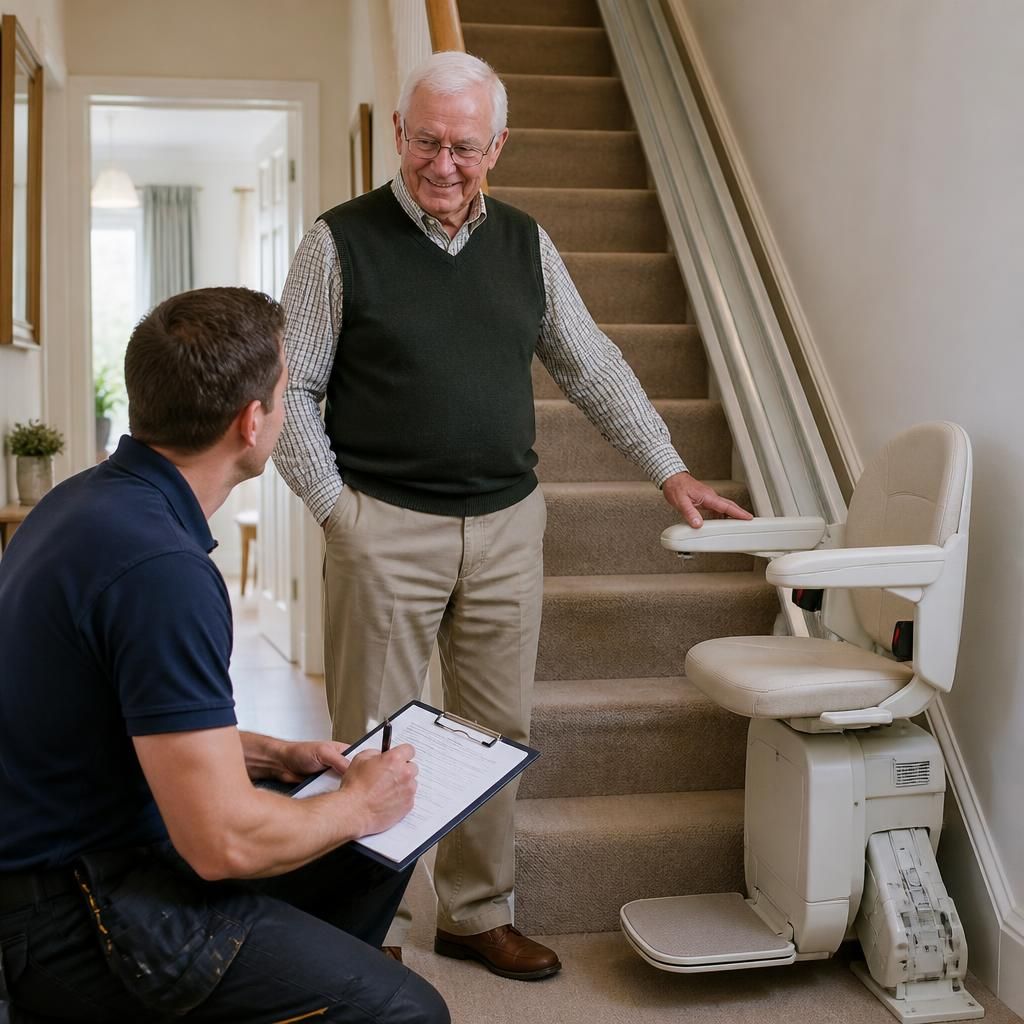
The first step is a survey of the staircase and the surrounding areas. The assessor will consider the width and shape of the stairs, the position of doors and landings, available parking points, electrical arrangements and how the user will get on and off the lift safely. They will also discuss seating, controls, user weight, transfer ability and any particular mobility concerns.
For a straight stair lift, the survey can often confirm quickly whether a standard system is suitable. For a curved lift, measurements and design information are used to produce a rail that fits the individual staircase. The installation date can then be arranged once the equipment has been prepared and the necessary components are available.
Factors that can change the lead time
- The type and shape of the staircase, particularly where it has bends, intermediate landings or limited parking space.
- Whether a suitable new or reconditioned stair lift is currently available.
- The need for additional features, such as a powered swivel seat, a folding or powered hinge rail, or remote controls.
- Access to the property and whether the installation team can work safely around furniture, doors or other obstructions.
- Whether electrical work, minor preparation or coordination with another contractor is needed.
- Installer availability, delivery arrangements and periods of unusually high demand.
- Any changes to the specification after the survey, which may require the equipment or installation plan to be revised.
Most stair lift installations do not require major structural alterations to the house. The rail is generally fixed to the stair treads or appropriate supporting structure rather than the wall. However, the survey may identify a need to clear furniture, adjust a door arrangement or plan a safe parking position before the installation can proceed.
If the stair lift is needed urgently, explain this when arranging the assessment. A straight model may be possible quickly where the staircase and equipment allow it, but a rapid installation should never replace a proper survey. The lift must be correctly specified, securely fitted and tested for the person who will use it.
When the installation is complete, the engineer should test the stair lift, explain its controls and cover essential safety information, including charging, seat-belt use, obstruction sensors and what to do during a power cut. Before accepting a proposed date, confirm whether the quoted lead time includes the survey, manufacture or delivery, installation and any follow-up adjustments. This gives a more accurate picture of when the stair lift will be ready for everyday use.
Stair lift lead time is the period from agreeing the specification to the installation date; it is not the length of time the fitting itself takes. A standard straight stair lift may be arranged quickly when the staircase is suitable and equipment is available. A curved or specially configured lift usually takes longer because the rail must be measured, designed and made for the individual staircase.
The confirmed date follows a home assessment, which checks the staircase, parking position, electrical supply, access and the user’s requirements. If installation is urgent, mention this when booking the assessment. A rapid fitting should still include proper surveying, secure installation, testing and instruction on safe use.
Arrange your stair lift assessment
Arrange your stair lift assessment to confirm the most suitable lift and receive an accurate installation date for your UK home. Tell us if your need is urgent so we can discuss the available options.