
How long does it typically take to install a stair lift in a house?
A straight stairlift can typically be installed in a house within a few hours, often during a single visit. Curved stairlifts usually take longer because they are made to fit the staircase, with installation scheduled after the required survey and manufacture.
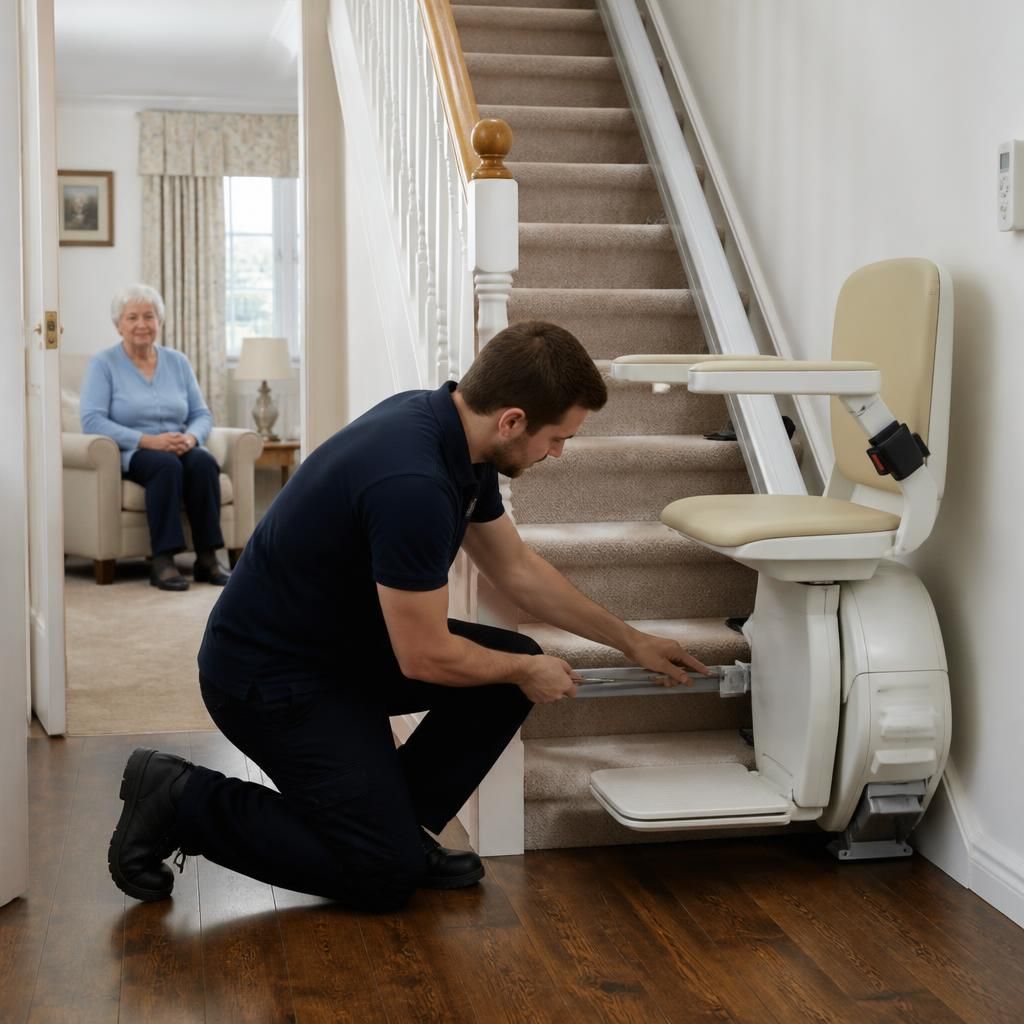
A straight stairlift can usually be installed in a house within a few hours, often during a single visit. A curved stairlift generally takes longer overall because it is made to follow the staircase and must be surveyed, manufactured and then fitted. The installation itself may take most of a day, depending on the design and access to the stairs.
The type of stairlift affects the timescale
- Straight stairlifts: These use a standard rail and can usually be fitted during one planned appointment. The installer secures the rail to the stair treads, connects the lift, tests its operation and explains how to use it.
- Curved stairlifts: These require a detailed survey because the rail is designed for the exact shape of the staircase. There is usually a gap between the survey and installation while the rail is manufactured. Fitting time depends on the number of bends, landings, changes in gradient and any parking positions.
- Outdoor stairlifts: These may need additional preparation if the stairs are exposed to weather, have uneven surfaces or require suitable electrical protection. The condition of the staircase and the location of the power supply can affect the appointment.
- Reconditioned stairlifts: Where a suitable model and rail are available, installation may be arranged quickly. The stairlift still needs to be checked, correctly configured and safely tested for the specific staircase.
What happens before installation?
A home assessment is normally carried out before the fitting date. This confirms the staircase layout, available space at the top and bottom, the most suitable seat and controls, and the position of the charging point. It also allows the installer to identify practical issues such as doors, radiators, low ceilings, narrow landings or a need for the stairlift to fold away when not in use.
For a straight stairlift, the assessment and installation may sometimes be arranged close together when the appropriate equipment is available. For a curved model, the survey information is used to produce the bespoke rail, so the fitting date will be agreed once manufacture has been completed. The exact lead time should be confirmed at the assessment, as it can vary according to the design and equipment required.
How long does the fitting appointment take?
The appointment includes more than attaching the rail. The installer must position and secure the track, install the stairlift and charging equipment, check the electrical connections, and test the lift through its full route. They will also check that the seat, footrest, armrests, swivel mechanism, safety sensors and controls operate correctly.
Once the installation is complete, the installer should demonstrate starting and stopping, travelling safely, using the controls, charging the batteries and folding the seat or footrest where applicable. You should have the opportunity to operate the stairlift yourself and ask questions before the appointment ends. If a family member or carer will help with its use, it is sensible for them to attend the demonstration.
Factors that can change the installation time
- The length, width and layout of the staircase.
- The number of bends, intermediate landings or changes in direction.
- Limited space at the top or bottom of the stairs.
- The need for a hinged rail, powered swivel seat or other optional feature.
- The position of the nearest suitable electrical supply.
- Whether minor preparation is needed around the staircase or charging position.
- Restricted access to the house or difficulty bringing equipment indoors.
- Unexpected conditions found during the survey or fitting visit.
Most stairlift installations do not require major structural work. The rail is normally fixed to the stair treads rather than the wall, but the survey will establish whether the staircase is suitable and whether any minor adjustments are needed. If substantial building work appears necessary, this should be explained before installation is arranged.
What to do before the installer arrives
Keep the stairs and nearby landings as clear as possible, and make sure the installer can reach the electrical supply and the full route of the staircase. Remove fragile items from the immediate working area and tell the team about any access restrictions, pets or mobility requirements. You do not normally need to dismantle the staircase or arrange major preparation yourself.
If the installation is for someone who is returning home after an operation or hospital stay, arrange the assessment and fitting as early as possible. Straight models may be fitted quickly once the required equipment is available, but bespoke curved stairlifts need additional time for design and manufacture. A confirmed installation date is therefore more reliable than a general estimate.
After fitting, the stairlift should be ready for normal use following the safety checks and demonstration. If you notice unusual movement, noise, a warning light or difficulty charging the lift, stop using it if necessary and contact the service team for advice rather than attempting to adjust the rail or electrical components yourself.
The time needed to install a stairlift depends mainly on the staircase and the type of lift selected. A straight stairlift can often be fitted during a single appointment lasting a few hours, while a curved stairlift usually requires a separate survey and bespoke rail manufacture before the fitting date.
During the installation, the engineer secures the rail to the stair treads, connects the lift and charging equipment, and tests the complete route. They also check the seat, controls, footrest, swivel mechanism and safety sensors before demonstrating safe operation and charging.
To help the appointment run smoothly, keep the stairs and nearby landings clear and make sure the installer can access the full route and a suitable power supply. If the staircase has tight landings, several bends, limited space or restricted access, mention this during the assessment so the fitting time and any preparation can be planned accurately.
Arrange Your Stairlift Installation Assessment
Arrange your stairlift installation assessment with Independent Stairlifts to confirm the most suitable model, fitting requirements and expected timescale for your home.