
Are there specific safety features included in stair lifts for houses?
Yes. Stair lifts for houses typically include safety features such as a secure seat belt, obstruction sensors, automatic braking, safety edges, swivel or lockable seats, and battery backup to help the lift stop safely and operate during a power cut.
Yes. Stair lifts for houses are designed with several integrated safety features to help the user travel between floors securely and allow the lift to stop safely if an unexpected situation occurs. Common features include a powered seat belt, obstruction sensors, safety edges, automatic braking, swivel or lockable seats, interlocking controls and battery backup. The exact specification depends on the stairlift model, staircase layout and the assessment of the person using it.
Seat belts and secure seating
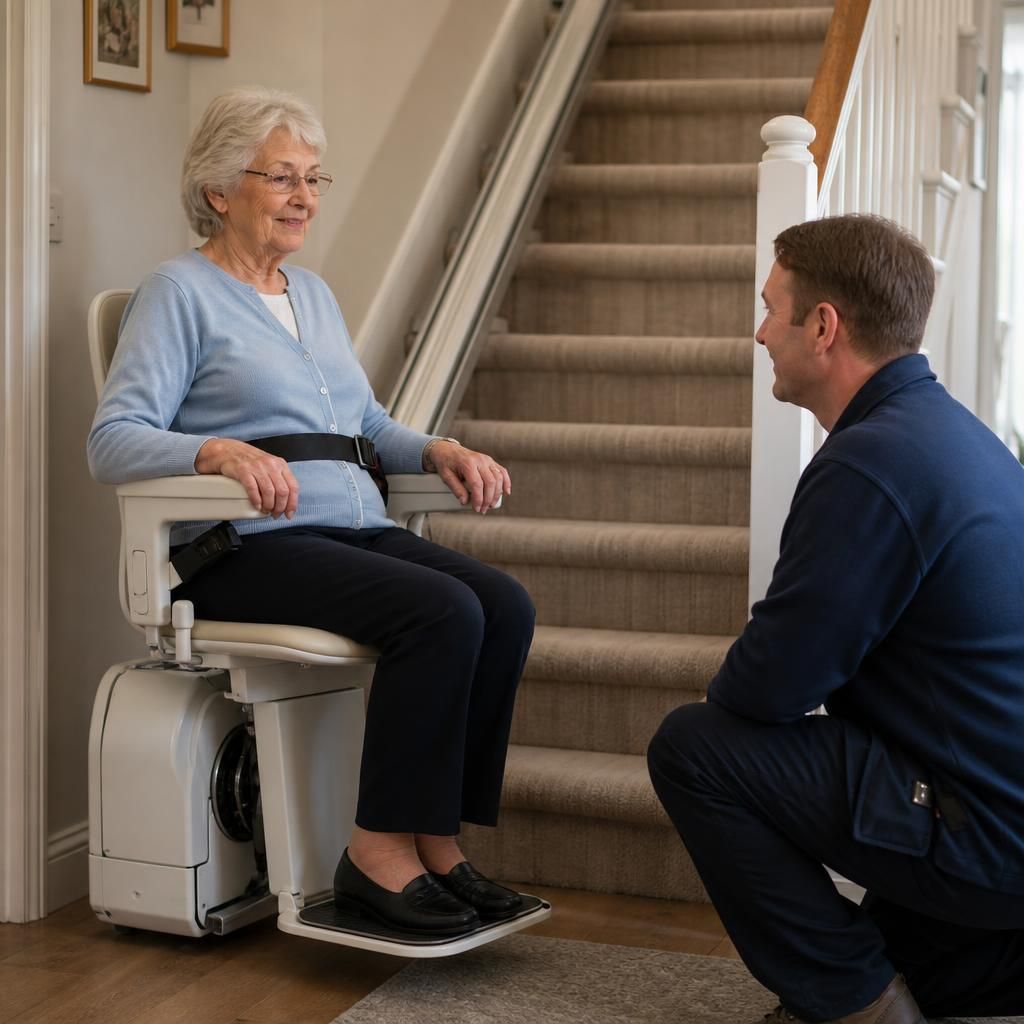
A seat belt helps keep the user correctly positioned throughout the journey. Depending on the model, this may be a lap belt or another restraint designed to be fastened before the lift moves. The seat is usually shaped and padded to support a stable sitting position, while armrests can provide additional support when getting on and off.
Many stairlifts include an interlock that prevents movement until the belt is fastened correctly. Users should remain seated with their feet on the footrest and avoid leaning out or attempting to stand while the lift is moving.
Obstruction sensors and safety edges
Sensors around the footrest, carriage or other exposed parts of the stairlift detect objects in the lift’s path. If the system senses an obstruction, it is designed to stop the lift rather than continue pushing against it. This can help identify items such as toys, footwear, furniture or other objects left on the stairs.
Some models also have pressure-sensitive safety edges. These are designed to interrupt movement if an edge makes contact with an obstruction. The stairs should still be kept clear, as sensors are an additional safeguard and not a substitute for good housekeeping.
Automatic braking and controlled movement
A stairlift uses a braking system to control its movement and bring it to a controlled stop when the handset or armrest control is released. The drive system is designed to prevent uncontrolled travel, including when the lift stops at the top or bottom of the staircase. Controls are generally designed for gradual starting and stopping to reduce sudden movement.
Stairlifts also have end-of-travel controls. These stop the lift at its designated parking points and help prevent it from travelling beyond the usable section of the rail.
Swivel, lockable and powered seats
A swivel seat can turn towards the landing when the stairlift reaches the top or bottom of the stairs. This allows the user to get on or off facing away from the staircase, rather than twisting beside the steps. A lockable swivel mechanism helps keep the seat in the correct position while travelling.
Where a user has limited strength or movement, a powered swivel or powered footrest may reduce the effort needed to operate the lift. These options are not necessary for every installation, so the assessment should consider how the user transfers into and out of the seat.
Battery backup for power cuts
Most domestic stairlifts operate from rechargeable batteries and remain connected to a charging point when parked. The batteries allow the lift to continue operating for a limited period during a mains power failure, although the available travel depends on the model, battery condition and how much charge was stored before the outage.
A battery-powered stairlift will not normally run indefinitely during a power cut. If the power fails, the safest approach is usually to complete the journey to a suitable landing if possible, then contact the appropriate support service if the lift does not operate as expected. The lift should be returned to its charging position when not in use, as this helps maintain battery readiness.
Controls and user protection
Controls are commonly fitted to the armrest and may also be supplied as remote handsets. These allow the user or another person to call the stairlift to a landing. Key switches, lockable controls or remote control isolation can help prevent unintended use, which may be useful in a household with children or other people who should not operate the equipment.
Some stairlifts provide audible alerts, visual indicators or diagnostic messages for conditions such as a low battery, an open seat belt, an obstruction or a lift that is not correctly parked. These warnings should not be ignored. If a warning remains after the obvious cause has been addressed, the lift should be taken out of use and checked by a qualified technician.
Safety features for different houses and users
Safety does not depend only on the stairlift itself. The rail design, stair width, landing space, lighting, floor surfaces and the user’s ability to transfer safely all need to be considered. For example, a narrow staircase may require a particular seat or folded design, while an open landing may make a swivel seat or additional parking position especially important. Outdoor installations also need equipment and finishes suitable for exposure to weather.
A professional assessment should identify potential hazards, confirm that the proposed stairlift is suitable for the staircase and recommend any appropriate options. It should also consider whether the user can operate the controls, fasten the belt and safely get on and off the lift.
Using the safety features correctly
- Fasten the seat belt before moving and remain seated throughout the journey.
- Keep the stairs and the lift’s travel path clear of objects, pets and other people.
- Keep hands, clothing and loose items inside the seat area and away from the rail.
- Make sure the lift is parked at its charging point when it is not being used.
- Do not bypass a safety switch, sensor or interlock, even if the lift appears to be working.
- Report unusual noises, jerky movement, repeated stopping or warning indicators promptly.
These features significantly reduce avoidable risks, but they cannot compensate for incorrect use, poor maintenance or an unsuitable installation. Regular servicing and prompt attention to faults help keep the stairlift operating as intended. If the needs of the user or the layout of the house change, the installation should be reviewed so that the equipment and its safety options remain appropriate.
Battery backup is an important safety feature in a domestic stairlift. The rechargeable batteries allow the lift to keep operating for a limited time if the mains power fails, helping the user reach a landing safely. The lift should be left at its charging point when not in use, and any low-battery warning or unexpected failure should be reported rather than ignored.
Arrange a Stairlift Safety Assessment for Your House
Arrange a stairlift safety assessment for your house to confirm that the equipment, controls and safety features are suitable for the user and staircase. Contact Independent Stairlifts to discuss your requirements.