
Are there any structural modifications needed for installing a stair lift in a house?
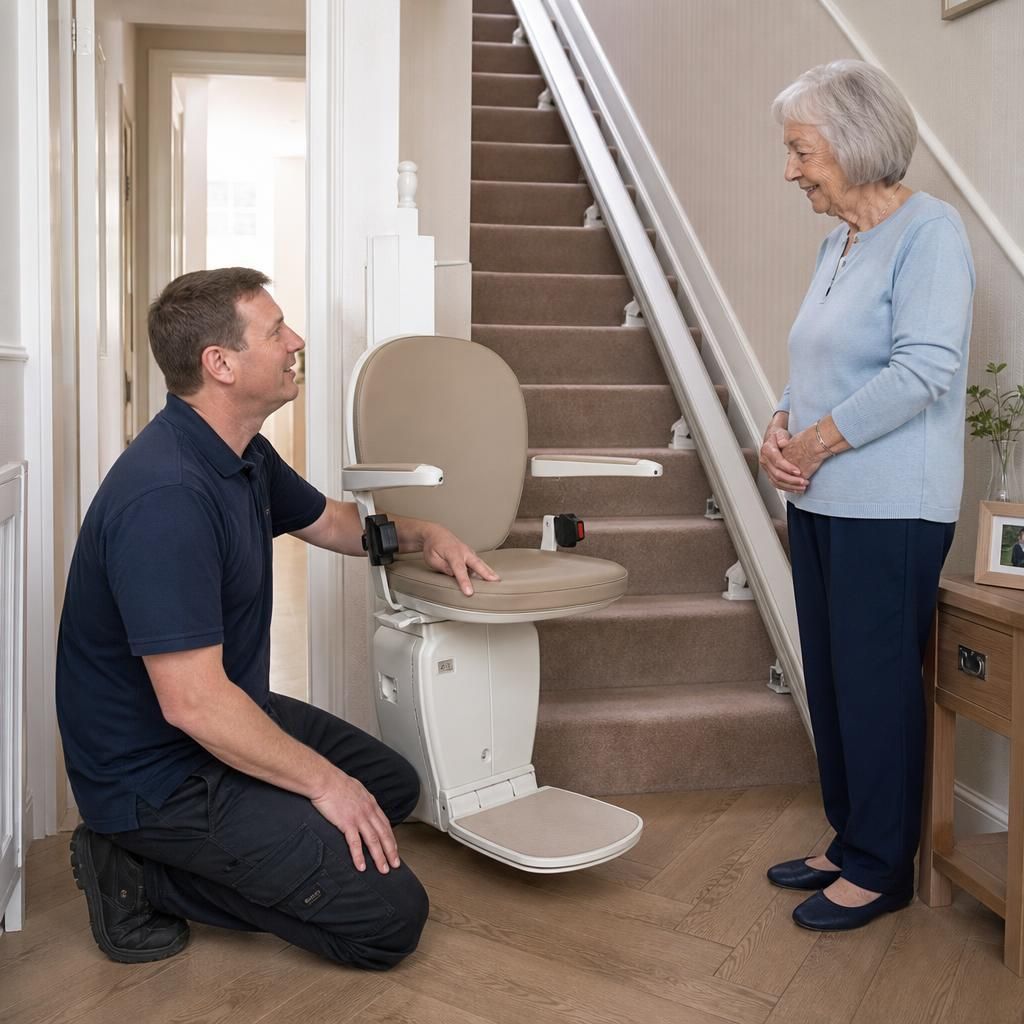
Most stairlifts can be installed without structural modifications to your house, as the rail is secured to the stair treads rather than the wall. An assessment will confirm whether any unusual staircase design, restricted access or structural issue requires additional preparation before installation.
Most stairlifts can be installed without structural modifications to the house. In a standard installation, the stairlift rail is fixed to the stair treads or a suitable supporting structure, rather than being attached to the wall. This usually avoids removing walls, altering the staircase or changing the layout of the property.
A professional assessment is still essential because the installation method depends on the staircase, the condition of the property and how the lift will be used. The surveyor will check the stairs, landings, access points, available clearance and any features that could affect the rail or chair. They can then identify whether any preparation is needed before installation.
Typical installation work includes:
- Fixing the rail securely to the stair treads using suitable brackets.
- Positioning the seat, controls, charging points and safety sensors.
- Checking that the lift clears walls, bannisters, doors and other obstructions throughout its travel.
- Making minor adjustments to trim, skirting boards or other non-structural items where necessary.
- Connecting the lift to an appropriate electrical supply, usually without extensive rewiring.
The rail is normally designed to follow the line of the staircase. On a straight staircase, this is generally a straightforward installation. Curved stairlifts are made to suit the individual shape of the stairs and may require careful positioning around bends, intermediate landings or changes in direction. These features affect the design of the rail, but they do not usually mean that the staircase itself must be rebuilt.
Some circumstances may require additional preparation. This is more likely where the staircase or surrounding area has a structural defect, restricted clearance or an unusual design. Examples include:
- Stair treads that are loose, damaged, uneven or unable to support the fixing brackets.
- A staircase with insufficient width or clearance for the chosen lift and a safe walking route.
- Very steep, irregular, spiral or split-level stairs that need a bespoke assessment.
- A landing that does not provide enough room to get on or off the lift safely.
- Doors, radiators, cupboards, handrails or other fixtures that obstruct the chair or rail.
- Flooring, trim or decorative features that prevent the rail from being positioned correctly.
- An outdoor staircase exposed to weather, where suitable weather-resistant equipment and electrical arrangements are needed.
Where a tread is damaged, it may need repairing or strengthening before the stairlift is fitted. This is different from modifying the overall structure of the house: the purpose is to provide a sound fixing point and maintain safe use of the staircase. The installer should explain any such work before proceeding, including whether it will be carried out by the installation team or another qualified professional.
Most stairlifts use a nearby electrical connection and a rechargeable battery system. If there is no suitable socket, an electrician may need to install one in an appropriate position. This is normally a minor electrical alteration rather than a major structural change. The electrical work should be completed safely and in line with applicable UK requirements.
It may sometimes be possible to make the stairlift more compact by using a hinged or shortened rail arrangement, depending on the staircase. This can help where the bottom of the stairs is close to a doorway or narrow passage. It is important not to remove or reposition a handrail without considering how this affects support for other people using the stairs. The final arrangement should preserve safe access wherever practical.
If the property is rented, listed or subject to restrictions from a landlord, housing provider or building management company, permission may be needed before work begins. A stairlift is usually installed with limited disruption and can often be removed later, but fixing points and any associated alterations should still be agreed in advance. Listed buildings and properties with unusual construction may require additional advice.
The installation team should not rely on assumptions about the staircase. During the assessment, tell them about any known movement, previous alterations, damp, subsidence, damaged treads, unusual wiring or planned building work. Also explain who will use the lift and whether another person needs to continue using the stairs, as this can affect the required clearance and rail position.
After fitting, the installer should test the lift along its complete route, check the fixings and safety systems, and show the user how to operate it, charge it and use the swivel seat, seat belt and controls safely. If any structural or electrical issue is identified during the survey, it should be dealt with before installation rather than worked around without proper assessment.
In summary, a stairlift normally requires secure fixing to the stairs, not major structural alteration to the house. The main exceptions relate to defective or unusual staircases, limited clearance, obstructing fixtures, landing arrangements and electrical provision. A detailed home assessment will establish what is needed and should identify any additional work before the installation date.
Most stairlifts do not require structural modifications to the house because the rail is normally secured to the stair treads, not the wall. This avoids removing walls or rebuilding the staircase, while allowing the lift to follow the existing stairs.
A professional survey will check that the treads are sound, the rail has sufficient clearance and the landings allow safe access. Minor preparation, such as repairing a damaged tread or installing a suitable electrical socket, may occasionally be needed, but these are not usually major structural alterations.
Book Your Stairlift Home Assessment
Book your stairlift home assessment so we can check your staircase, access and electrical provision, and confirm whether any preparation is needed before installation.