
What type of maintenance is required to keep a compact stairlift operating smoothly?
A compact stairlift requires routine cleaning and visual checks, with professional servicing to inspect the rails, drive system, batteries, seat, safety sensors and controls. Keep the charging points clear, report unusual noises or movement promptly, and follow the manufacturer’s servicing recommendations to maintain safe, smooth operation.
A compact stairlift needs regular visual checks, routine cleaning and professional servicing to keep its rail, drive system, batteries, seat, controls and safety sensors working correctly. Most day-to-day care is straightforward, but servicing should be carried out by a suitably qualified technician in line with the manufacturer’s recommendations. This helps identify wear before it affects reliability or safety.
Keep the rail and surrounding area clean. Dust, grit, pet hair and other debris can collect on the track, particularly where the stairlift is close to walls or skirting boards. Wipe accessible surfaces with a soft, dry or slightly damp cloth and keep the steps, landing and rail clear of objects. Do not apply oil, grease or household cleaning products to the rail or moving parts unless the manufacturer specifically instructs you to do so. Incorrect lubrication can attract dirt or affect the drive mechanism.
Check the charging points regularly. A stairlift should normally be left parked on a designated charging point when it is not in use. Keep the contacts and the area around the charger free from dust and obstruction, and check that the stairlift is charging as expected. If the lift repeatedly loses power, fails to charge, or only operates for a short period, arrange an inspection rather than repeatedly resetting it. Rechargeable batteries gradually wear and may need replacement as part of normal maintenance.
Carry out simple visual and functional checks. Before use, look for anything unusual, including:
- loose, damaged or missing covers;
- unusual noise, vibration, jolting or changes in speed;
- sticking or incomplete movement of the footrest, armrests, seat or swivel mechanism;
- damage to the seat belt, joystick, remote controls or display;
- obstructions on the stairs or around the top and bottom parking areas; and
- fault lights, warning tones or error messages that do not clear in the normal way.
Test the controls only as described in the operating instructions. The seat belt should fasten securely, the controls should respond normally, and safety features such as the obstruction sensors should be checked during a professional service. Do not deliberately place an object in the stairlift’s path to test a sensor, as this can create a hazard or damage the equipment.
Arrange professional servicing at the recommended interval. During a service, the technician can inspect the rail fixings, drive components, gears, rollers, batteries, charging system, seat, swivel lock, safety belt, sensors, controls and electrical connections. They can also check that the stairlift travels smoothly, stops correctly at the landings and remains securely fixed to the staircase. The appropriate interval depends on the model, how often it is used, the staircase environment and the manufacturer’s guidance.
Servicing is particularly important for a compact stairlift installed on a narrow or curved staircase. These installations may include a closely shaped rail, tight bends, hinged sections or limited clearance around the seat and footrest. A technician can check that these components remain correctly aligned and that there is no interference with walls, doors, furniture or other household traffic.
Respond promptly to changes in performance. Stop using the stairlift and contact the service team if it becomes jerky, stalls, moves unusually slowly, makes a new grinding or clicking noise, fails to stop accurately, or shows a persistent warning. Keep the lift in a safe position if possible, and do not attempt to bypass a safety device or remove covers. If there is smoke, a burning smell, visible electrical damage or a damaged cable, switch off the power only if it is safe to do so and seek urgent technical advice.
Users should not dismantle the stairlift, adjust the rail, alter the wiring, replace internal components or attempt repairs using non-approved parts. These actions can create a safety risk and may affect the equipment’s warranty or service history. Remote controls, charging points and external surfaces can usually be kept clean by the household, but faults inside the lift require professional attention.
Keep the operating manual, service records and installation details available for anyone who uses or maintains the stairlift. Tell the technician about any changes in the user’s mobility, unusual usage pattern, water exposure or alterations to the staircase area. With clean surroundings, correct charging, prompt reporting of faults and servicing at the recommended intervals, a compact stairlift can continue to provide smooth and dependable access without requiring frequent intervention from the user.
Professional servicing is the most important maintenance task for a compact stairlift because it checks components that are not accessible during normal household cleaning. A qualified technician can inspect the rail fixings, drive system, batteries, charging contacts, seat, safety belt, sensors and controls, then confirm that the lift travels and stops correctly.
Servicing should follow the manufacturer’s recommendations and take account of how often the stairlift is used and the shape of the staircase. Curved rails, tight bends and limited clearance require particular attention to alignment and moving parts. Between services, report unusual noises, jerky movement, charging problems or warning lights promptly rather than attempting to adjust or repair the lift yourself.
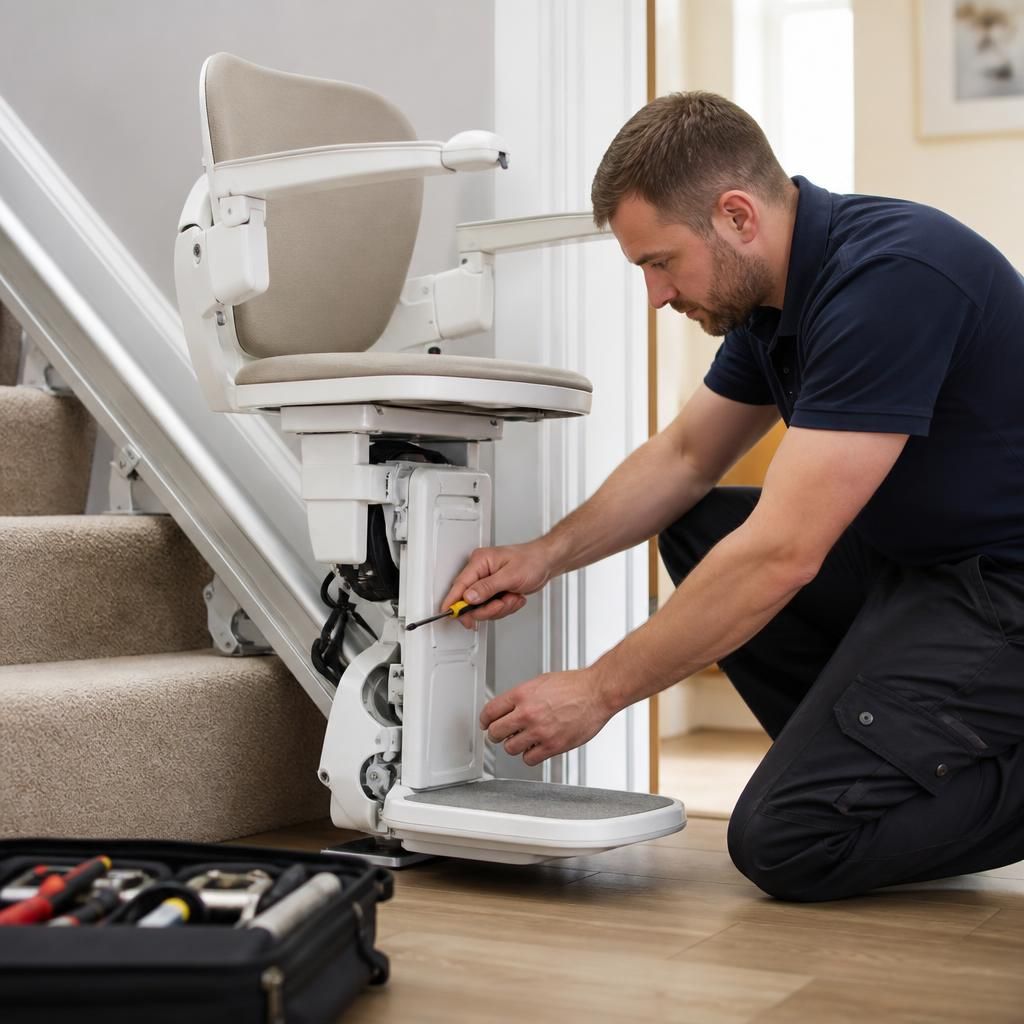
Arrange a compact stairlift maintenance check
Arrange a compact stairlift maintenance check with Independent Stairlifts to confirm that the rail, drive system, batteries and safety features are operating correctly. Contact our team to book a service at a suitable time.