
How do compact stairlifts ensure safety during operation?
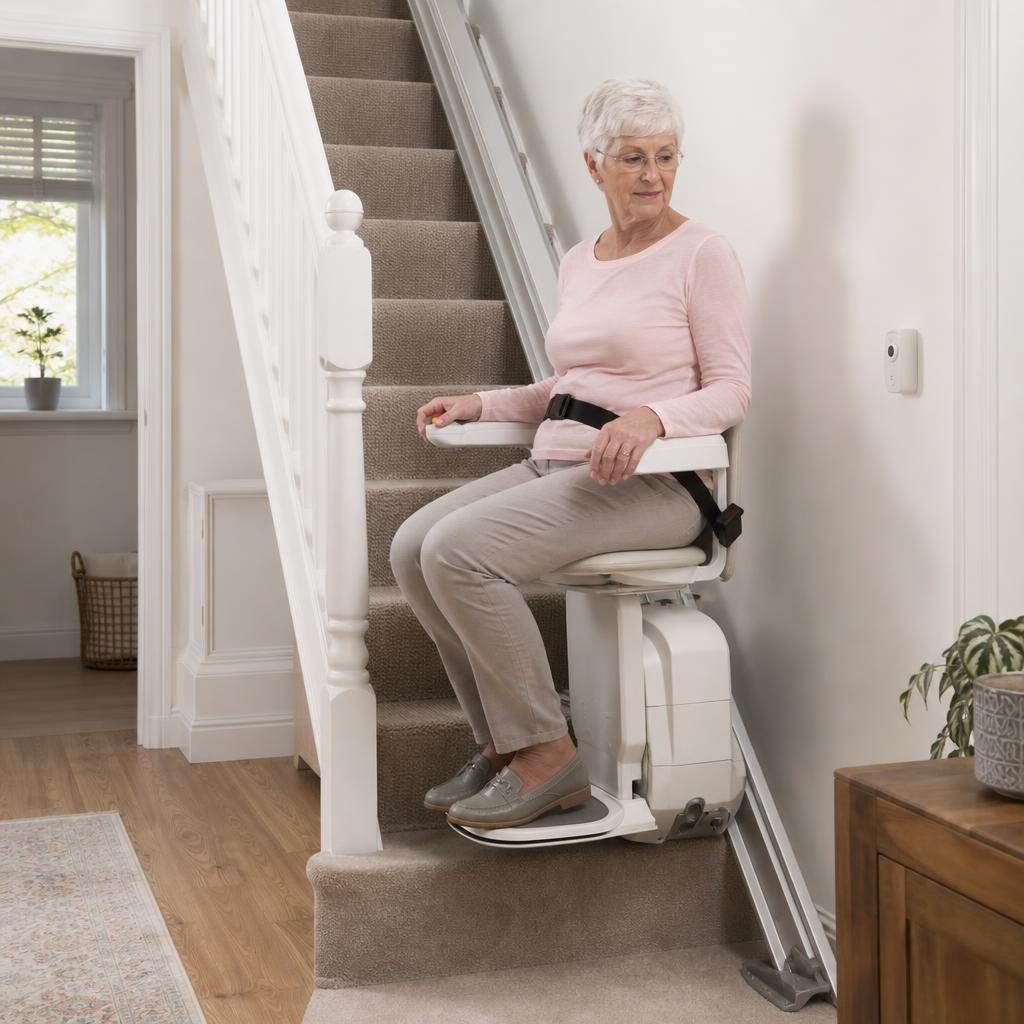
Compact stairlifts ensure safe operation through features such as obstruction sensors, secure seat belts, controlled starting and stopping, automatic braking and swivel seats that help users get on and off safely. Battery backup also helps the lift reach a suitable landing during a power cut, while correct installation and regular servicing ensure these safety systems continue to work properly.
Compact stairlifts ensure safe operation by combining controlled movement, secure seating, obstruction detection and automatic stopping systems. Their smaller design does not remove the need for essential safety features; instead, the lift is configured to work safely within the available stair width, landing space and the user’s mobility needs.
Key safety features include:
- Obstruction sensors: Sensors beneath or around the footrest detect objects on the stairs. If the stairlift meets an obstruction, it is designed to stop rather than continue moving. Keeping the staircase clear remains important, as sensors are not a substitute for removing hazards.
- Seat belts or harnesses: The restraint keeps the user correctly positioned while travelling. The belt should be fastened before movement begins and adjusted so it is secure without being uncomfortable.
- Controlled starting and stopping: Compact stairlifts normally accelerate and decelerate gradually, reducing sudden movement when leaving or approaching a landing. This is particularly helpful for users with limited balance or reduced strength.
- Automatic braking: The drive and braking systems are designed to hold the chair securely when it stops. The stairlift should also stop if the controls are released or if a safety circuit detects a problem.
- Swivel seat and safety interlocks: A powered or manual swivel seat can turn towards the landing, helping the user get on and off without twisting across the stairs. Interlocks prevent travel if the seat, armrests or footrest are not in the required position, depending on the model.
- Battery backup: Battery-powered systems can usually continue to a suitable landing during a mains power failure, provided the batteries are charged and maintained. The exact performance depends on the model and the condition of the batteries.
Compact stairlifts also use hand controls or remote controls that allow the user or a carer to operate the lift without leaning across the staircase. Controls are commonly positioned on the armrest, and some models can be operated from either end of the stairs. Releasing the control normally stops the stairlift, helping prevent unintended travel.
Safety begins with a proper assessment rather than with the equipment alone. During the survey, the installer checks the stair width, tread depth, bends, landings, doorways and available space at the top and bottom. They also consider how the user transfers into the seat, whether a folding rail is needed, and whether the chosen compact design leaves enough room for other people to use the stairs safely. On a curved staircase, the rail must be measured and manufactured to follow the actual route; on a straight staircase, the rail and stopping positions must still be set accurately.
Correct installation is essential because the stairlift must be securely fixed to the staircase and aligned with its intended travel path. The installer should test the lift’s movement, stopping points, seat mechanism, belt, sensors, controls, charging system and battery operation before handover. They should also explain safe use, including how to position the seat, fasten the belt, respond to an obstruction stop and deal with a power interruption.
Users can help maintain safe operation by keeping the track, steps and landing clear, sitting fully back in the seat, fastening the restraint and keeping loose clothing away from moving parts. A user should not carry more weight than the stairlift’s specified limit, allow another person to ride on the lift, or attempt to use it if a warning light, unusual noise or irregular movement appears. Pets, shopping and other items should only be carried where the equipment and its instructions specifically allow it.
Regular servicing helps confirm that safety systems remain effective. A qualified engineer can inspect the batteries, drive components, charging points, rail fixings, seat belt, swivel mechanism, sensors, limit switches and braking performance. The appropriate service interval depends on the model, how often it is used and the manufacturer’s guidance. Between visits, report changes such as jolting, difficulty charging, failure to stop at the usual position or repeated obstruction warnings rather than continuing to use the lift without advice.
If a compact stairlift stops unexpectedly, the safest response is to remain seated, keep the belt fastened and follow the operating instructions. Do not try to climb off on the stairs, force the controls or interfere with the mechanism. If the lift cannot be restarted using the normal reset procedure, contact the service team for guidance. The final safety outcome depends on the right model, a suitable installation, correct daily use and timely maintenance working together.
Compact stairlifts ensure safe operation by combining obstruction detection, secure seating and controlled movement within the available staircase space. Their smaller dimensions do not reduce the need for safety systems; the lift must still stop if it detects an obstruction or if a key component is not correctly positioned.
- Obstruction sensors stop the stairlift when an object is detected around the footrest or travel path.
- Seat belts and safety interlocks help keep the user secure and prevent movement unless the seat and other safety components are correctly positioned.
- Gradual starting, stopping and automatic braking reduce sudden movement and hold the chair securely when it stops.
- Swivel seating and accessible controls support safer transfers at the landing and allow the user to stop the lift by releasing the control.
These features work properly only when the stairlift is correctly installed, used as instructed and maintained. Keep the steps and rail clear, fasten the restraint before travelling and report unusual noises, jolting, charging problems or repeated safety stops to the service team.
Discuss Your Compact Stairlift Safety Requirements
Discuss your compact stairlift safety requirements with our team so we can review your staircase, mobility needs and preferred safety features. We can help identify a suitable solution and explain the next steps for assessment and installation.