
Do compact stairlifts require frequent maintenance to remain functional?
Compact stairlifts do not usually require frequent maintenance, but regular servicing and basic user checks help keep them safe, reliable and functional. Following the manufacturer’s service recommendations and reporting unusual noises, movement or charging problems promptly can prevent minor issues from developing.
Compact stairlifts do not normally require frequent maintenance to remain functional. They are designed for regular domestic use, but scheduled servicing and simple checks by the user are important for safe, dependable operation. The correct service interval is set by the manufacturer and may also depend on the stairlift model, how often it is used, the age of the equipment and the conditions in the home.
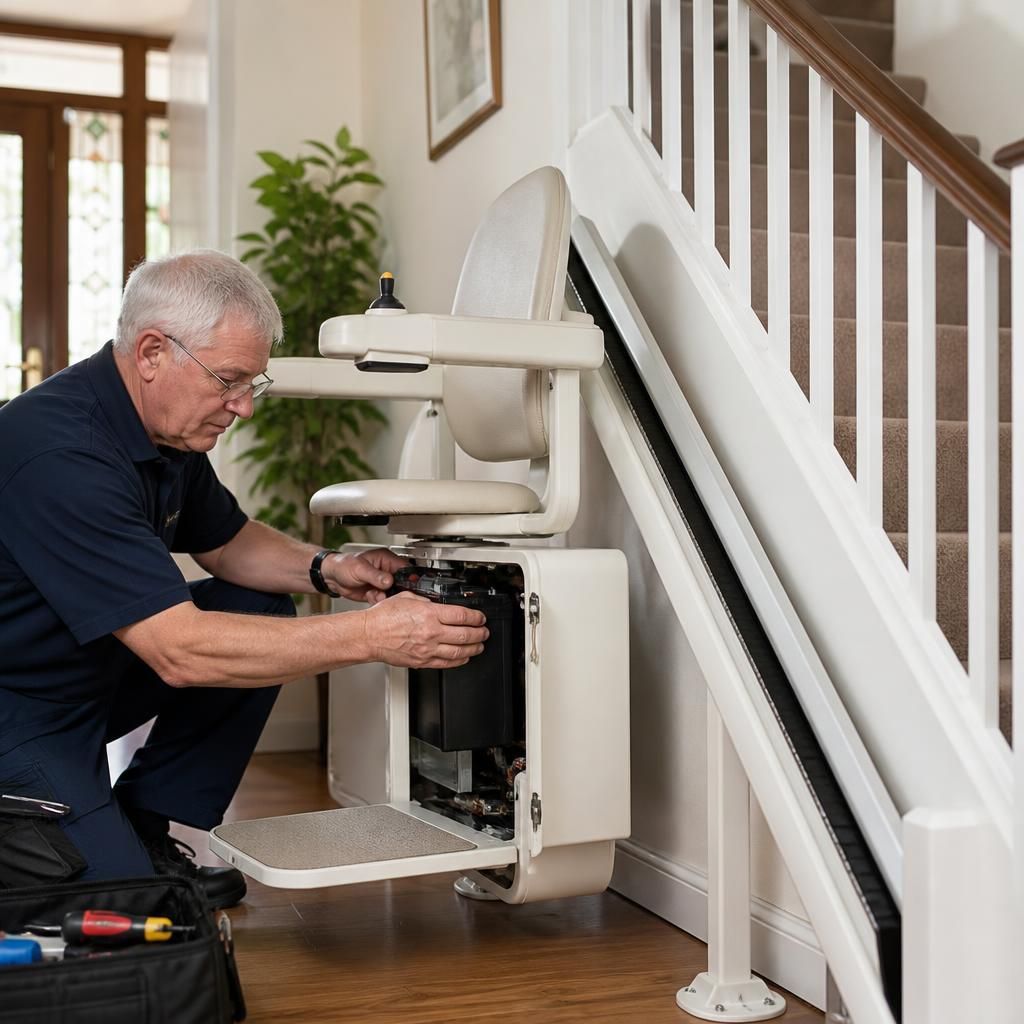
Routine servicing is usually arranged periodically rather than whenever the lift is used. During a service, a qualified engineer can inspect the carriage, drive system, charging points, batteries, seat, armrests, footrest, sensors, controls and safety features. The engineer may clean and lubricate suitable moving parts, check electrical connections, test the lift on the full length of the rail and identify wear before it affects performance. Any work should follow the manufacturer’s instructions for that particular stairlift.
Between services, users can help reduce avoidable faults by:
- Keeping the rail, steps and charging points clear of dust, loose objects and spillages.
- Checking that the stairlift reaches its charging position and is left there when not in use, where the design requires this.
- Using the seat belt and operating the controls as instructed.
- Looking for visible damage to the seat, armrests, footrest, rail or remote controls.
- Listening for changes such as unusual grinding, squeaking, knocking or straining.
- Reporting changes in speed, stopping, starting, battery performance or movement immediately rather than continuing to use the lift unnecessarily.
Battery condition is particularly important because compact stairlifts generally rely on rechargeable batteries, including when the lift is travelling away from its charging point. Batteries gradually lose capacity with age and may need replacing even when the rest of the stairlift is working correctly. A lift that is becoming slow, failing to complete its journey, sounding a low-battery warning more often or not charging properly should be assessed by an engineer.
Maintenance needs can be greater where a stairlift is used heavily, exposed to damp or temperature changes, installed outdoors, or operated in a home with dust, pets or building work. Curved stairlifts can also require careful inspection because their bespoke rail and drive components must remain correctly aligned. Reconditioned stairlifts should still receive servicing in line with the installed equipment and should be checked if their service history or battery condition is unclear.
Users should not remove covers, alter the rail, bypass safety sensors or attempt electrical and battery repairs themselves. These actions can create a safety risk and may affect the manufacturer’s warranty or service agreement. If the lift stops unexpectedly, displays a fault, moves unevenly or makes a new noise, stop using it if it is safe to do so and contact Independent Stairlifts or the appointed service provider for advice.
In practice, a compact stairlift should remain reliable without frequent attention when it is correctly installed, kept charged, used as intended and serviced at the recommended intervals. Regular professional checks do not mean that the lift is inherently high-maintenance; they provide a way to confirm that essential safety and operating components continue to work correctly.
Compact stairlifts do not usually need frequent maintenance, but keeping the rechargeable batteries properly charged is essential for reliable operation. The lift should be left at its designated charging point when it is not in use, where the model’s design requires this.
Reduced travel distance, slower movement, repeated low-battery warnings or difficulty completing the journey can indicate that the batteries are losing capacity or are not charging correctly. Do not attempt to replace batteries or investigate electrical components yourself; contact Independent Stairlifts or the appointed service provider so the issue can be assessed safely.
Need help keeping your compact stairlift reliable?
If your compact stairlift is making unusual noises, losing battery power or not completing its journey, contact Independent Stairlifts to arrange professional advice or servicing.