
Can compact stairlifts accommodate users with limited mobility effectively?
Yes, compact stairlifts can support people with limited mobility effectively when the model, seat and controls are matched to the user’s abilities and staircase. A professional assessment confirms that the lift can be installed safely while providing the stability, comfort and ease of use needed for everyday travel between floors.
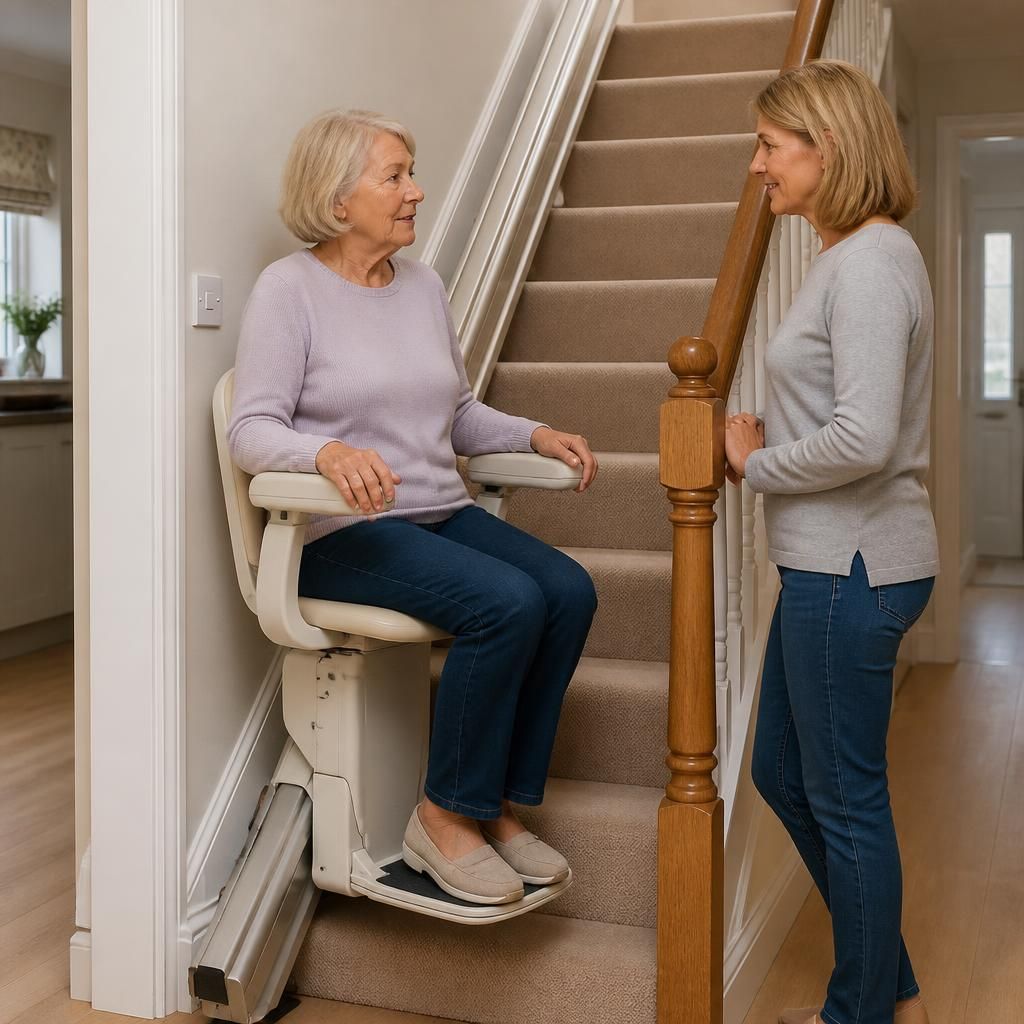
Compact stairlifts can accommodate people with limited mobility effectively when the lift is properly matched to the user, staircase and home. Their reduced footprint helps preserve usable stair space, while features such as powered seats, easy-to-operate controls, supportive seating and safety sensors can make travelling between floors more manageable. A professional assessment is essential because limited mobility affects each person differently.
A compact design does not mean that comfort or support has to be sacrificed. Depending on the staircase and the user’s needs, a suitable stairlift may include:
- A slim or retractable seat: This can reduce the space occupied when the stairlift is parked, helping other household members use the stairs.
- Powered swivel, folding or reclining functions: These can make getting on and off easier for someone who has difficulty turning, standing or maintaining balance.
- Adjustable armrests, footrests and seat settings: These help provide a stable, supported position throughout the journey.
- Simple controls: Controls can be positioned to suit the user’s reach and hand movement. A remote control may also allow the lift to be called to another floor.
- Safety features: Seat belts or harnesses, obstruction sensors, braking systems and controls that require deliberate operation help reduce avoidable risks.
The most important consideration is how independently the user can transfer on to the seat and off it at the top or bottom of the stairs. Someone who can stand briefly and take a few steps may be well suited to a conventional seated stairlift. If standing from a low seat, bending the knees or turning at the landing is difficult, a powered swivel seat or another seating configuration may be more appropriate. Where balance is particularly poor, the assessment should also consider whether additional support, supervision or a different mobility solution is needed.
Users do not normally travel in a wheelchair on a domestic stairlift. The wheelchair is left at one level and the user transfers to the stairlift before travelling. This means the space available at both ends of the staircase matters. Landings, doorways and nearby furniture must allow a safe transfer, and the user must be able to reach the controls without stretching or twisting. If transferring is not practical, a stairlift may not be the right option without further adaptations.
Compact stairlifts can be installed on many narrow or awkward staircases, including some with bends or intermediate landings. Curved systems are made to follow the staircase, although the available space, rail position and parking arrangement will affect the final design. On a straight staircase, the installation may be more straightforward, but the same checks are still needed to confirm that the user can approach the seat safely and that the lift will not obstruct essential access.
Limited mobility can also involve reduced grip strength, visual impairment, cognitive difficulties or fatigue. These factors should be discussed during the assessment. For example, a user with weak hands may need larger, clearly positioned controls; someone who tires easily may benefit from a comfortable seat and a parking point that avoids unnecessary walking; and someone with reduced vision may need controls and indicators that are easy to identify by touch or contrast. The stairlift should be chosen around the person’s actual routine rather than solely around the narrowest part of the staircase.
Safe operation also depends on the user being able to follow the basic procedure: sit fully back in the seat, secure the belt or harness where fitted, keep hands and clothing clear of the moving parts, and remain seated until the lift has stopped at the landing. The footrest should be kept clear, and the lift should not be used to carry more people or loads than it is designed for. Carers and family members should receive clear guidance if they will be helping with transfers or operation.
A compact stairlift may not be suitable where the user cannot sit upright safely, cannot transfer without significant risk, or needs to remain in a wheelchair throughout the journey. In these circumstances, the assessment may identify other possibilities, such as changes to the living arrangement, improved transfer equipment or a different access system. The final recommendation should take account of the user’s mobility, weight, posture, medical condition, confidence, home layout and likely changes in needs.
Independent Stairlifts can assess the staircase and discuss the user’s abilities before recommending a compact solution. This allows the seat, controls, safety equipment, rail layout and parking position to be considered together, rather than treating compactness as the only priority. With the right specification and installation, a compact stairlift can provide practical day-to-day access while keeping as much of the staircase usable as possible.
Compact stairlifts can support users with limited mobility effectively when the seat and controls make transferring on and off the lift manageable. The key assessment is not simply whether the rail will fit the staircase, but whether the user can approach the seat, sit securely, travel comfortably and leave the lift safely at the landing.
Features such as a powered swivel seat, supportive armrests, an adjustable footrest and an easy-to-reach control can help users who have difficulty turning, bending or maintaining their balance. A retractable or folding design may also preserve more usable stair space when the lift is parked. However, the most suitable configuration depends on the user’s posture, strength, reach, confidence and ability to follow the operating instructions.
Independent Stairlifts can assess transfer points, landings and nearby obstructions alongside the staircase itself. This helps determine whether a compact stairlift is appropriate and where it should park. If the user cannot transfer safely, remain seated upright or manage the controls, a different seating arrangement or alternative access solution may need to be considered.
Arrange a compact stairlift assessment
Arrange a compact stairlift assessment with Independent Stairlifts to review the user’s mobility, transfer needs and staircase layout. We can recommend a suitable configuration for safe, practical everyday use.