
Are there specific power supply requirements for installing a stairlift in a terraced house?
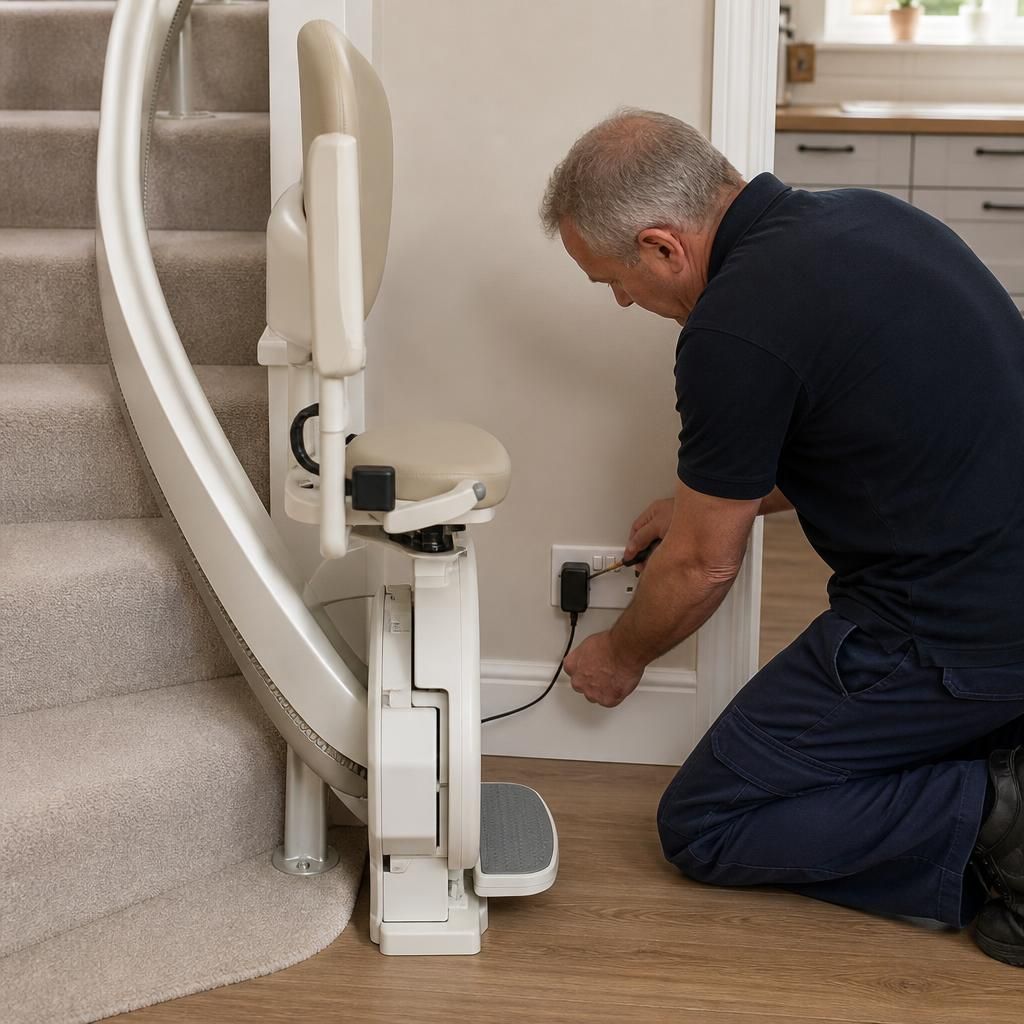
Most stairlifts in terraced houses use a standard domestic electrical supply, with the charger connected to a suitable socket near the stairlift’s parking position; the stairlift’s rechargeable batteries then power it during use. An installer will check the socket, earthing and circuit condition, and arrange any necessary electrical work rather than relying on an extension lead or unsuitable wiring.
Most stairlifts installed in terraced houses use the existing domestic electricity supply. The stairlift is normally connected to a suitable socket or charging point at one end of the staircase, often near its normal parking position. Rechargeable batteries then provide the power needed while the lift is travelling, so it does not usually require a dedicated high-capacity supply or a new consumer unit.
Before installation, the electrical supply should be checked rather than assumed to be suitable. This assessment normally includes:
- Confirming that a socket is positioned where the stairlift can charge correctly when parked.
- Checking the socket, wiring, earthing and protective devices are in satisfactory condition.
- Assessing whether the circuit can safely accommodate the charger alongside the other appliances connected to it.
- Checking that the electrical installation is appropriate for the age and condition of the property.
- Identifying any cable routes required to avoid exposed, trailing or trip-prone wiring.
Older terraced houses can have electrical installations that have been altered over several years. A socket may appear suitable but still have a loose connection, inadequate earthing or wiring that needs attention. Where necessary, electrical work should be completed by a suitably competent installer or qualified electrician before the stairlift is put into regular use.
A stairlift charger generally uses considerably less power than larger household appliances, and many installations can use an existing socket if it passes inspection. However, an extension lead, trailing cable or multi-way adaptor should not be used as a permanent solution. These can be vulnerable to damage on a narrow staircase and may leave the charger disconnected when the lift is parked elsewhere. If there is no suitable socket, the installer may recommend a new socket, a fused connection unit or another fixed charging arrangement that follows the stairlift manufacturer’s instructions.
The charging point should remain accessible without creating an obstruction. Its position depends on the stairlift design and the available space at the top or bottom of the stairs. This is particularly important in a terraced house, where a hallway, landing or doorway may be close to the track. The installer will consider whether the lift can be parked and charged without blocking a route through the home.
Stairlifts are battery-powered during travel, which means a brief interruption to the mains supply will not normally stop a user halfway up the stairs. The batteries recharge automatically when the lift is parked correctly at a charging point. If the lift is repeatedly left away from its charging position, the batteries may not recharge fully. This can reduce the available journeys and eventually affect battery life.
During an assessment, tell the installer about any known electrical issues, recent rewiring, tripping circuits or planned building work. If the property is rented, permission from the landlord may also be needed before adding a socket or altering fixed wiring. The final requirements depend on the stairlift model, the staircase layout and the condition of the home’s electrical installation, so the correct arrangement should be confirmed during the survey rather than selected in advance.
Independent Stairlifts can assess the available power supply as part of the stairlift survey and explain whether the existing socket is adequate or whether electrical work is recommended. This helps ensure that the stairlift is installed safely, charges reliably and fits into the everyday layout of the terraced house.
The stairlift’s charging point must be positioned so the lift can park and recharge without obstructing a hallway, doorway or landing. In a terraced house, where circulation space may be limited, the installer will assess whether the existing socket is safely located and accessible at the stairlift’s normal parking position.
If the socket is unsuitable or too far from the charging point, a fixed socket or other approved electrical connection may be recommended. Extension leads, trailing cables and multi-way adaptors should not be used as permanent arrangements, particularly beside a narrow staircase where they could be damaged or create a trip hazard. The final position should be confirmed during the survey, taking account of the stairlift model and the layout of the home.
Book a stairlift power supply assessment
Book a stairlift power supply assessment with Independent Stairlifts to confirm whether your existing socket and wiring are suitable for safe, reliable charging. We can recommend any necessary electrical work during your survey.