
What are the emergency safety features included in spiral stairlifts?
Spiral stairlifts commonly include rechargeable battery backup, obstruction sensors, a seat belt, an emergency stop control and manual controls to help keep the user safe if the lift encounters an issue or the household power fails. Exact features vary by model and bespoke installation, so your assessment should confirm how the lift can be stopped, lowered or operated manually in an emergency.
Spiral stairlifts typically include several emergency safety features to protect the user if the lift detects an obstruction, loses electrical power or needs to be stopped unexpectedly. These commonly include rechargeable battery backup, obstruction sensors, a seat belt, an emergency stop control, safety interlocks and a method of manual operation or lowering. The precise combination depends on the stairlift model and the bespoke track installation, so these functions should be demonstrated during your assessment and handover.
Rechargeable battery backup
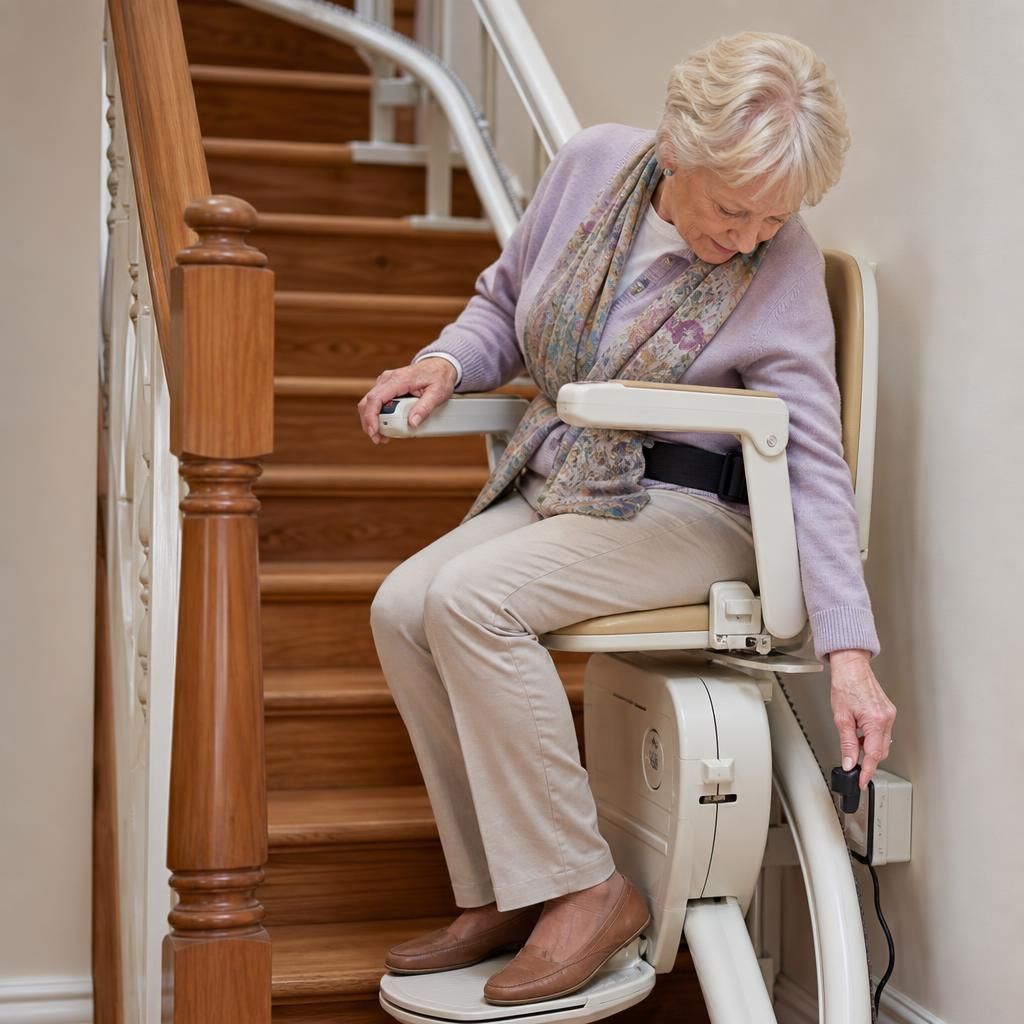
Most modern stairlifts are battery-powered while travelling, with the batteries recharged automatically when the lift is parked at a charging point. This means the stairlift can usually continue to operate during a mains power cut, provided the batteries are charged and in good condition. Battery backup is particularly useful on a spiral staircase because the user may be part-way along a complex route when the household electricity fails.
Battery backup is not unlimited. If the power remains off, the lift should be parked at its designated charging point as soon as it is safe to do so, rather than repeatedly travelling up and down the stairs. The installer should explain the warning sounds or display messages that indicate a low battery and show you where the charging contacts are located.
Obstruction sensors
Sensors around the footrest, carriage and other vulnerable areas detect objects in the lift’s path. If the stairlift meets an obstruction, the controls should stop the motor and prevent continued travel. This helps reduce the risk of trapping a foot, item of clothing or household object between the lift and the stairs or wall.
On a spiral or unusually shaped staircase, clearances can change around bends and narrower sections. Sensors are therefore only one part of safe operation. Keep the track, steps and landing areas clear, and do not try to override a sensor or continue travelling if the lift has stopped because of an obstruction. Remove the obstruction only when it is safe, following the instructions supplied with the lift.
Emergency stop control
An emergency stop button or switch allows the passenger or another person nearby to stop the stairlift immediately. It is intended for situations such as unexpected movement, an object entering the lift’s path or a passenger becoming unwell. The control is normally clearly marked and should be within reach when seated.
After using the emergency stop, do not restart the lift until the cause of the stop has been identified. If the control will not reset, the lift makes an unusual noise or the same problem occurs again, leave it stopped and contact the service team. Moving a passenger manually without guidance can create additional risk on a spiral staircase.
Seat belt and seating safety controls
A seat belt or restraint helps keep the passenger securely positioned while the lift travels around bends or changes direction. Some models also use an armrest control, seat sensor or related interlock that prevents travel until the seat is correctly positioned and the belt is fastened.
Where the seat swivels at the top or bottom landing, a swivel-locking mechanism should prevent travel until the seat is returned to its correct travelling position. This reduces the risk of the user leaving the seat before the lift has reached a suitable landing position. Always use the belt as instructed, even when travelling a short distance, and keep hands, feet and loose clothing inside the seating area.
Manual operation and emergency lowering
Depending on the model, a spiral stairlift may have a manual winding facility, release mechanism or other approved method for moving the lift a short distance when normal controls or power are unavailable. This is not intended for routine use. Manual operation can require a special tool and should only be carried out by a responsible person who has been shown the correct procedure by the installer.
Not every stairlift can be manually lowered in the same way, and forcing the carriage along the track can damage the drive system or compromise safety. Ask specifically what to do if the passenger is stranded on the staircase, where the manual controls are stored and who should operate them. If the user is unwell, injured or unable to leave the lift safely, contact the emergency services rather than attempting an improvised removal.
Safety interlocks and travel limits
Interlocks prevent the lift from travelling when an essential safety condition has not been met. Depending on the design, these may check that the seat, armrests, footrest, swivel seat or safety belt is in the correct position. Limit switches and programmed stopping points control where the lift stops at the top and bottom of the track, helping it avoid travelling beyond the safe ends of the installation.
On a bespoke spiral track, the stopping positions and clearances should be checked carefully during installation. The lift should not be used if it stops short, overruns, fails to lock in its landing position or behaves differently from normal.
Audible and visual warnings
Many stairlifts provide warning tones, indicator lights or a display message when the battery is low, the lift is not charging, a safety edge has been activated or a component needs attention. These alerts are an important early warning rather than a fault to ignore. The handover should cover the meaning of the common sounds and indicators for your particular model.
Some systems also include remote controls, allowing a carer to call the lift to a landing or move it away from the stairs when it is unoccupied. A remote control should not be used to move the lift while someone is seated unless the instructions specifically permit this and the operator has a clear view of the route.
What to confirm during your assessment
- How the stairlift operates during a power cut and how long the charged batteries are expected to support normal use.
- Where the emergency stop control is located and how it is reset.
- How obstruction sensors behave and what to do if one is activated.
- How the seat belt, swivel seat and other interlocks must be used.
- Whether the model has an approved manual winding or emergency-lowering procedure.
- Which warning tones, indicator lights or display messages require the lift to be taken out of use.
- Who to contact if the lift stops with a passenger on the staircase, including out-of-hours arrangements where applicable.
Emergency features reduce risk but do not replace correct use, regular servicing and a clear staircase. Keep charging points connected, avoid carrying objects that could obstruct the route, and report changes in performance promptly. During a bespoke assessment for a spiral or complex staircase, the installer can confirm which features are included, demonstrate them in the actual home and explain the specific emergency procedure for that installation.
A rechargeable battery backup allows a spiral stairlift to keep operating during a household power cut, provided the batteries are charged and in good condition. This is particularly important when the lift is part-way around the staircase. Once safely at a landing, park the stairlift at its charging point and avoid unnecessary journeys, as battery capacity is limited. If the lift does not respond, displays a low-battery warning or stops unexpectedly, use the emergency stop if necessary and contact the service team rather than attempting to force it along the track.
Arrange a bespoke spiral stairlift safety assessment
Arrange a bespoke spiral stairlift safety assessment to confirm the emergency features, controls and procedures suited to your staircase and mobility needs. Our specialist team can demonstrate how the lift should be operated and what to do if an issue occurs.