
How do I maintain a stairlift for spiral or awkward stairs after installation?
Maintain a stairlift on spiral or awkward stairs by keeping the bespoke rail and carriage clean, charging the batteries correctly, and arranging routine servicing with a qualified engineer. Do not attempt to adjust the rail, safety sensors or electrical components yourself; report unusual noises, movement or stopping faults promptly.
Maintain a stairlift on spiral or awkward stairs by keeping the bespoke rail and carriage clean, charging the batteries correctly, checking for visible obstructions and arranging routine servicing with a qualified stairlift engineer. Because these installations often include curved sections, tight clearances and made-to-measure safety features, do not adjust the rail, sensors or electrical components yourself.
Keep the rail and carriage clean. Wipe the accessible parts of the rail, seat, armrests, footrest and carriage with a soft, dry or slightly damp cloth. Remove dust, pet hair and other debris from around the rail, particularly at bends, joints and entry or exit points. Do not pour water over the lift or use abrasive cleaners, solvents, grease or oil unless the manufacturer specifically recommends them. Lubricating the rail yourself can attract dirt and may affect the carriage or braking system.
Take extra care around a spiral or unusually shaped staircase. A small object left on a step, landing or beside the rail can interfere with the footrest, sensors or carriage as it travels through a restricted section. Keep curtains, rugs, furniture, storage items and trailing cables clear of the stairlift’s route. If the lift has a swivel seat, powered footrest or other powered movement, keep the surrounding area clear so these features can operate without contact.
Use the charging points correctly. Leave the stairlift at its designated charging position when it is not in use, as shown during installation. This allows the batteries to recharge and helps prevent the lift from being unavailable when needed. If the lift has more than one charging position, use them as instructed. Avoid switching off the power supply unless the user instructions specifically require it, and check that any visible charging indicator behaves as described in the manual.
Rechargeable stairlift batteries gradually lose capacity as they age. A lift that travels more slowly than usual, stops before reaching the intended position, gives a low-battery warning despite being left on charge, or requires charging more frequently should be reported for assessment. Do not replace batteries or open the battery compartment unless this is specifically authorised and carried out by a competent engineer.
Carry out simple visual checks. Before use, look for anything unusual, including:
- damage, looseness or movement in the rail, seat, armrests, footrest or safety belt;
- objects or debris close to the rail, steps, landings or travel path;
- new scraping, clicking, grinding or juddering during travel;
- the lift stopping, starting unevenly, travelling more slowly or failing to stop at its normal position;
- warning lights, tones or error messages that are not explained by a low battery; and
- changes in the way the seat swivels, folds or locks.
Do not continue using the stairlift if a safety belt will not secure, a seat or armrest is loose, the lift behaves unpredictably, or a component appears damaged. Switch it off if the instructions advise this, keep the stairway clear and contact Independent Stairlifts or the appointed service provider for advice. Never try to bypass a safety switch or hold down a control to make the lift run.
Arrange professional servicing. A qualified engineer can inspect the bespoke rail, carriage, drive system, batteries, charging contacts, safety sensors, limit switches, seat mechanisms and fixings. On a spiral or awkward staircase, the engineer should also check clearances through bends, the alignment of the rail and the stopping positions at the top and bottom. Follow the service interval in your documentation and arrange an inspection sooner if the lift is used heavily, has been exposed to damp conditions or develops a change in performance.
Do not move, extend, repaint, drill near or alter the rail after installation. Even a small change can affect clearances, carriage alignment or the operation of sensors on a tight curve. If building work, flooring changes, decorating or furniture alterations are planned near the staircase, ask for advice first. Protect the lift from dust and accidental impact, but do not cover the carriage or charging equipment in a way that could restrict ventilation or access.
Outdoor installations need additional care. Keep the lift’s charging points and controls protected from standing water, snow and excessive dirt, and use any supplied cover as instructed. Check the rail and seat after severe weather and report corrosion, water ingress, damaged covers or unreliable operation. Do not use an outdoor stairlift in conditions or locations outside the manufacturer’s instructions.
Keep the user manual, service records and engineer’s contact details available. If the stairlift is shared, make sure every user knows how to use the belt, controls, swivel seat, footrest and emergency stop, and understands how to report a fault. The exact cleaning products, charging method and service requirements vary between models, so the instructions supplied with your lift take priority over general advice.
Routine cleaning and sensible daily checks help identify problems early, but they do not replace professional maintenance. Promptly reporting unusual noise, movement, stopping faults or battery warnings is particularly important on a bespoke stairlift, where the rail and carriage have been designed for the specific spiral or awkward layout.
Maintaining a stairlift on spiral or awkward stairs means keeping the bespoke rail and travel route clear, while arranging professional checks of the carriage, batteries, sensors and stopping positions. Tight bends and restricted clearances make it especially important to report unusual noises, juddering, loose components or changes in movement promptly.
Wipe accessible surfaces with a soft, slightly damp cloth and remove dust or debris from around the rail, steps and charging points. Do not apply oil, alter the rail or attempt to adjust safety components yourself. Leave the lift at its designated charging point when not in use, and contact a qualified engineer if it stops unexpectedly, gives repeated battery warnings or no longer travels smoothly through a bend.
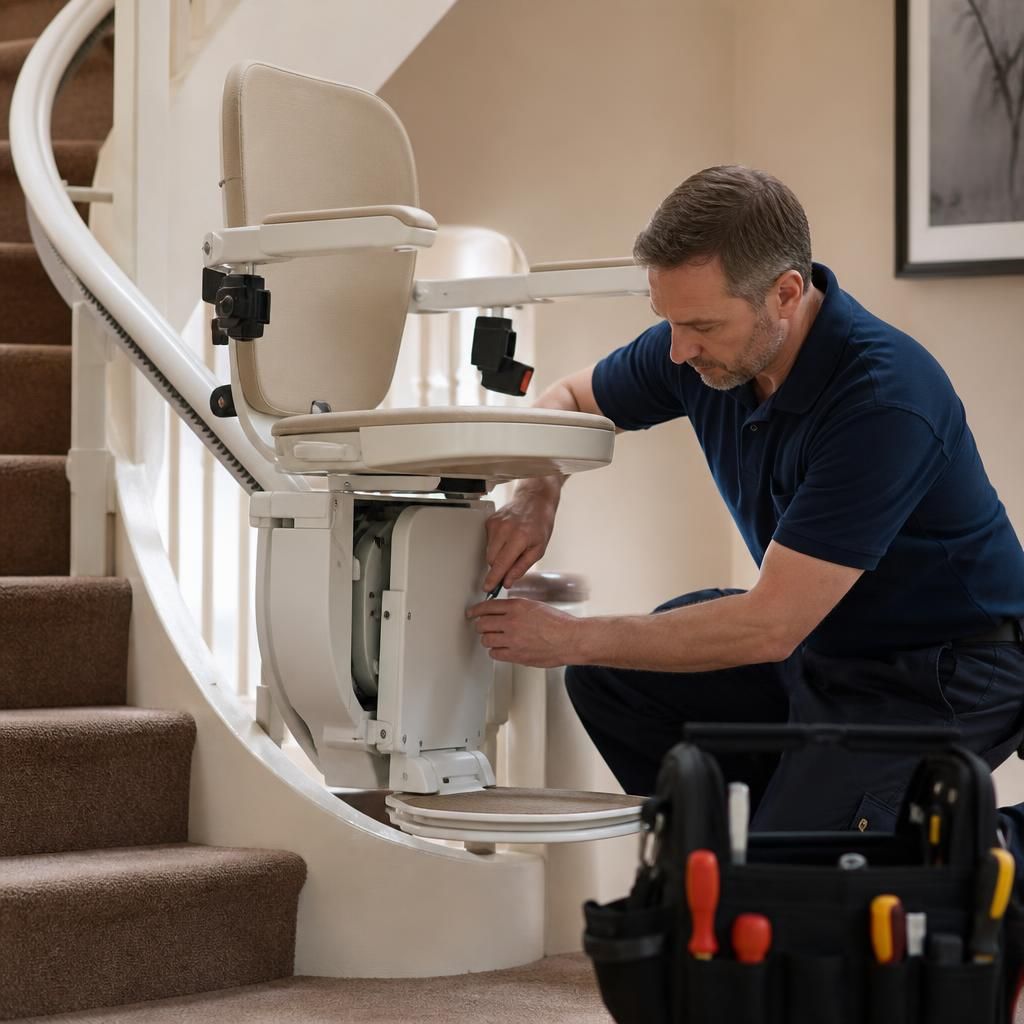
Arrange professional stairlift maintenance
Arrange professional stairlift maintenance with Independent Stairlifts to check the bespoke rail, carriage, batteries, sensors and stopping positions on your spiral or awkward staircase. Contact us to book a service or discuss any change in performance.