
Can stairlifts for spiral stairs be installed both indoors and outdoors?
Yes, stairlifts for spiral stairs can be installed indoors or outdoors, provided the staircase and surrounding space are suitable. Outdoor installations require weather-resistant components and bespoke design, while both types need an expert assessment to measure the curves, landings, access points and available clearance accurately.
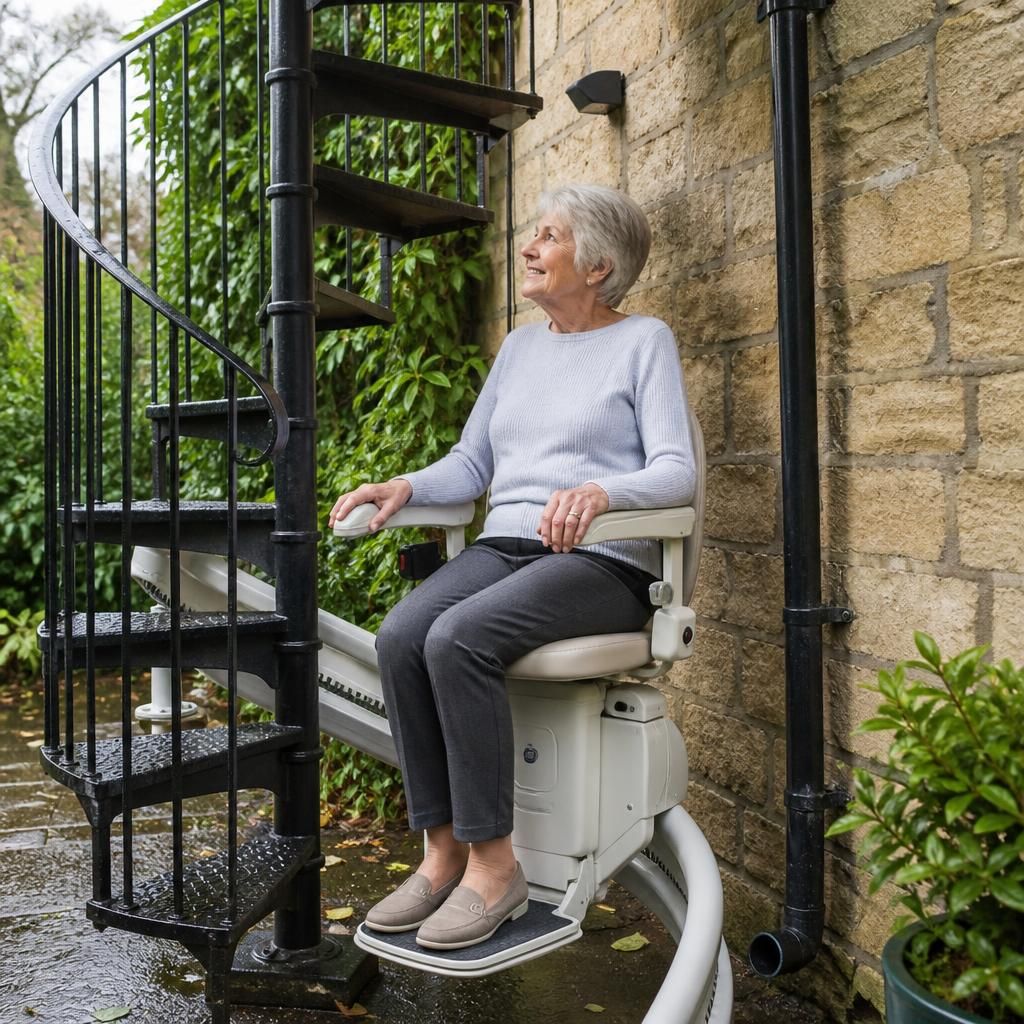
Yes. Bespoke stairlifts for spiral stairs can be installed indoors or outdoors when the staircase, landings and surrounding access space are suitable. Indoor installations are generally protected from weather, while outdoor installations require weather-resistant equipment, careful drainage and additional protection for the lift, charging points and controls. In both situations, the stairlift must be designed around the staircase rather than treated as a standard straight-flight installation.
A spiral or unusually shaped staircase is assessed in detail before a suitable solution is recommended. The assessment considers the direction and tightness of each curve, changes in gradient, the width of the stairs, headroom, landings, access at the top and bottom, and whether the user can safely get on and off the seat. The position of doors, walls, radiators, windows and other obstructions is also important. These details determine whether a stairlift can follow the staircase safely and whether the user will have enough clearance throughout the journey.
For an indoor spiral staircase, the track is normally manufactured to follow the individual shape of the stairs. Depending on the layout, it may continue around tight bends, pass through changes in direction or finish at a landing where the user can transfer safely. A powered swivel seat, hinged track or alternative parking position may be considered where space at the top or bottom is restricted. The final design must preserve access to the staircase and avoid creating unnecessary obstructions for other people in the property.
Outdoor spiral staircases present additional design and maintenance requirements. Equipment used outside must be suitable for exposure to rain, sunlight, temperature changes, dirt and, in some locations, salt or coastal air. Components such as the seat, controls, motor housing, charging equipment and track finishes need appropriate protection. The installation should also account for water run-off, standing water, slippery surfaces and the possibility of debris collecting on the track or steps.
An outdoor stairlift may need a weatherproof cover when parked, particularly if it is not positioned beneath a canopy. Charging arrangements should be located and protected so that the lift can charge reliably without exposing electrical connections to avoidable moisture. The user should also have a stable, well-lit and level area for boarding and leaving the lift. If the staircase is exposed to strong winds or severe weather, the assessment may identify extra precautions or indicate that a different access solution would be safer.
Weather resistance does not mean that an outdoor stairlift is maintenance-free. Outdoor equipment needs regular checks to remove leaves, grit and other debris, and to identify corrosion, water ingress or changes in the condition of the stairs and handrails. The track and moving parts should be serviced in line with the manufacturer’s guidance. Indoor lifts also require servicing, but they are usually exposed to fewer environmental stresses.
Not every spiral staircase can accommodate a stairlift. Very narrow steps, insufficient headroom, unsuitable landings, restricted access or a structure that cannot safely support the required installation may make a conventional track-based solution impractical. In some cases, a different bespoke configuration may resolve the issue; in others, a platform lift, improved access route or another mobility aid may need to be considered. The appropriate option depends on the building and the user’s mobility needs.
Where the property is listed, in a conservation area or subject to a landlord’s conditions, permission may be needed before work begins. An assessment should identify whether the proposed track, fixings, electrical work or external equipment could affect the building’s appearance or structure. Independent Stairlifts can discuss these considerations during a free assessment and explain what information is needed before an installation is confirmed.
The most reliable way to establish whether a spiral stairlift is suitable indoors or outdoors is to arrange an on-site assessment. Measurements, photographs and details of how the staircase is used can then be reviewed alongside the user’s seating, transfer and control requirements. This allows the proposed design to address both the geometry of the stairs and the practical conditions at the property, rather than relying on a standard model that may not be appropriate.
Outdoor stairlifts for spiral stairs require weather-resistant equipment and a track designed specifically for the staircase. The lift must withstand rain, sunlight, temperature changes and debris, while keeping the seat, controls, motor housing and charging points suitably protected.
The installation also needs safe drainage, a stable boarding area and protection from standing water. A weatherproof cover may be recommended when the lift is parked in an exposed position. Regular cleaning and servicing are important because leaves, grit, moisture and corrosion can affect outdoor components and the track.
Arrange your free spiral stairlift assessment
Arrange your free spiral stairlift assessment with Independent Stairlifts to confirm whether an indoor or outdoor solution is suitable for your staircase and access needs. Our specialist team will assess the layout and explain the available options.