
What is the expected lifespan of a spiral stairlift and what maintenance does it require?
A well-installed spiral stairlift will commonly provide reliable service for around 10 years or more, although its lifespan depends on usage, the model, installation conditions and servicing. Maintenance usually includes regular safety checks, cleaning and inspection of the track and moving parts, battery replacement when required, and prompt attention to any unusual noise, movement or fault.
A well-installed spiral stairlift will commonly provide reliable service for around 10 years or more, although its actual lifespan depends on the model, how often it is used, the condition of the staircase, the installation environment and the quality of servicing. A bespoke spiral stairlift has a more complex curved track than a straight model, so regular inspection is important to keep its movement, safety systems and charging equipment working correctly.
What affects the lifespan of a spiral stairlift?
The main factors affecting service life include:
- Frequency of use: A stairlift used several times a day will experience more wear than one used occasionally.
- Track design: Spiral staircases may require tight curves, changes in gradient and carefully positioned joints. These components must remain correctly aligned.
- Installation conditions: Dust, damp, temperature changes and exposure to moisture can affect electrical and mechanical parts. This is particularly relevant where a stairlift is installed near an external entrance or on an outdoor staircase.
- Load and operation: Using the stairlift within the manufacturer’s stated weight limit and following the operating instructions helps reduce strain on the motor, drive system and track.
- Maintenance history: Prompt servicing and early repairs can prevent a minor fault from causing more extensive wear.
Age alone does not determine whether a stairlift needs replacing. A well-maintained lift may continue to operate safely beyond its expected service period, while a heavily used or poorly maintained lift may require significant work sooner. Replacement decisions should be based on its safety, reliability, availability of parts and the cost and practicality of further repairs.
Routine maintenance for a spiral stairlift
Maintenance should follow the manufacturer’s instructions and be carried out by a suitably qualified stairlift engineer. A service normally includes inspection and testing of the following areas:
- Track and drive system: The engineer checks the curved rail, joints, drive mechanism and fixing points for wear, looseness, damage or misalignment. On a spiral staircase, even a small change in alignment can affect how smoothly the lift travels around a bend.
- Seat and safety equipment: The seat, swivel mechanism, armrests, footrest, seat belt and safety sensors are checked to ensure they operate securely. The swivel seat must lock correctly before travel begins.
- Motor and controls: The motor, handset, arm controls, stop controls and remote controls are tested. The engineer will also investigate hesitation, unusual vibration or changes in travel speed.
- Batteries and charging points: Most domestic stairlifts use rechargeable batteries so they can operate during a power cut. Battery condition, charging contacts and charging points should be checked, particularly if the lift is used infrequently or is regularly left away from its designated charging position.
- Safety sensors: Obstruction sensors and other safety systems are tested to confirm that the lift stops as intended if an obstacle is detected.
- Electrical connections: Wiring, connections and protective covers are inspected for damage, corrosion or signs of overheating.
There is no single servicing schedule that suits every spiral stairlift. Follow the service interval specified for your particular model and arrange an inspection sooner if the lift is used heavily, installed outdoors, exposed to damp conditions or showing any change in performance. Keeping service records can also help when diagnosing faults or assessing whether repair or replacement is the more sensible option.
What you can do between services
Simple checks and careful cleaning can help preserve the lift, but they should not replace professional servicing. Keep the track and surrounding steps clear of clothing, bags, pet toys and other objects. Wipe accessible surfaces with a soft, slightly damp cloth and keep the charging contacts free from dirt. Do not use excessive water, abrasive cleaners or unapproved lubricants, as these can damage finishes, electrical parts or the drive system. Do not attempt to adjust the track, remove covers or repair the motor and batteries yourself.
Use the stairlift as intended and report any of the following promptly:
- jerky, hesitant or unusually slow movement;
- new grinding, clicking, squeaking or buzzing sounds;
- the lift stopping unexpectedly or failing to complete a journey;
- an error message or warning light;
- batteries that do not hold charge or a lift that repeatedly fails to charge;
- a seat, armrest, footrest or safety belt that feels loose; or
- visible damage, moisture ingress or movement in the track or its fixings.
If the stairlift behaves unexpectedly, stop using it and contact the service team rather than repeatedly resetting it. A qualified engineer can identify whether the problem is caused by a battery, sensor, control, alignment issue or another component. Timely attention is especially important on a spiral staircase because the curved track and restricted space can make faults more difficult to inspect safely.
In practical terms, the best way to extend the life of a spiral stairlift is to keep it clean and dry, leave it on charge as instructed, avoid exceeding its rated load, arrange servicing at the recommended interval and report changes early. With those measures, many stairlifts remain safe and dependable for around 10 years or longer, subject to the condition of the equipment and the suitability of replacement parts.
The expected lifespan of a spiral stairlift is commonly around 10 years or more, provided it is correctly installed, used within its rated capacity and maintained at the recommended intervals. Because its track follows tight curves, professional checks are particularly important for confirming that the rail, drive system, safety sensors and fixings remain correctly aligned.
Between services, keep the track and steps clear, wipe accessible surfaces with a soft, slightly damp cloth and leave the lift on charge as instructed. Do not use excessive water, abrasive cleaning products or unapproved lubricants. Contact a qualified engineer promptly if the lift becomes jerky, unusually noisy or slow, fails to charge, stops unexpectedly or shows any visible damage.
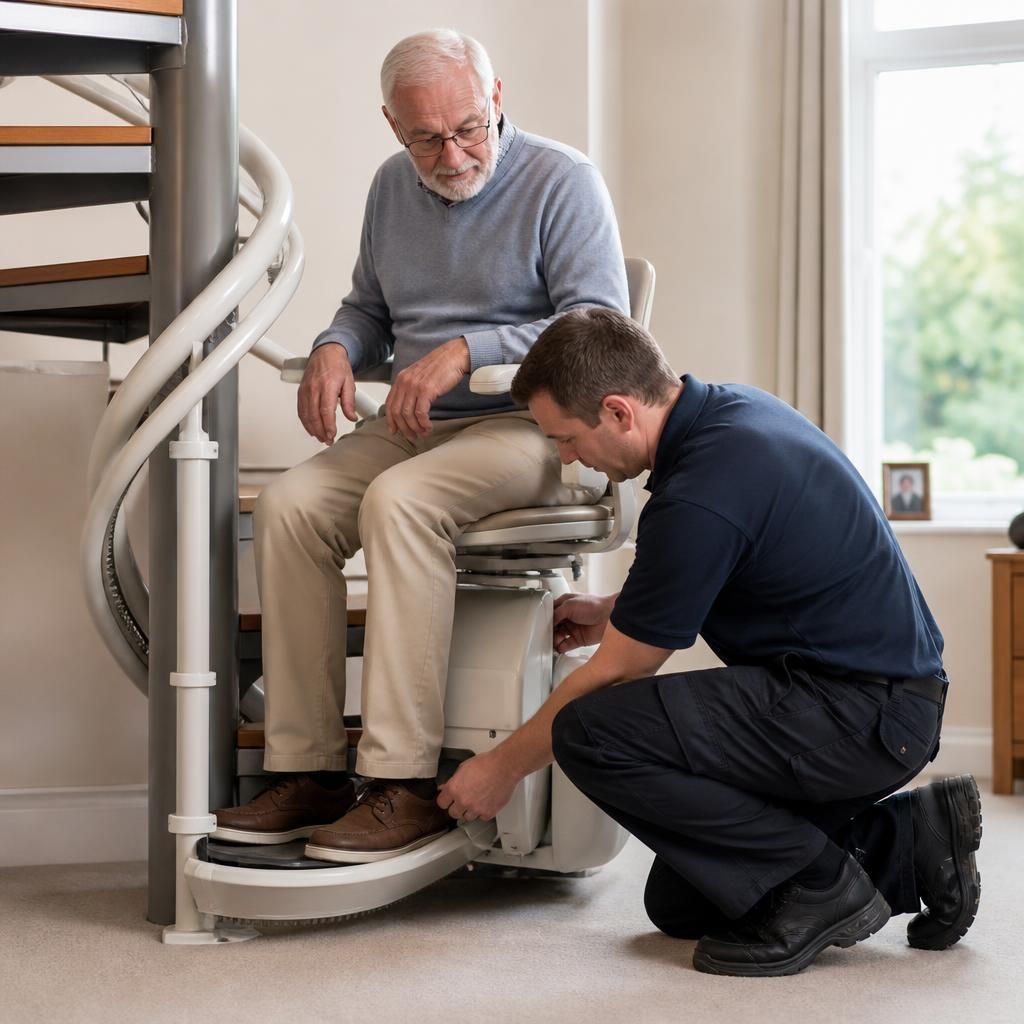
Arrange a Professional Spiral Stairlift Assessment
Arrange a professional spiral stairlift assessment to review your stairlift’s condition, maintenance needs and suitability for continued use. Our team can advise on servicing, repairs or replacement where required.