
Are spiral stairlifts suitable for outdoor use?
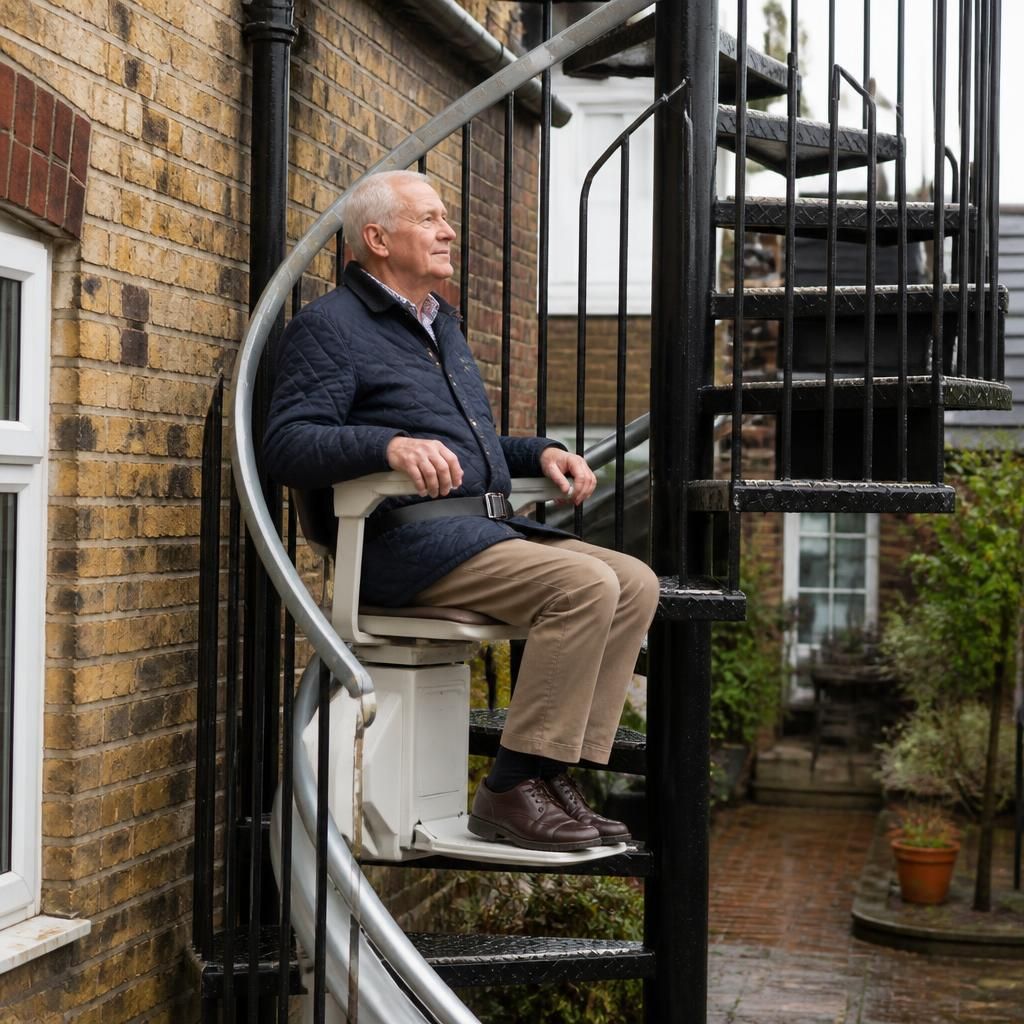
Yes, a spiral stairlift can be suitable for outdoor use, but it must be a model specifically designed and protected for exterior conditions rather than a standard indoor lift. The staircase, exposure to rain and frost, electrical supply, drainage, corrosion protection and safe access will all need to be assessed before installation.
Yes, a spiral stairlift can be suitable for outdoor use, but it must be a model specifically designed and protected for exterior conditions. A standard indoor stairlift should not be installed outside, even where the staircase is partially sheltered. The staircase, weather exposure, electrical supply, drainage, corrosion protection and safe access arrangements all need to be assessed before a recommendation can be made.
Outdoor spiral stairlift installations are usually bespoke. The lift may need to follow tight curves, changing gradients and limited clearances, while also coping with rain, frost, sunlight, wind-blown debris and temperature changes. In some situations, a suitable outdoor curved stairlift can be installed; in others, a different access solution may be safer or more practical.
What makes an outdoor spiral stairlift different?
An outdoor model should have components and finishes intended for exterior use. This normally includes protection for the motor, batteries, charging equipment and control systems, together with corrosion-resistant rails, fixings and other exposed parts. Materials must be suitable for the conditions at the property. For example, a coastal location may require additional protection from salt-laden air, while a staircase beneath trees may be more exposed to leaves, moisture and organic debris.
Weather-resistant does not mean completely unaffected by the weather. Covers may still be needed when the lift is not in use, and the seat, armrests and controls should be kept as dry and clean as possible. Water must not be allowed to collect around the charging point, rail or drive mechanism.
Key points considered during an assessment
- The staircase structure: The installer will check the condition, width, tread shape, gradient and fixing points of the spiral staircase. The rail must be securely attached to a suitable structure without compromising the stairs.
- Clearance and access: The lift must leave enough room for the passenger to sit safely, board and exit at the top and bottom, and avoid nearby walls, gates, doors, balconies or other obstructions. Spiral staircases can have particularly restricted entry and exit areas.
- Exposure to weather: The position of the staircase, including whether it is fully exposed, enclosed, covered or close to the sea, affects the specification. Wind, driving rain, frost, direct sunlight and snow should all be considered.
- Drainage: Outdoor stairs should not allow water to pool beneath the rail or at the landing areas. Poor drainage can accelerate corrosion and affect the reliability of electrical and mechanical components.
- Electrical safety: The power supply and charging position must be suitable for the outdoor environment and installed in accordance with current electrical safety requirements. A qualified installer will consider protection from moisture, cable routes and safe isolation.
- Passenger safety: The user should be able to transfer onto and off the seat safely, with suitable support from the armrests, seat belt and controls. Wet treads, ice and poor lighting may create additional risks, even when the stairlift itself is operating correctly.
How the staircase is used also matters
A stairlift on an outdoor spiral staircase may be appropriate where the user needs regular access between a house and garden, a separate entrance, or different levels of an external property. However, it may not be suitable if the stairs are frequently wet, icy or obstructed, or if the passenger cannot safely remain seated and transfer at the landings.
If the staircase is used by several people, the design should also allow others to pass safely where possible. On a narrow spiral staircase, a rail and seat can reduce the remaining space. An assessment should therefore consider the needs of everyone using the route, not just the stairlift passenger.
Maintenance and day-to-day care
Outdoor stairlifts generally require closer attention than indoor models. Keep the rail and drive area clear of leaves, grit, mud and standing water. Wipe away dirt using the method recommended for the equipment, and do not use unsuitable solvents or pressure washers around the motor, controls or charging points. Check that covers remain secure and report unusual noises, slow movement, charging problems or visible corrosion promptly.
Regular servicing is important because exterior conditions can affect batteries, electrical connections, safety sensors, moving parts and fixings. The required service schedule will depend on the model and the environment. A lift in a sheltered courtyard may need different care from one exposed to coastal weather or severe frost.
When an outdoor spiral stairlift may not be the best option
A different access arrangement may be preferable where the staircase is structurally unsuitable, there is no safe boarding area, or the route is exposed to conditions that would make reliable use difficult. Depending on the property, alternatives might include adapting the staircase, improving shelter and drainage, or considering another type of outdoor access equipment. This decision should be based on the building, the route and the passenger’s mobility rather than on the shape of the staircase alone.
Independent Stairlifts can assess the staircase, the surrounding access route and the intended use before confirming whether an outdoor spiral stairlift is practical. The assessment should identify the appropriate exterior specification, required protection and any building or electrical work needed, so you can make an informed decision about safe, reliable access.
An outdoor spiral stairlift must be specifically designed for exterior conditions; an indoor model is not suitable for installation outside. Its rail, motor, batteries, controls, fixings and charging equipment need appropriate protection from rain, frost, sunlight, wind-blown debris and corrosion.
The staircase and surrounding area also require assessment. The installer will check that the structure can support the rail, that water drains away effectively and that there is enough room to board and leave the seat safely. Sheltering the staircase may help, but it does not remove the need for weather-resistant equipment or safe electrical installation.
Outdoor use also requires regular care. Keep the rail and drive mechanism clear of leaves, grit, mud and standing water, secure any protective covers and report charging problems, unusual noises or visible corrosion promptly. A suitable servicing schedule helps maintain safe and dependable operation in changing weather.
Arrange an outdoor spiral stairlift assessment
Arrange an assessment with Independent Stairlifts to check whether an outdoor spiral stairlift is suitable for your staircase, access requirements and local weather conditions. We can advise on the appropriate exterior specification and any protection or preparation needed before installation.