
Are spiral stairlifts suitable for outdoor use, and what are the key considerations?
Yes, a spiral stairlift can be suitable for outdoor use if it is specifically designed and installed for external conditions. Key considerations include weather-resistant components, safe operation on tight turns, suitable power and drainage, secure track fixing, and a detailed site assessment by a qualified installer.
Yes, a spiral stairlift can be suitable for outdoor use, but only when the equipment is specifically approved for external installation and the staircase, power supply and surrounding environment have been assessed. An indoor spiral stairlift should not simply be installed outside. Outdoor exposure introduces rain, condensation, frost, sunlight, wind, dirt and temperature changes that can affect the track, drive system, controls and electrical components.
Use equipment designed for external conditions
The stairlift should have weather-resistant components and protective finishes appropriate for the location. Depending on the model, this may include corrosion-resistant metalwork, sealed electrical connections, protected controls, UV-resistant surfaces and upholstery intended for outdoor use. A weatherproof cover may protect the seat and controls when the lift is parked, but it does not replace equipment designed for outdoor conditions.
Outdoor suitability is model-specific. The installer should confirm which components are rated for external use and whether the proposed arrangement is suitable for the particular exposure at your property. A sheltered stairwell may present fewer challenges than an open staircase beside the coast, a garden path or a high wall that receives strong wind and driving rain.
The staircase and track need a detailed assessment
Spiral stairs already require careful measurement because the track must follow tight curves while maintaining safe clearance from the steps, handrails and surrounding walls. Outside, the survey must also consider:
- the shape, diameter and gradient of the spiral staircase;
- available space at the top and bottom for safe boarding and leaving the seat;
- the position of gates, doors, paths, landings and other access routes;
- the condition and load-bearing strength of the steps, central column, surrounding structure or other proposed fixing points;
- water run-off, standing water, drainage and the risk of ice on the steps; and
- exposure to wind, salt air, falling leaves, grit and other contaminants.
A curved track may need to be fixed to the staircase or adjacent structure rather than a conventional load-bearing wall. The fixing method must be suitable for the construction and capable of remaining secure as the materials experience outdoor temperature and moisture changes. If the staircase is old, lightweight or structurally unusual, additional checks may be needed before installation can be specified.
Safety remains the main consideration
A safe outdoor installation must provide a stable transfer position and enough clearance for the user, even when the steps or landing are wet. The seat, armrests, footrest, safety belt, controls and swivel mechanism should be easy to use for the individual passenger. Tight turns can affect how the user approaches the seat and how much room is available at the ends of the track, so these details should be demonstrated and agreed during the assessment.
Outdoor conditions can also make the staircase itself hazardous. Rain, frost, moss, leaves and ice may reduce grip independently of the stairlift. A stairlift does not remove the need to keep the steps, landings and handrails clear and in good condition. Lighting, drainage, non-slip surfaces and suitable guarding may be necessary, particularly where the staircase is exposed or elevated.
Power, charging and drainage must be planned
The charging point and electrical supply need protection appropriate to an outside installation. The arrangement should prevent water from collecting around the charging contacts or electrical connections, and cables should be routed so that they cannot be damaged or become a trip hazard. The installer or a suitably qualified electrician should confirm that the supply, isolation and protective devices are appropriate for the equipment and the property.
Where possible, the track and charging position should be located away from direct run-off and areas where snow, leaves or mud collect. Drainage is particularly important on spiral staircases because water can remain on narrow treads, landings or fittings. The installation should not obstruct existing drains or create a new point where water can enter the building.
Maintenance is more important outdoors
An external spiral stairlift normally needs more frequent cleaning and inspection than an indoor installation. Salt, grit, dirt and moisture can accelerate corrosion or affect moving parts. Follow the manufacturer’s maintenance schedule and arrange servicing by a suitably qualified technician. Checks may include the track, fixings, drive system, charging contacts, safety edges, seat, belt, controls and protective covers.
Keep the lift parked in its recommended position, use the supplied cover where appropriate, and remove leaves, mud and other debris without using cleaning products that could damage seals or finishes. Do not hose down the stairlift or attempt to dismantle weatherproof components. Report unusual noise, slower movement, charging problems, visible corrosion or intermittent controls promptly.
What to confirm during your assessment
Before proceeding, ask the installer to confirm that the proposed model is approved for outdoor use, what level of weather protection it provides, where it can be parked and charged, how the track will be fixed, and what servicing and cover arrangements apply. It is also worth discussing how the lift will be used in wet or icy weather and whether an alternative access route is needed during severe conditions.
A site assessment is essential because a spiral stairlift that works well on one external staircase may not be appropriate for another. Independent Stairlifts can assess the staircase, access requirements and surrounding structure before advising whether an outdoor spiral solution is practical, or whether another access arrangement would provide a safer and more suitable result.
An outdoor spiral stairlift must be designed and approved for external use; an indoor model is not suitable simply because it fits the staircase. Weather-resistant components, protected electrical connections, suitable controls and finishes that can withstand moisture, sunlight and temperature changes are essential. A protective cover can help when the lift is parked, but it does not replace proper outdoor specification.
A detailed site assessment is also important. The installer should check the staircase structure, track fixings, drainage, charging position, boarding areas and exposure to wind, frost, leaves and salt air. Keeping the steps clear and dry remains the customer’s responsibility, as a stairlift cannot prevent slips caused by moss, ice or standing water. Ask for the proposed model’s outdoor suitability, maintenance requirements and severe-weather guidance before installation.
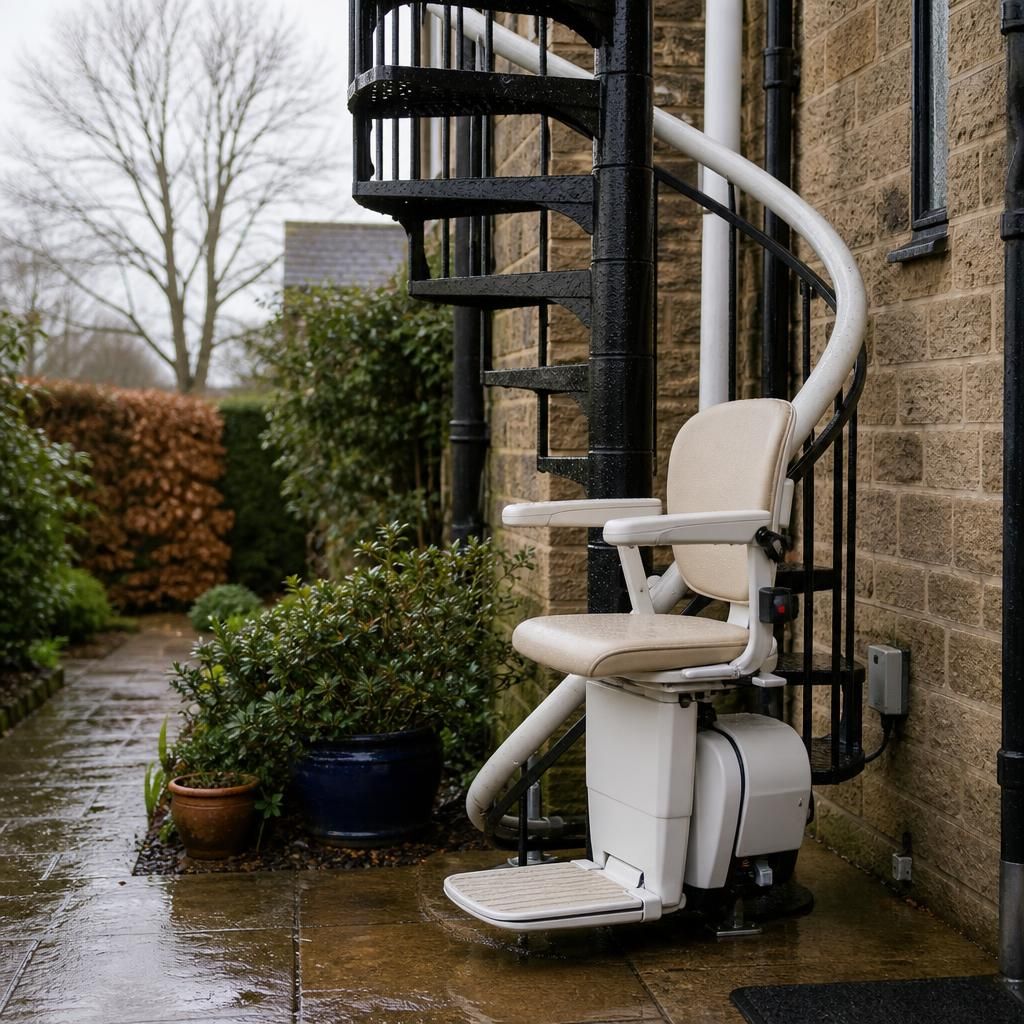
Arrange an assessment for your outdoor spiral stairlift
Arrange an assessment with Independent Stairlifts to confirm whether your spiral staircase, surrounding structure and access requirements are suitable for an outdoor stairlift. We can advise on the appropriate weather-resistant specification, track fixing, charging position and ongoing maintenance.