
How does maintenance ensure the long-term safety of a spiral stairlift?
Regular maintenance keeps a spiral stairlift safe by checking its drive system, batteries, charging points, track, seat and safety controls for wear or faults. Professional servicing can identify problems early, maintain reliable operation and ensure the lift remains suitable for the staircase and the person using it.
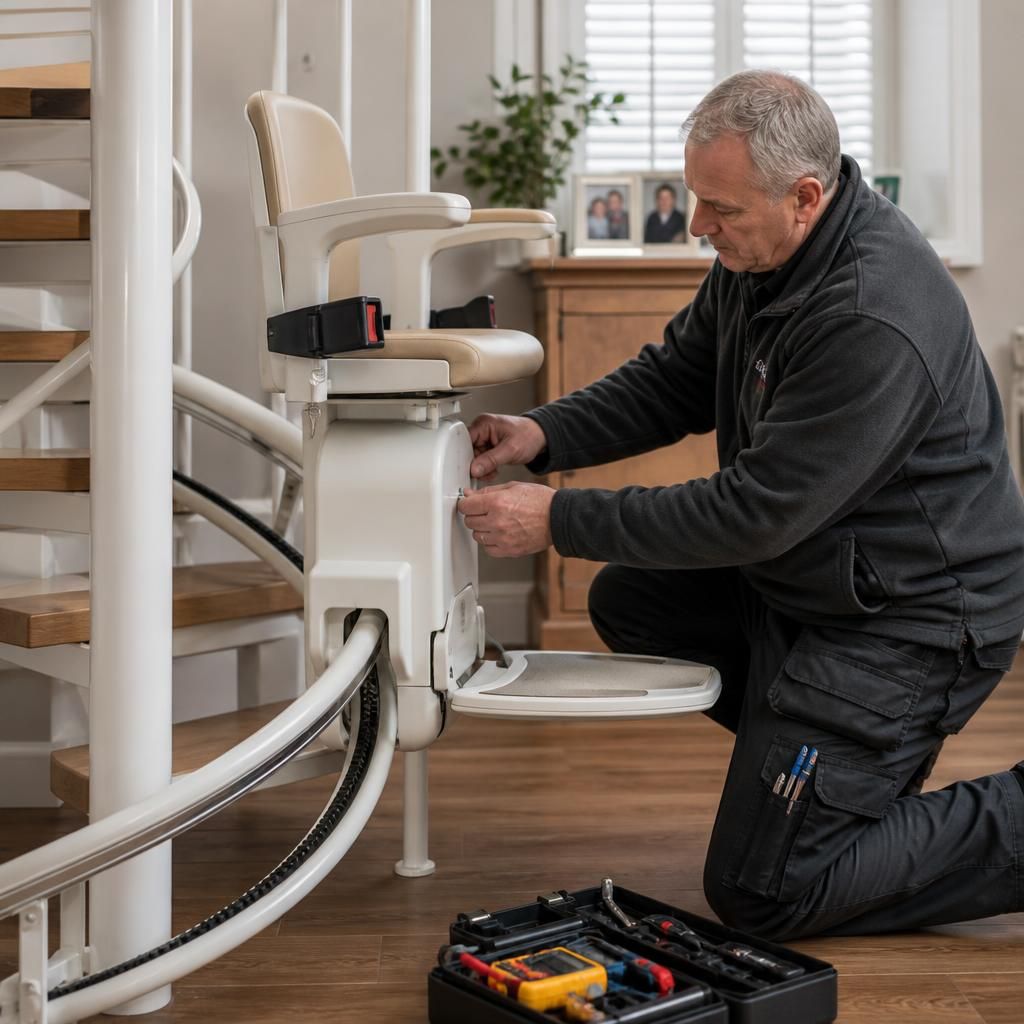
Regular, professional maintenance supports the long-term safety of a spiral stairlift by identifying wear, faults and changes in performance before they affect safe operation. A service checks the lift as a complete system, including the drive mechanism, batteries, charging points, track, seat, restraint and safety controls, while also confirming that it continues to suit the staircase and the person using it.
A spiral staircase places particular demands on a stairlift. Its curved track must follow the staircase accurately around bends, and the lift needs to start, stop and travel smoothly through changing directions. Maintenance therefore helps confirm that the track remains secure and correctly aligned, that the carriage engages with it as intended, and that there are no obstructions, unusual noises or changes in movement that could indicate a developing fault.
During a professional service, an appropriately trained engineer will usually assess the following areas:
- Drive system and carriage: The engineer checks movement, braking, drive components and general condition for signs of wear, slipping, juddering or unusual noise.
- Track and fixings: The curved rail is inspected for damage, looseness, contamination and alignment issues. Fixings and clearances are checked so the carriage can travel safely around the spiral.
- Seat and restraint: The seat, armrests, swivel mechanism, footrest and seat belt are examined to ensure they operate correctly and provide stable support during travel and transfers.
- Safety controls: The engineer tests the controls, stopping functions, sensors and other fitted safety devices. Any control that is sticking, intermittent or difficult to use should be reported promptly.
- Batteries and charging: Battery condition and charging points are checked to reduce the risk of the stairlift stopping unexpectedly or failing to respond when required. The engineer can also inspect charging contacts for dirt, damage or poor connection.
- Electrical and protective components: Relevant wiring, covers and connections are assessed for damage or deterioration, with faults addressed before they become a safety concern.
Maintenance is also important because a stairlift can continue to operate while a component is gradually deteriorating. A small change in travel smoothness, battery performance or stopping behaviour may be an early indication that adjustment, cleaning or replacement is needed. Finding the cause at this stage can help prevent a more disruptive breakdown and reduce the chance of the lift being unavailable when it is needed.
Between services, the user or carer should carry out simple visual and functional checks. Keep the track, seat and footrest free from objects, and make sure the lift is parked at its charging point when it is not in use, following the instructions supplied with the model. Check that the seat belt fastens, the controls respond normally and the lift travels without unusual sounds or movement. Do not continue using the stairlift if it develops a fault, stops unexpectedly, moves irregularly or shows visible damage. Switch it off if appropriate and contact Independent Stairlifts or the relevant service team for advice.
Routine cleaning can also support reliable operation, but it should be limited to the areas and methods recommended for the particular model. Avoid applying oil, grease or other substances to the track or drive components unless the manufacturer specifically instructs you to do so. Incorrect lubrication or attempts to adjust the rail can affect traction, sensors or alignment and may create a greater risk than the original problem.
Servicing should follow the manufacturer’s recommendations and take account of how frequently the stairlift is used, its age, its environment and its condition. An outdoor spiral stairlift may need additional attention because moisture, dirt and temperature changes can affect exposed components. A lift used by several people, or one installed in a particularly demanding setting, may also require closer monitoring than a lightly used indoor lift.
A maintenance record is useful because it shows what has been inspected, any parts replaced and any recommendations made by the engineer. It can help identify recurring issues, support future fault diagnosis and confirm that safety checks have been completed. If the user’s mobility, weight, transfer method or confidence changes, tell the service team; the stairlift may need reassessment even if it is working normally.
Maintenance cannot compensate for unsafe use or an unsuitable installation, so safe operation remains important. Use the stairlift only as instructed, keep other people and objects clear of the staircase, secure the seat belt and wait for the lift to stop fully before getting on or off. Never allow untrained people to dismantle, rewire or modify the stairlift. Professional inspection is the safest way to deal with faults and to confirm that repairs have restored the lift to proper working order.
In short, planned maintenance protects long-term safety by keeping the track, drive, power supply and user protection systems in reliable condition, while early fault detection helps prevent avoidable failures. If your spiral stairlift is showing a change in performance or you are unsure when it is due for a service, contact Independent Stairlifts for practical advice and an assessment of the lift and its installation.
Professional maintenance protects the long-term safety of a spiral stairlift by identifying developing faults before they affect travel, stopping or user support. An engineer checks the curved track, carriage, drive system, batteries, charging points, seat, restraint and safety controls as one system.
This is particularly important on a spiral staircase, where the lift must follow bends smoothly and remain correctly aligned. Changes such as juddering, unusual noise, slower movement, unreliable charging or inconsistent stopping should not be ignored. Report them promptly and stop using the lift if its operation becomes unsafe.
Follow the manufacturer’s servicing recommendations, keep the track and footrest clear, and avoid attempting repairs, lubrication or adjustments yourself. A maintenance record can also help track recurring issues and confirm that necessary safety checks and repairs have been completed.
Arrange a professional spiral stairlift maintenance assessment
Arrange a professional spiral stairlift maintenance assessment with Independent Stairlifts to check its track, drive system, batteries and safety controls. Contact us for practical advice if your lift needs servicing or its performance has changed.