
How do I maintain my spiral stairlift to ensure its longevity and performance?
Maintain your spiral stairlift by keeping the track and seat clean, checking for visible wear or obstructions, charging the batteries as instructed, and arranging professional servicing at the recommended intervals. Do not attempt electrical or mechanical repairs yourself; contact Independent Stairlifts promptly if you notice unusual noise, movement, stopping, or reduced performance.
Maintaining a spiral stairlift involves keeping the track and moving parts clear, using the charging system correctly, checking for visible wear and arranging professional servicing at the recommended intervals. Regular care helps preserve smooth movement and battery performance, while early reporting of faults can prevent a minor issue from becoming a safety problem.
Keep the stairlift and track clean. Dust, grit, pet hair and other debris can collect around the spiral rail, seat base and footrest. Wipe accessible surfaces with a soft, slightly damp cloth, then dry them thoroughly. Follow the cleaning instructions supplied with your stairlift, particularly around switches, controls and electrical connections. Do not pour water onto the lift, spray cleaning products directly onto it or use abrasive products, solvents or strong chemicals.
Pay particular attention to the inside and underside of the track where it follows the curve of the staircase. Only clean areas that you can reach safely without leaning across the stairway. Do not remove covers or attempt to dismantle the rail to clean it. If debris is trapped in a part of the mechanism that you cannot access safely, contact Independent Stairlifts for advice.
Keep the route clear. A spiral stairlift needs enough clearance to travel around its curved track. Do not leave bags, furniture, ornaments, toys or other items on the steps or beside the rail. Check that curtains, clothing and trailing cables cannot catch on the seat, footrest or moving carriage. If the stairlift has a swivel seat or folding components, make sure they can move freely and are not obstructed.
Use the charging system as instructed. Rechargeable batteries perform best when the stairlift is returned to its designated charging position after use, unless your model’s instructions say otherwise. Check that the charger is switched on and that any charging indicator shows the expected status. Avoid switching off the stairlift’s electrical supply at the wall unless advised to do so, as this can leave the batteries discharged and may reduce availability when the lift is needed.
If the stairlift is not going to be used for an extended period, ask Independent Stairlifts how it should be left. The correct procedure can vary by model. Do not replace batteries or alter charging components yourself; these tasks should be completed by a suitably qualified engineer using compatible parts.
Carry out simple visual checks. Before using the lift, look for:
- new marks, damage or looseness on the seat, armrests, seat belt, footrest or controls;
- objects or build-up of dirt on the rail or around the carriage;
- frayed cables, exposed wiring or damaged plugs;
- oil or other fluid where it was not previously present; and
- changes in the way the seat folds, swivels, locks or travels.
Do not test the stairlift by placing yourself at risk or by bypassing a safety switch. If a safety feature does not operate as expected, stop using the lift and report it.
Pay attention to changes in performance. Unusual grinding, clicking or squealing, juddering, hesitation, unexpected stopping, reduced travel speed or difficulty starting can indicate a mechanical, electrical or battery-related fault. A warning light, repeated fault tone or loss of charge should also be investigated. Stop using the stairlift if it behaves unpredictably, becomes unstable, gives off a burning smell or shows signs of electrical damage. Move to a safe position if possible, switch the lift off only as instructed for your model, and contact Independent Stairlifts.
Do not attempt to lubricate the spiral rail unless the manufacturer’s instructions specifically require it. Applying the wrong lubricant can attract dirt, affect sensors or interfere with the drive system. Mechanical adjustments, electrical repairs, battery replacement and safety-device testing should be carried out by a qualified stairlift engineer rather than by the user or a family member.
Arrange professional servicing. A service visit normally includes checks of the rail, drive system, batteries, charging points, safety sensors, seat, belt, controls and fixings. The engineer can identify wear that is not obvious during everyday use, confirm that the stairlift is travelling and stopping correctly, and advise whether any parts need attention. Follow the service schedule provided for your particular model and arrange an inspection sooner if the stairlift is used heavily, has been exposed to damp conditions or has developed a change in performance.
Keep the installation and service information available, including the model details and any fault messages. Recording when a problem first appeared and what happened immediately beforehand can help the engineer diagnose it more efficiently. If you are unsure whether a noise or warning is normal, it is safer to ask for advice than to continue using the lift until it fails.
Take extra care in damp or outdoor locations. Moisture, condensation and temperature changes can affect electrical equipment and metal components. Keep the stairlift as dry as the installation allows, do not use it with wet controls or damaged weather protection, and report corrosion, water ingress or deterioration of outdoor covers. Cleaning and servicing requirements may differ for an outdoor or semi-enclosed installation, so use the guidance supplied for that stairlift.
Good maintenance does not replace safe operation. Use the seat belt where fitted, remain seated with your arms and feet inside the safe areas, observe the lift’s load guidance and keep children away from the controls. If a fault affects movement or any safety feature, do not try to work around it. Contact Independent Stairlifts so the stairlift can be assessed and repaired safely.
Professional servicing is an important part of maintaining a spiral stairlift because an engineer can inspect components that are not accessible during routine cleaning. Servicing typically includes the curved rail, drive system, batteries, charging points, safety sensors, seat belt, controls and fixings.
Follow the service schedule supplied for your model, and arrange an earlier inspection if the stairlift develops unusual noise, hesitation, juddering, unexpected stopping or reduced battery performance. Do not attempt mechanical, electrical or battery repairs yourself; contact Independent Stairlifts so faults can be assessed and corrected safely.
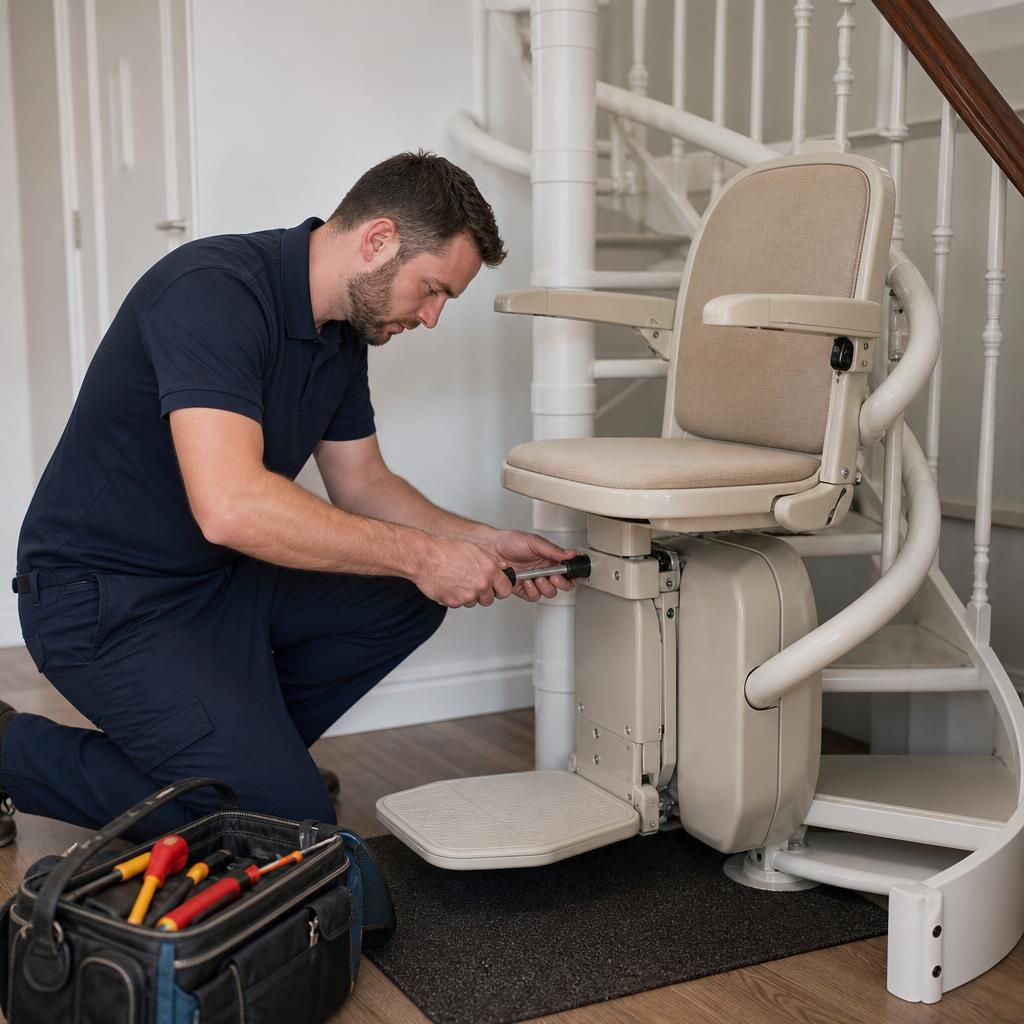
Arrange Your Spiral Stairlift Service
Arrange a professional spiral stairlift service with Independent Stairlifts to check the rail, drive system, batteries, safety features and fixings. Contact us if your stairlift is due for servicing or has developed unusual noise, hesitation, stopping or reduced battery performance.