
Are spiral stairlifts suitable for outdoor use?
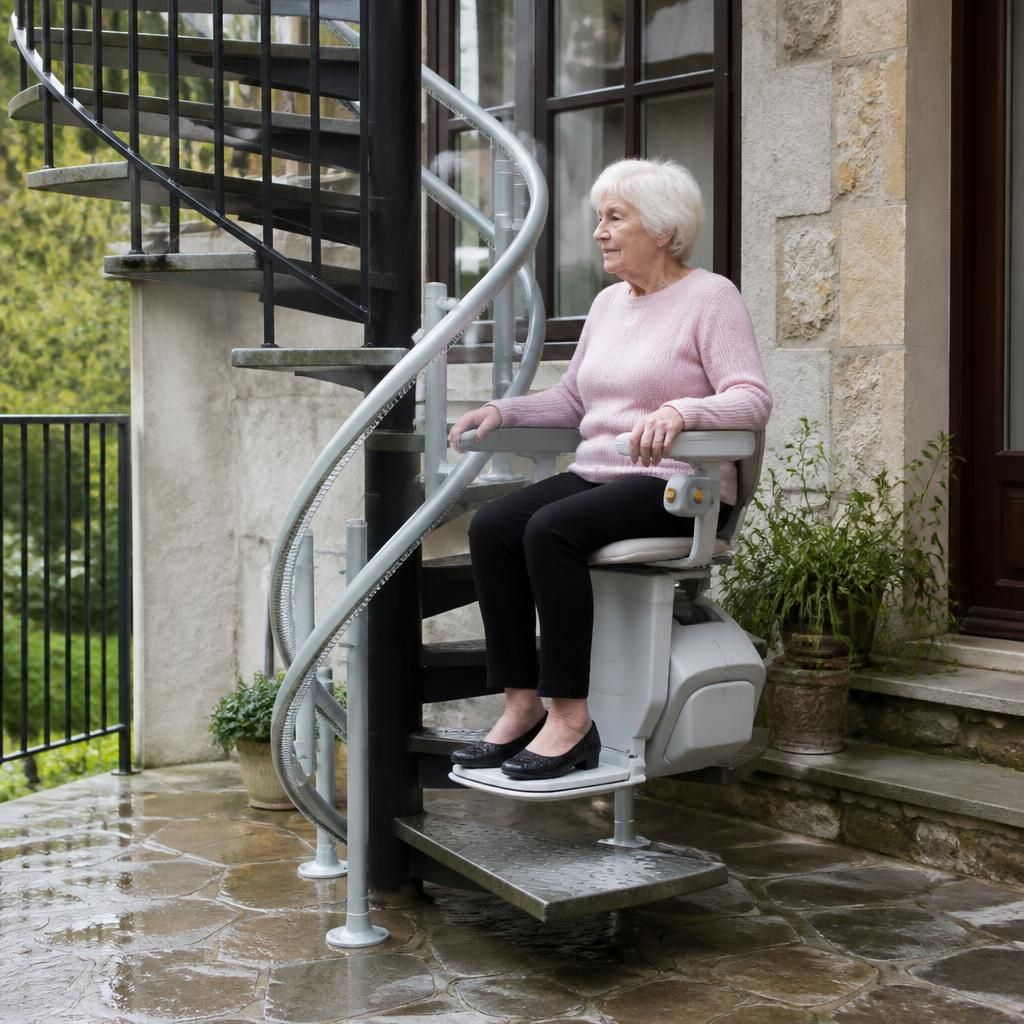
Yes, a spiral stairlift can be suitable for outdoor use when it is purpose-designed for external conditions and made to follow the staircase safely. A specialist assessment is essential to confirm that the stairway, weather exposure, power supply and available landing space are suitable for a bespoke outdoor installation.
Yes, a spiral stairlift can be suitable for outdoor use, but only when it is specifically designed for external conditions and carefully matched to the staircase. An indoor stairlift should not be installed outside because rain, frost, sunlight, damp and temperature changes can damage its electrical and mechanical components. A specialist assessment is needed to confirm whether the staircase, surrounding structure, power supply and landing areas can support a safe bespoke installation.
Outdoor spiral stairlifts are generally designed with materials and protective finishes that can withstand exposure to the elements. Depending on the model and installation, this may include corrosion-resistant components, weather-protected controls, sealed electrical parts and upholstery intended for external environments. The exact level of protection varies, so the equipment must be specified for the location rather than adapted from an indoor system.
Suitability depends on more than the shape of the staircase. During an assessment, the important considerations usually include:
- The staircase structure: The steps, central column, supporting walls and fixing points must be strong enough for the proposed rail and lift. A freestanding external staircase may require a different fixing method from one attached to a building.
- The curve and gradient: A spiral stairlift needs a rail that follows the staircase accurately while maintaining safe clearance from the steps, balustrade and surrounding surfaces. Tight curves, changing gradients or restricted access may require a fully bespoke rail.
- Weather exposure: The installer will consider whether the stairlift is exposed to driving rain, strong wind, snow, coastal air or direct sunlight. These conditions can affect corrosion, drainage, visibility and the performance of moving parts.
- Boarding and exit space: There must be a safe place to sit down and leave the stairlift at the top and bottom. External landings may need additional guarding, lighting or weather protection, particularly where the staircase ends near a path, driveway or uneven ground.
- Electrical provision: The power supply, charging points and cable routes must be suitable for outdoor installation and protected in accordance with current electrical requirements. The position of a charging point should also allow the stairlift to be parked safely without obstructing access.
- Access around the staircase: The stairlift should not reduce the safe passage available to other people or create a hazard on a shared walkway. Gates, handrails and other safety measures may be needed where the staircase is elevated or open-sided.
Weather protection is an important part of the installation. A suitable outdoor model may tolerate normal exposure, but it should not be treated as maintenance-free or left unnecessarily exposed when it is not in use. A protective cover can help shield the seat, controls and upholstery from rain, frost and sunlight where the design permits one. It is also important to keep the rail, steps and charging area clear of leaves, standing water, ice and other debris.
Outdoor use can increase the need for regular servicing. Checks may include the condition of fixings, rail and drive components, electrical connections, batteries, safety edges, seat belt and controls. Salt air and persistent damp can accelerate corrosion, while freezing conditions may affect moving parts and battery performance. Any unusual noise, hesitation, loss of power or control fault should be reported rather than ignored. The stairlift should not be used if the staircase or its landing has become slippery, obstructed or structurally damaged.
Safety features remain essential outdoors. These may include a seat belt, obstruction sensors, a swivel seat, controls that can be operated safely and a battery system that allows the lift to complete a journey during a power interruption. The precise features depend on the equipment selected and the staircase design. On an exposed spiral staircase, the assessment should also consider wind, rain and the user’s ability to board or leave the seat securely.
In some properties, the best solution may not be an outdoor spiral stairlift. If the staircase is too narrow, exposed or structurally unsuitable, alternatives could include modifying the access route, improving the staircase or considering another form of platform or vertical access. This decision should be based on the user’s mobility, the building and the way the entrance is used, rather than on the staircase shape alone.
Before installation, ask for confirmation that the proposed equipment is rated for outdoor use, how it should be protected when parked, what maintenance is required and whether any building, electrical or planning considerations apply. A site assessment by an experienced stairlift installer will identify these requirements and establish whether a bespoke external spiral stairlift can provide safe, practical access at your property.
An outdoor spiral stairlift must be purpose-designed for exposure to rain, frost, sunlight and changing temperatures. An indoor model is not suitable simply because it is fitted beneath a canopy or covered when not in use.
Outdoor equipment should have suitable weather-resistant finishes, protected electrical components and materials selected for the installation environment. A protective cover can help shield the seat and controls when parked, but it does not remove the need to keep the rail, steps and charging area free from leaves, standing water, ice and other debris.
Regular checks are particularly important in exposed or coastal locations, where damp and salt air can accelerate corrosion. If the lift develops unusual noise, hesitation, a control fault or reduced battery performance, stop using it and arrange an inspection.
Arrange an outdoor spiral stairlift assessment
Arrange an outdoor spiral stairlift assessment with Independent Stairlifts to confirm whether your staircase, access points and surrounding conditions are suitable for a bespoke installation.