
How does choosing a bespoke spiral stairlift benefit the longevity and adaptability of the installation?
A bespoke spiral stairlift is measured and configured to follow the exact shape, width and landings of your staircase, helping reduce strain on the equipment and support reliable long-term use. Its tailored rail, seating and control options can also accommodate changes to the property or the user’s mobility needs more effectively than a standard straight-stair installation.
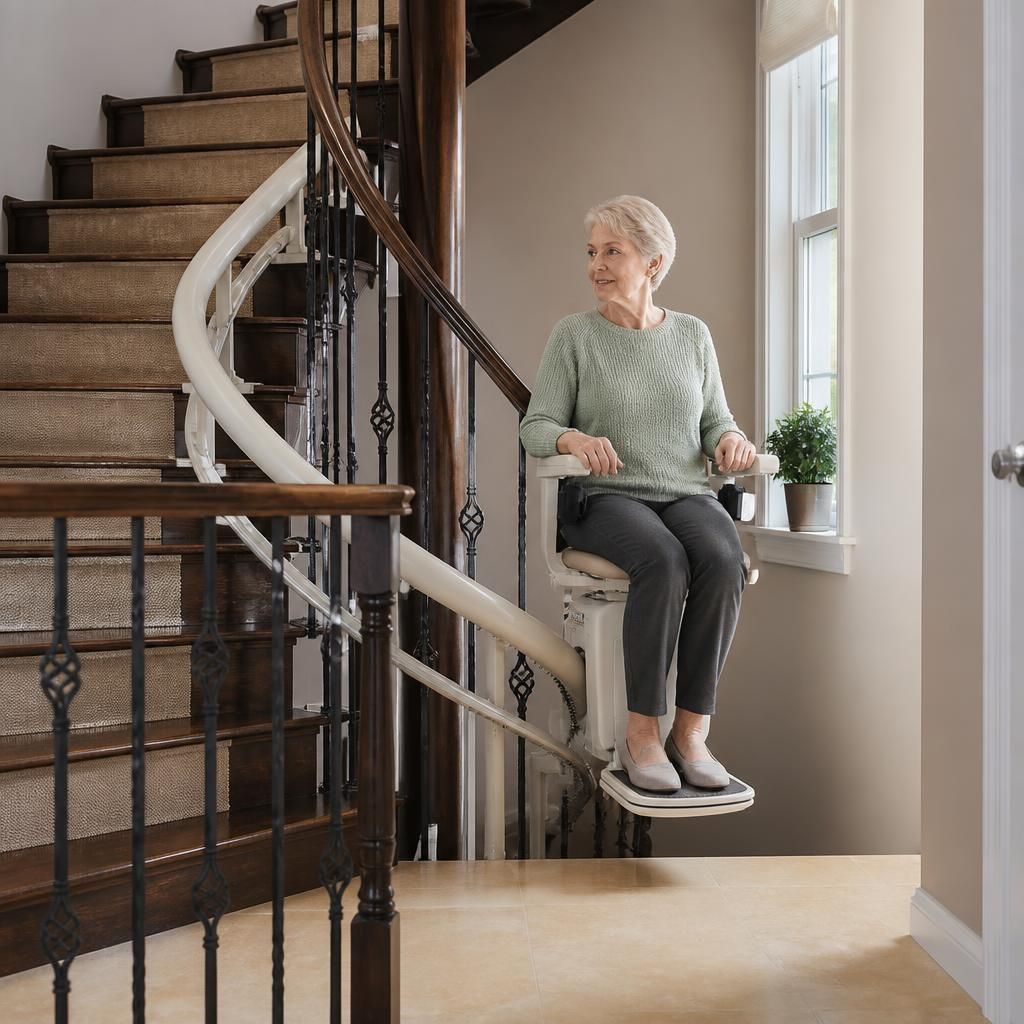
A bespoke spiral stairlift is designed around the exact geometry of the staircase, rather than adapted from a standard straight-stair model. The rail, drive system, seat, controls and charging position are selected to suit the spiral’s curve, changing gradient, tread width and available landings. This precise fit can help the installation operate more smoothly over time and makes it easier to accommodate practical changes in the home or the user’s mobility needs.
A closer fit can support long-term reliability
Spiral staircases often have tapered treads, tight curves, restricted headroom and limited space at the top or bottom. A standard rail may not follow these features accurately, which can create compromises in travel, parking or access. With a bespoke system, the rail route is measured and configured to maintain suitable clearances throughout the journey.
Accurate alignment helps the carriage and drive mechanism follow the rail consistently. This can reduce avoidable stress caused by an unsuitable route, although the lifespan of any stairlift will still depend on correct installation, regular servicing, usage and the condition of its components. A site survey is therefore important: it identifies fixing points, checks the structure and confirms how the lift will interact with doors, landings, handrails and other household features.
The installation can be adapted to the staircase
A bespoke rail can be shaped to the staircase rather than forcing the staircase to accommodate a straight or generic installation. Depending on the survey, this may allow the lift to:
- Follow a continuous spiral or complex curve more accurately;
- Use suitable parking positions at the top, bottom or on an available landing;
- Preserve more usable space on the stairs and nearby floors;
- Work around doorways, radiators, walls, balustrades and changes in headroom; and
- Provide a safer, more predictable approach to transfers at the boarding and exit points.
The exact options depend on the staircase and the equipment selected. A bespoke design is not simply a cosmetic variation; the rail route and seating arrangement affect how the user approaches, travels on and leaves the stairlift.
It can accommodate changing mobility requirements
People’s mobility may change after the stairlift is installed. A user might later find it more difficult to turn, bend, stand from the seat or operate a small control. During the original assessment, it is sensible to consider both current and foreseeable needs rather than choosing only the smallest or simplest configuration.
Depending on the model and the user’s circumstances, useful features may include powered swivel or folding functions, an easy-to-operate control, a suitable seat height, supportive armrests, a safety belt and remote controls. These features do not remove the need for a safe transfer, but they can make everyday operation more manageable as confidence, balance or leg strength changes.
Adaptability also includes how the stairlift is used by other people in the home. A folding seat, footrest or armrest may help retain access to the staircase when the lift is parked. Careful positioning can reduce obstruction without compromising the user’s boarding space.
It may be easier to plan for changes to the property
Home layouts can change. A door may be replaced, furniture may be rearranged, or a landing may need to serve a different purpose. A bespoke installation records the existing route and fixing arrangements, giving a service engineer a clearer basis for assessing any future alteration.
However, a spiral stairlift cannot always be extended, moved or reconfigured without new parts or a further survey. Changes to the staircase, flooring or surrounding walls should be discussed before work begins. If a future alteration is likely, mention it during the assessment so the proposed parking position and rail design can take it into account where practicable.
Good maintenance protects the investment
A precise installation is only one part of achieving dependable long-term use. Keep the rail and charging points clear, follow the operating instructions and report unusual noise, hesitation, vibration, loss of power or changes in braking promptly. Do not attempt to adjust the rail, carriage or safety mechanisms yourself.
Routine servicing allows wear, batteries, drive components, sensors and safety controls to be checked before a minor issue becomes a larger fault. The maintenance schedule should follow the manufacturer’s guidance and the level of use. Outdoor or particularly demanding environments may require additional attention because moisture, dirt and temperature changes can affect equipment.
Overall, the main benefit of choosing bespoke is that the stairlift is designed for the staircase and the person using it at the same time. That tailored approach can support smoother operation, preserve access around the installation and provide more scope to respond to changing needs. A detailed assessment remains essential, because the most suitable design depends on the staircase structure, the available space, the user’s abilities and the adaptations that may be needed later.
A bespoke spiral stairlift is built around the staircase’s individual curve, gradient, width and available landing space. This tailored rail route helps the carriage travel consistently, reducing the compromises that can occur when a standard system is fitted to a complex staircase.
The design can also support longer-term adaptability. Seating, controls, parking positions and transfer features may be selected to suit the user’s current abilities while allowing for likely changes, such as reduced balance, leg strength or dexterity. Folding components can help preserve access for other household members when the lift is parked.
Longevity still depends on correct installation, appropriate use and regular servicing. A professional survey should consider the staircase structure, surrounding doors and furniture, future alterations and the user’s changing needs before the rail is manufactured.
Arrange Your Bespoke Spiral Stairlift Assessment
Arrange your bespoke spiral stairlift assessment to review your staircase, available space and current or future mobility needs. Our team can then recommend a tailored design and explain the installation and maintenance options available.