
What should I do if my curved stairlift stops working suddenly?
If your curved stairlift stops working suddenly, stop using it, switch it off safely and check that the seat, armrests, footrest and charging position are correctly set. Do not force the lift or attempt electrical repairs; contact Independent Stairlifts for advice and an engineer visit if the problem does not clear.
If your curved stairlift stops working suddenly, stop using it, keep yourself safe, and carry out only the basic checks described in the user guide. Do not force the lift, bypass a safety switch or attempt electrical repairs. If it will not restart, contact Independent Stairlifts so the fault can be assessed and an engineer can restore safe operation.
If you are on the staircase: remain seated with the seat belt fastened if it is safe to do so, keep your hands and feet clear of the rail and moving parts, and use the alarm, telephone or another agreed method to call for assistance. Do not try to climb past the stairlift or transfer on the stairs unless there is no safer option. If you are unwell, injured or in immediate danger, contact the emergency services.
Switch the stairlift off before checking it. Look for anything that may have prevented the lift from completing its movement, such as an object, clothing or a pet near the rail, footrest or landing area. Remove an obstruction only if you can do so without reaching into the mechanism or placing yourself on the stairs. Check that the seat is in its normal travelling position, the armrests are lowered, the swivel seat is fully locked and the footrest is not obstructed. Curved stairlifts have several safety sensors, and the lift may refuse to move if one of these is detecting an unsafe position.
Check the simple controls and power supply:
- Make sure the key switch is inserted and turned to the operating position, if your model has one.
- Check that the power switch or isolation switch has not been turned off.
- Confirm that the mains supply to the stairlift is available. Do not remove covers or work inside a socket, charger or control box.
- Ensure the handset or remote control is switched on and has a working battery. If you have a second handset, try it only as described in the user instructions.
- Check that the stairlift is positioned correctly on a charging point. A low battery can cause warning tones, slow movement or a complete failure to travel.
Listen for warning beeps or look for a display message, and note what happened immediately before the fault appeared. Tell the engineer whether the lift stopped while travelling, would not leave its charging point, moved in one direction only, or stopped after a power cut. Also record any visible error code. This information can help distinguish a charging issue, control fault, obstruction or battery problem.
After the basic checks, you may try the normal restart procedure in your stairlift instructions, provided you can do so safely. Do not repeatedly switch the lift on and off, continue using it when it is making unusual noises, or attempt to reset a fault by disconnecting batteries or removing panels. A curved stairlift follows a bespoke rail, so a problem with alignment, the drive mechanism, safety edges or the swivel system should be inspected by a suitably trained engineer.
Contact Independent Stairlifts for support if the lift remains inoperative, stops repeatedly, gives a fault warning, will not charge, or behaves differently after restarting. Have the stairlift model details, your location and any error message available when you call. We can advise on the safest immediate steps and arrange an appropriate service visit. If your stairlift is covered by a service agreement or warranty, use the support route provided with your installation paperwork.
Do not rely on the stairlift again until the cause has been identified and it operates normally through its intended route. If a battery is nearing the end of its service life, a charger is failing or a safety sensor is being triggered intermittently, the fault may return even if the lift starts working temporarily. Arrange an inspection rather than treating an intermittent restart as a permanent repair.
If your curved stairlift stops while you are on the staircase, remain seated with the seat belt fastened if it is safe to do so. Keep your hands, feet and clothing away from the rail and moving parts, and use the alarm, telephone or another agreed method to call for assistance. Do not try to climb past the lift, transfer on the stairs or force it to move.
If you are injured, unwell or in immediate danger, contact the emergency services. Once you are safe, switch the stairlift off and contact Independent Stairlifts for advice. An engineer should assess any lift that remains inoperative, stops repeatedly or displays a fault warning before it is used again.
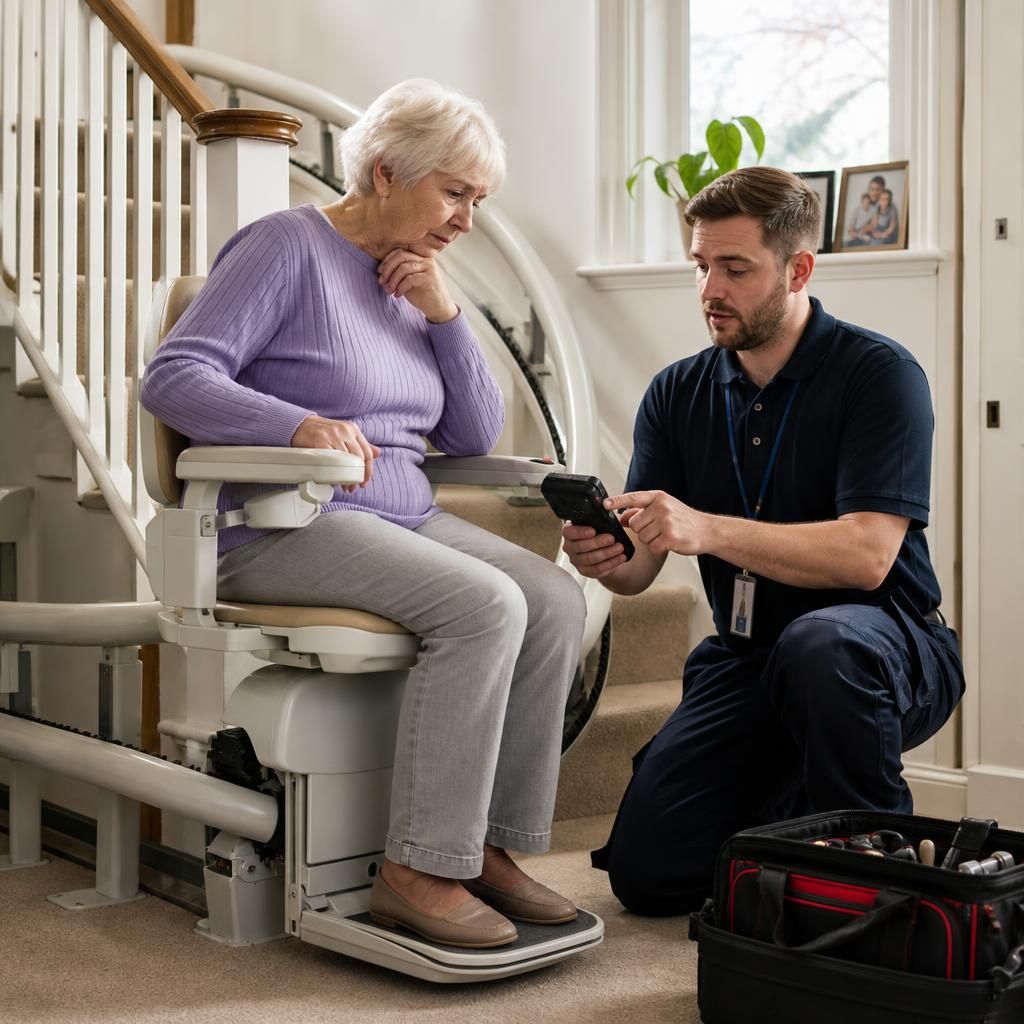
Need help with a curved stairlift that has stopped working?
If your curved stairlift has stopped working, contact Independent Stairlifts for practical advice and an engineer visit. Keep the lift switched off until the fault has been assessed and safe operation confirmed.