
How do I maintain my curved stairlift for long-term reliability?
Maintain your curved stairlift by keeping the rail, seat and controls clean and clear, charging the batteries as instructed, and reporting unusual noises, movement or fault messages promptly. Arrange servicing in line with the manufacturer’s guidance and avoid attempting electrical or mechanical repairs yourself.
Long-term reliability depends on keeping your curved stairlift clean, correctly charged and free from obstructions, while arranging professional servicing at the intervals recommended for your model. Regularly check the seat, controls, safety features and curved rail, and report unusual noise, movement or fault messages rather than continuing to use the lift when something seems wrong.
Keep the stairlift and rail clean
Dust, hair, pet fur and household debris can collect around the rail, seat and moving parts. Wipe accessible surfaces with a soft, slightly damp cloth and a mild household cleaner suitable for the materials. Dry the surfaces afterwards, particularly around the armrest controls and charging contacts. Do not spray liquid directly onto the stairlift, motor housing, switches or electrical connections.
Pay particular attention to the bends, joins and parking areas of a curved rail. These areas can be more difficult to reach and may collect items left on the stairs. Keep the rail clear so the carriage can travel smoothly along its programmed route. Do not use abrasive pads, solvents or excessive water, and do not apply oil or other lubricant unless the manufacturer’s instructions specifically require it. The wrong product can affect sensors, belts, rollers or other components.
Charge the batteries consistently
Most domestic stairlifts use rechargeable batteries and need to be left at a designated charging point when parked. Follow the charging instructions supplied with your stairlift, including any guidance about where to park it at the top or bottom of the stairs. If the lift is regularly left away from its charger, the batteries may discharge and their useful life may be reduced.
Check that the charging indicator shows the expected status when the stairlift is parked. If the indicator does not illuminate, the lift repeatedly reports a low battery, or it will not complete its normal journey after charging, contact the service team. Do not try to replace batteries or alter the charger unless this has been authorised and explained by a qualified technician.
If your home will be empty for an extended period, check the instructions for your particular model before switching anything off. Some stairlifts need to remain connected to their charger, while others have specific recommendations for periods of non-use.
Carry out simple safety checks
Before travelling, make sure the staircase and the lift’s route are clear. Check that:
- the seat is locked in its travelling position and, where applicable, swivels and locks correctly;
- the footrest is secure and free from objects;
- the armrests are fully lowered if required for operation;
- the seat belt fastens and releases normally;
- the control switch, remote controls and direction controls respond as expected;
- the powered swivel seat, if fitted, completes its movement without obstruction;
- the stairlift starts and stops smoothly without unexpected jolting; and
- doors, furniture, pets and other people are clear of the stairs before movement begins.
Only carry the load permitted in the manufacturer’s instructions, and keep shopping, walking aids and other items from catching on the rail or footrest. A walking stick or frame should be positioned securely and should not interfere with the controls or safety sensors.
Watch for changes in performance
Unusual sounds or changes in movement can indicate that inspection is needed. Contact Independent Stairlifts or your servicing provider if you notice grinding, repeated clicking, squeaking that is new or worsening, hesitation, vibration, uneven travel, a burning smell, a fault code or a battery that no longer holds its charge as expected.
Do not ignore intermittent problems simply because the stairlift works again after being switched off and on. Note what happened, when it occurred, where the stairlift was on the rail and whether any message or indicator appeared. This information can help the technician identify the cause more efficiently.
If the stairlift stops unexpectedly, follow the operating and emergency instructions provided with the lift. Keep calm, use the manual release or emergency lowering procedure only if your instructions permit it, and contact the appropriate support service. Do not force the carriage along the rail or attempt to bypass a safety switch.
Arrange professional servicing
Professional servicing is important because some wear and electrical faults cannot be identified through routine cleaning. A trained technician can inspect the rail and carriage, drive mechanism, rollers, batteries, charging points, seat functions, sensors, safety belt and controls. They can also check that the stairlift remains correctly aligned and operates safely through every bend and parking position.
Arrange servicing in line with the manufacturer’s guidance and any service agreement that applies to your stairlift. A service may also be appropriate sooner if the lift is used heavily, has been exposed to damp or unusual conditions, has been moved between homes, or has developed a change in performance. Keep records of service visits, reported faults and battery replacements so that recurring issues can be identified.
Protect the stairlift from avoidable damage
Use the stairlift only for its intended purpose and do not allow children to play with the controls. Avoid placing heavy objects on the seat or footrest. Keep the staircase well lit, but do not position loose cables, rugs or decorative items where they could contact the rail or moving carriage.
For an outdoor curved stairlift, use the supplied weather protection when the lift is parked and follow the cleaning instructions for outdoor equipment. Remove standing water, leaves and other debris from accessible areas, but do not open weatherproof housings or electrical compartments. Report corrosion, water ingress or damage to the cover promptly.
Never dismantle the stairlift, adjust the rail, remove covers, replace electrical components or attempt mechanical repairs yourself. Curved stairlifts are made to follow the specific staircase, so an incorrect adjustment can affect clearances, sensors and safe operation. A qualified stairlift technician should carry out repairs, battery work and any alteration to the installation.
Consistent charging, sensible daily checks, careful cleaning and timely servicing will help your curved stairlift remain dependable. If you are unsure whether a noise, warning light or operating change is normal for your model, stop using the lift if safety may be affected and contact Independent Stairlifts for advice.
Professional servicing is a key part of keeping a curved stairlift reliable because the technician can inspect components that are not accessible during routine cleaning. A curved stairlift must travel accurately around each bend, so its rail, carriage, drive system, rollers, sensors and charging points should be checked by a qualified technician in line with the manufacturer’s guidance.
Arrange a service sooner if you notice hesitation, unusual noise, vibration, repeated low-battery warnings, uneven travel or a fault message. During the visit, the technician can assess the seat belt, swivel mechanism, controls and safety features, as well as confirm that the lift operates correctly at its parking points and throughout the full route.
Keep a record of servicing, reported faults and battery replacement. This helps identify recurring problems and gives the technician useful information if the same issue returns. Do not adjust the rail, remove covers or attempt electrical or mechanical repairs yourself, as an incorrect adjustment can affect clearances and safety sensors.
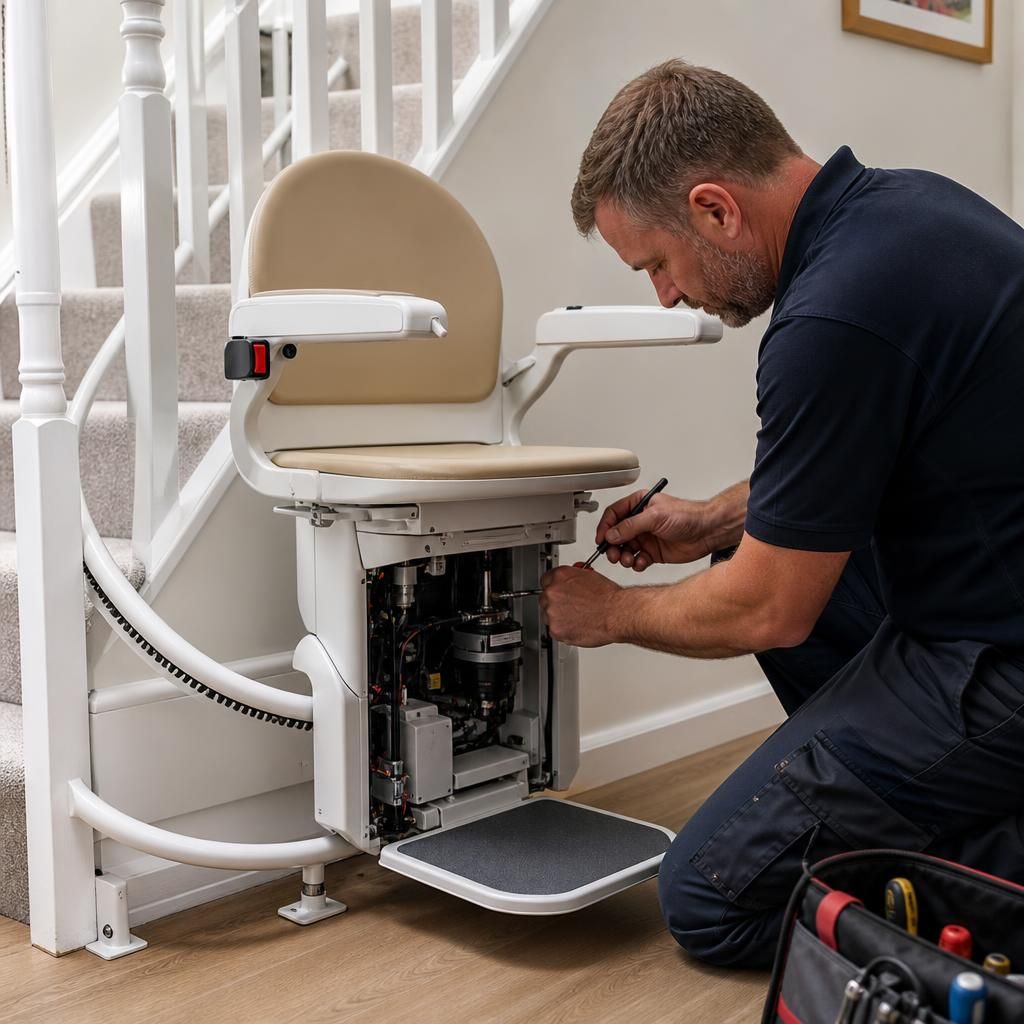
Arrange Professional Servicing for Your Curved Stairlift
Arrange professional servicing for your curved stairlift in line with the manufacturer’s guidance, or sooner if you notice unusual noise, hesitation, uneven movement or fault messages. Contact Independent Stairlifts to discuss servicing or report a change in performance.