
How is the installation process for a curved stairlift handled, and what should I expect?
A curved stairlift installation begins with a home assessment to measure your staircase, discuss your needs and design a rail that follows its exact shape. Once manufactured, the stairlift is securely fitted, tested throughout its route and explained to you before the installer leaves.
A curved stairlift installation is handled as a bespoke process: an adviser assesses your staircase and mobility needs, a rail is designed to follow the exact route, and an experienced installer fits and tests the finished system in your home. You should expect an initial survey, a period while the stairlift is manufactured, installation with limited disruption, and a full handover covering safe operation and everyday care.
1. The home assessment
The process starts with an assessment at your property. The surveyor examines the complete staircase, including landings, bends, intermediate floors, narrow sections, doorways and the available space at the top and bottom. Measurements are taken so the rail can be shaped to your staircase rather than treated as a standard straight run.
The assessment also considers how you intend to use the stairlift. The adviser may discuss your mobility, whether you need to travel between particular floors, which side of the staircase is most suitable, and how you transfer on and off the seat. Practical details such as parking, access to the property, electrical supply and the position of a charging point may also be reviewed.
This is the right time to mention anything that could affect daily use. For example, tell the surveyor if more than one person will use the stairlift, if you have difficulty bending your knees, or if you need a powered swivel seat, powered footrest or a different control arrangement. The assessment should also identify whether a folding or retractable feature would help preserve access for other people using the stairs.
2. Choosing the design and agreeing the specification
After the survey, the proposed design is discussed with you. A curved stairlift rail may include bends, changes in angle and transitions between floors, so its route needs to balance comfortable travel with usable space on the staircase and landings. The installer should explain where the stairlift will park, how much room is needed to get on and off, and how the rail will affect access when the seat is folded away.
The specification can include the seat style, upholstery, controls, safety features and optional powered functions. The final arrangement should reflect your physical needs and the layout of your home, not simply the appearance of the staircase. You should receive clear information about the proposed equipment, the work involved and the cost before manufacturing or installation is authorised.
3. Manufacturing the curved rail
Once the design has been confirmed, the rail is made to the measurements and configuration recorded during the survey. Unlike a straight stairlift, a curved model generally cannot be installed from standard rail sections alone. The bespoke rail must follow the particular turns and landings in your home, which is why the survey information is essential.
There is normally a period between the assessment and fitting while the rail and associated components are prepared. The expected timescale should be explained during the quotation process. If your circumstances change during this period, such as a change in your mobility or access to the property, contact Independent Stairlifts promptly so the arrangements can be reviewed.
4. Preparing for the installation visit
Before the installer arrives, keep the stairs and landings as clear as possible. Remove loose items, ornaments and obstacles from the planned working area, and make sure the installer can reach the relevant electrical points and landing spaces. If another person normally uses the stairs, arrange an alternative route or suitable support while work is taking place.
Most installations are completed inside the home without major structural alteration. The rail is usually secured to the stair treads rather than fixed directly to the wall, although the exact method depends on the design and the property. Your installer should explain any specific preparation needed before work begins. Let them know about pets, access restrictions or other household arrangements that could affect safe working.
5. Fitting the stairlift
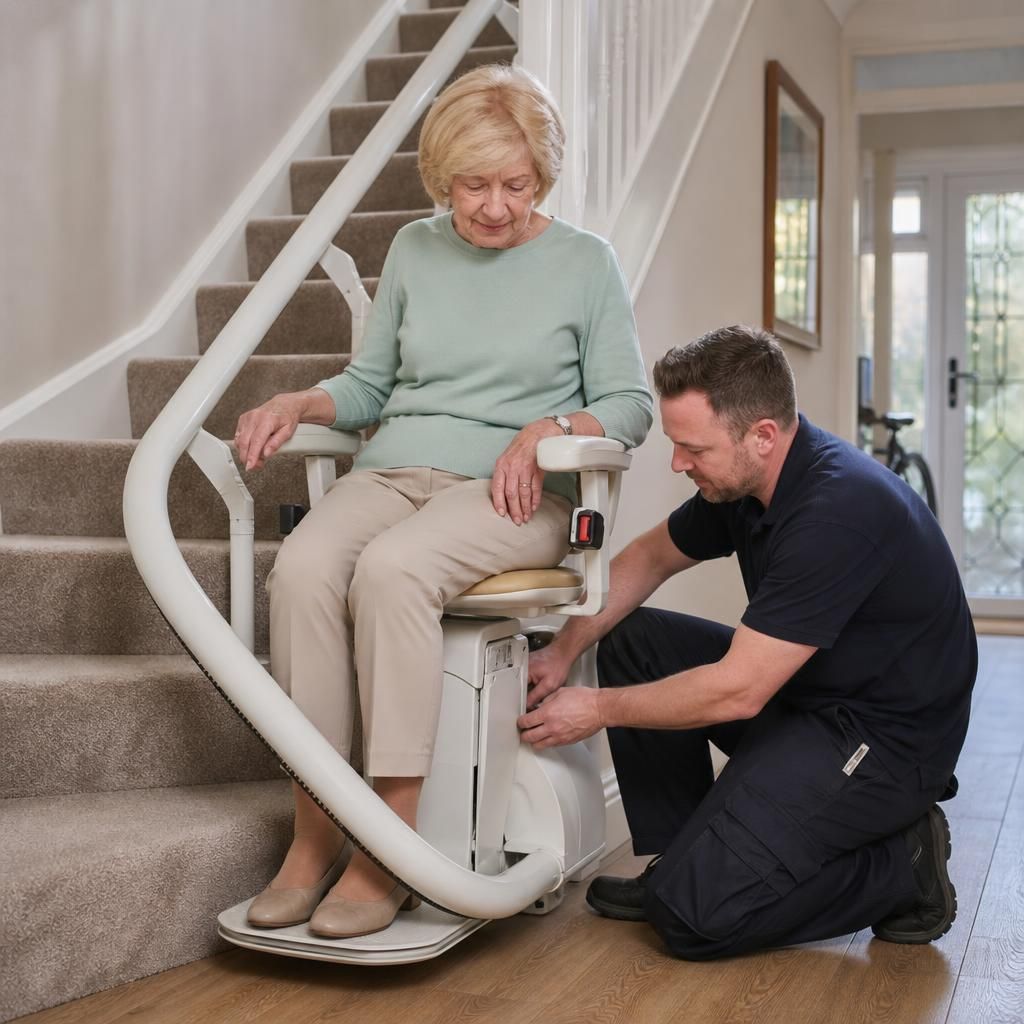
On installation day, the engineer positions and secures the rail, installs the carriage and seat, connects the charging equipment and fits the controls and safety components. The rail is assembled to follow the agreed route, including any turns or changes in direction. Care is taken to maintain sufficient clearance for the user and, where possible, for other people walking on the stairs.
The installer works through the staircase methodically and should protect the surrounding area as reasonably practicable. There may be drilling, packaging and some noise during the work, but the installation is not normally comparable with a major building project. The time required varies according to the number and complexity of the curves, the layout of the landings, the equipment selected and any access considerations.
6. Testing and safety checks
Before the stairlift is handed over, it is run along its complete route several times. The installer checks that it starts, stops and travels smoothly, parks correctly, charges as intended and clears the staircase safely. Safety features such as the seat belt, swivel mechanism, footrest sensors, controls and obstruction sensors are checked as part of the commissioning process.
The engineer should also confirm that the stairlift remains stable when the seat is used at the intended positions and that the controls respond correctly. If anything does not meet the required standard, it should be adjusted before you begin using the stairlift. Do not use the equipment until the installation has been completed and the installer has confirmed that it is ready.
7. Demonstration and handover
A proper handover is an important part of the installation. The installer should demonstrate how to approach and sit on the seat, secure the belt, operate the controls, use the swivel seat and fold the equipment away. You should be shown how to call the stairlift from either end, use the remote controls and respond if the stairlift stops because an obstruction has been detected.
Ask questions and practise the controls yourself before the installer leaves. Make sure you understand charging, emergency procedures, cleaning and who to contact if the stairlift develops a fault. You should be given the relevant user information and details of the aftercare arrangements. If a family member or carer helps you use the stairlift, they should be included in the demonstration.
What you should expect after installation
- The stairlift should follow the agreed route and provide a consistent, controlled journey between the selected floors.
- The seat, controls and safety features should be adjusted and demonstrated for the person who will use it.
- The installer should leave the working area tidy and explain any remaining practical points.
- You should have clear instructions for normal use, charging and reporting a fault.
- Any servicing or warranty arrangements should be explained, including what to do if the stairlift is not operating as expected.
Curved stairlift installation is normally planned around the individual staircase, so the exact process and timescale can vary between homes. The most useful preparation is to provide accurate information during the assessment, discuss any mobility or transfer difficulties openly, keep the access route clear and make sure you are comfortable operating the stairlift before signing off the handover. If the staircase or your needs change later, contact Independent Stairlifts for advice rather than attempting to alter or repair the equipment yourself.
The home assessment is the key stage in a curved stairlift installation because the rail must be designed to follow the exact shape of your staircase. An adviser measures the stairs, bends, landings and available space while also considering how you transfer on and off the seat and where the stairlift should park.
Use the assessment to explain any mobility difficulties, including problems bending your knees, reduced balance or the need for powered seat functions. The surveyor can then recommend suitable controls, seating and safety features. Once the design is agreed, the bespoke rail is manufactured before an installer fits, tests and demonstrates the stairlift in your home.
Book Your Curved Stairlift Assessment
Arrange your home assessment with Independent Stairlifts to discuss your staircase, mobility needs and the most suitable curved stairlift design.