
What factors influence the cost of a curved stairlift?
The cost of a curved stairlift is mainly influenced by the bespoke design required for your staircase, including its shape, length, landings, bends and access points. The choice of seat, safety features, finish, installation requirements and whether the lift is new or reconditioned can also affect the final price, so an accurate quote requires a personal assessment.
The cost of a curved stairlift is primarily determined by the design and installation of the rail, which must be made to follow the exact shape of your staircase. Stair length, bends, landings, changes in direction, access at the top or bottom, and the number of floors all affect the amount of surveying, manufacturing and fitting required. The choice of seat and optional features, the condition of the staircase, and whether you choose a new or reconditioned lift will also influence the final quotation.
Unlike a straight stairlift, a curved model cannot usually be supplied as a standard rail that fits a range of staircases. The rail is measured and configured for the individual home. This bespoke element is the main reason a curved stairlift generally costs more than a straight stairlift.
- Staircase shape and layout: A simple staircase with one continuous curve may require less work than a staircase with several bends, intermediate landings or changes in gradient. Switchbacks, unusually tight turns and staircases that narrow at particular points can require more detailed design.
- Rail length and travel: The rail must cover the full route between the boarding and disembarking points. A longer staircase uses more rail and may require additional assessment to ensure that the lift travels safely and parks without obstructing doorways, corridors or hallways.
- Number of floors and landings: A lift serving more than one level may need a more complex rail arrangement and carefully selected parking positions. Where the staircase includes a landing, the design must allow the user to approach and leave the seat safely.
- Available space: Narrow stairs, low ceilings, doorways close to the staircase and limited room at the top or bottom can affect the specification. A compact seat, a different parking position or a hinged or folding section of rail may be considered where space is restricted. These solutions can affect the price.
- Seat and operating options: Basic seating is not the only consideration. Swivel or powered swivel seats, powered footrests, adjustable seat heights, folding arms and different upholstery finishes may be available depending on the model. Features that make transfers easier or improve comfort can add to the cost.
- Safety features: Seat belts, sensors, arm controls, obstruction detection and diagnostic systems are commonly included according to the model. Additional controls or adaptations may be appropriate where the user has particular mobility or dexterity needs. The specification should be based on safe, independent use rather than on adding features unnecessarily.
- Installation requirements: The condition and construction of the staircase can influence fitting. Installers need to consider the strength and condition of the steps, fixing points, electrical supply and the space available for installation. Moving furniture, carrying equipment through restricted access or making minor adjustments around the lift may also affect the work involved.
- New or reconditioned equipment: A reconditioned curved stairlift can provide a lower-cost alternative, but availability depends on whether the existing rail and components can be matched to your staircase. A curved rail is normally specific to the staircase for which it was made, so it cannot always be reused in another home. Reconditioned equipment should be inspected, serviced and installed with appropriate safety checks.
- Additional adaptations: External parking areas, extra charging points, altered controls, call stations or changes needed to accommodate a wheelchair or walking aid may be quoted separately. The need for these items should be identified during the assessment.
A home assessment is therefore more reliable than estimating cost from the number of steps alone. During the assessment, the staircase is measured, the intended route is discussed and the user’s transfer, seating and access needs are considered. The installer can then explain which elements are essential, which are optional and whether any practical alternatives are available.
When comparing quotations, check what is included rather than comparing the headline price only. A quotation should make clear whether it covers the bespoke rail, seat, batteries, delivery, installation, testing, demonstration and aftercare. It is also worth confirming how building work, electrical changes, removal of an existing lift and any future servicing would be treated.
The most suitable specification is not necessarily the one with the greatest number of options. A properly measured rail, safe parking positions and a seat that supports comfortable transfers are usually more important than cosmetic upgrades. If budget is a concern, discuss the staircase layout and the user’s priorities during the assessment. A different seat configuration, a simpler finish or a suitable reconditioned option may reduce the cost without compromising essential safety.
For an accurate curved stairlift cost, an individual survey is needed. It allows the design to reflect the staircase and the person using it, rather than relying on a general price range that may not account for the work involved.
The main factor influencing curved stairlift cost is the bespoke rail. Unlike a straight stairlift, the rail must be designed and manufactured to follow the exact shape of your staircase, including bends, landings, changes in direction and available space at the top and bottom.
A staircase with tight turns, several landings or restricted access may require more detailed surveying and installation. The final price can also change according to the seat, safety features, parking position and whether the stairlift is new or reconditioned. A home assessment provides the most reliable quotation because it identifies the practical requirements before the lift is specified.
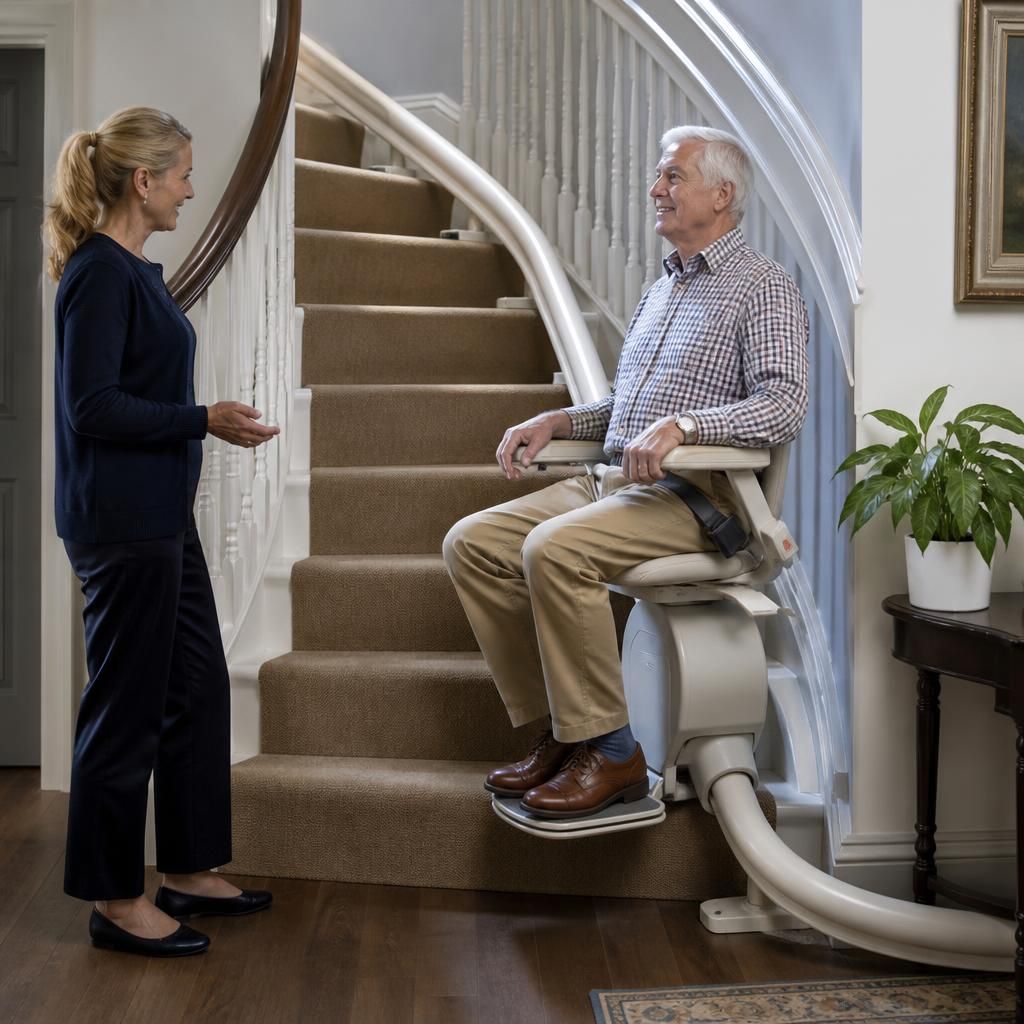
Arrange a tailored curved stairlift assessment
Arrange a tailored curved stairlift assessment to review your staircase, access requirements and preferred features. We can then provide a clear quotation based on the specification your home needs.