
What measures should be taken to maintain smooth and quiet operation of my curved stairlift over time?
Keep your curved stairlift running smoothly and quietly by keeping the rail and carriage free from dust and obstructions, charging the batteries correctly, and arranging servicing in line with the manufacturer’s guidance. Avoid using household oils or carrying out unauthorised adjustments; report unusual noises, juddering, reduced travel speed or warning indicators to Independent Stairlifts so the system can be inspected safely.
To keep your curved stairlift running smoothly and quietly, keep the rail and carriage clean and unobstructed, use the charging points correctly, follow the manufacturer’s servicing guidance and report changes in performance promptly. Curved stairlifts have made-to-measure rails with bends, joins and landing sections, so regular care helps the carriage travel consistently while reducing avoidable wear.
Keep the rail and carriage clean. Dust, pet hair, grit and household debris can collect on the rail, rollers or beneath the carriage. Wipe accessible surfaces with a soft, dry or slightly damp cloth when the stairlift is parked safely. Use only cleaning products recommended in your operating instructions, and do not allow liquid to run into the controls, motor or electrical components. Keep the steps, landing and the area around the rail clear so that nothing catches the footrest, seat or carriage during travel.
Do not apply household oil, grease, polish or other lubricant to the rail or moving parts unless the manufacturer’s instructions specifically require it. A curved stairlift’s rollers and drive components are designed to work with particular materials and clearances. Incorrect lubrication can attract dust, affect the drive system or make the lift noisier rather than quieter. Lubrication and adjustments should be left to a trained stairlift engineer.
Use the charging system consistently. Park the stairlift in its designated charging position whenever it is not in use, if your model requires this. Avoid leaving it stopped part-way along the track for extended periods, as this may prevent the batteries from charging. Keep charging contacts clean and make sure the mains supply to the charger is switched on. If the lift moves more slowly, gives a low-battery warning, struggles to complete its journey or repeatedly loses charge, arrange an inspection rather than continuing to use it until the battery is completely depleted.
Rechargeable batteries are serviceable components and will eventually need replacement. Their working life can be affected by infrequent use, prolonged periods away from a charging point and the age of the batteries. Follow the instructions supplied with your stairlift and contact Independent Stairlifts if charging takes longer than usual or the lift does not hold its charge.
Use the stairlift as intended. Sit fully back in the seat, use the safety belt where fitted, keep hands and clothing away from the rail and moving parts, and do not exceed the stated user or load limit. Do not carry bulky items that could strike the wall, staircase or carriage. Items attached to the stairlift can obstruct sensors, affect balance or create additional noise. If you have a folding seat, armrests or footrest, operate them gently and avoid forcing them if they feel stiff.
Arrange servicing at the intervals recommended by the manufacturer or your service agreement. During a service, an engineer can check the rail fixings, drive system, rollers, safety edges, sensors, seat mechanism, batteries, charging points and emergency controls. They can also identify wear or alignment issues before these develop into a breakdown. A bespoke curved rail should not be altered, moved or retightened by anyone who has not been trained to work on the equipment, as even a small change can affect travel and safety.
Report changes in operation early. Contact Independent Stairlifts for advice if you notice:
- new grinding, clicking, squeaking, knocking or repeated beeping;
- juddering, hesitation or an uneven start or stop;
- reduced travel speed, unexpected stopping or difficulty reaching a landing;
- the seat, footrest or arms becoming loose or difficult to operate;
- warning lights, error messages or recurring low-battery alerts; or
- damage to the rail, seat, covers, charging points or safety belt.
Stop using the stairlift if it appears unsafe, is obstructed, smells of burning or shows signs of electrical damage. Do not remove covers, bypass a safety sensor or attempt to reset a fault repeatedly. Note when the issue occurs, where on the staircase it happens and any message or sound produced; this information can help an engineer diagnose the problem more efficiently.
Keep the stairlift away from avoidable environmental hazards. For an indoor installation, prevent spillages and do not store cleaning equipment or furniture against the rail. If your curved stairlift is installed outdoors or in a damp area, check the weather protection and keep drainage paths clear, following the model-specific care instructions. Extreme temperatures, moisture and contamination can affect electrical connections and moving parts.
A simple routine of cleaning, correct charging, careful use and planned servicing is usually more effective than trying to quieten the stairlift yourself. If the sound or movement has changed despite routine care, arrange an assessment with Independent Stairlifts so the cause can be checked safely and the appropriate adjustment or replacement part identified.
Correct charging is essential for keeping a curved stairlift’s movement smooth and its motor quiet. Park the lift in its designated charging position whenever it is not being used, where required by the model, and keep the charging contacts clean and unobstructed. Do not leave the stairlift part-way along the rail for long periods, as the batteries may not recharge properly.
If the lift becomes slower, gives repeated low-battery warnings, struggles to complete the journey or loses charge quickly, arrange an inspection with Independent Stairlifts. Avoid continuing to use it until the batteries are completely depleted, as this can affect reliability. Rechargeable batteries are serviceable parts and may eventually need replacement; an engineer can check the batteries, charger and electrical connections safely.
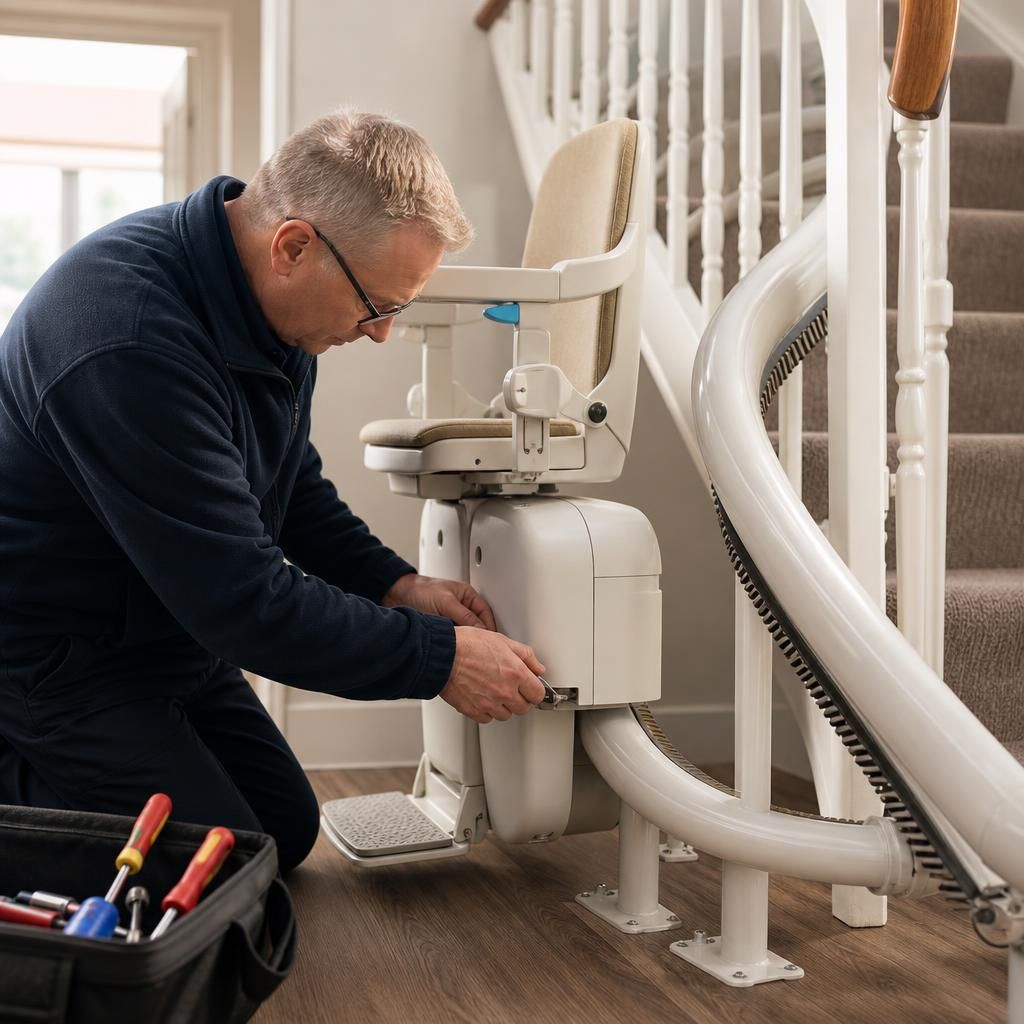
Arrange Expert Support for Your Curved Stairlift
If your curved stairlift is making unusual noises, moving unevenly or losing charge, contact Independent Stairlifts to arrange an inspection by a trained engineer. We can identify the cause and advise on the appropriate servicing, adjustment or replacement part.