
What maintenance is necessary to ensure my curved stairlift operates smoothly over time?
Regular professional servicing, routine cleaning of the rail and seat, and prompt attention to unusual noise, movement or warning lights will help your curved stairlift operate smoothly over time. Keep the track and charging points clear, use the lift as instructed, and arrange repairs or battery replacement through a qualified technician rather than attempting adjustments yourself.
Keeping a curved stairlift operating smoothly requires regular professional servicing, sensible day-to-day cleaning, clear charging points and prompt attention to changes in its movement or sound. Because a curved lift follows a bespoke rail with powered drive and safety components, maintenance should follow the manufacturer’s instructions and be carried out by a suitably qualified stairlift technician.
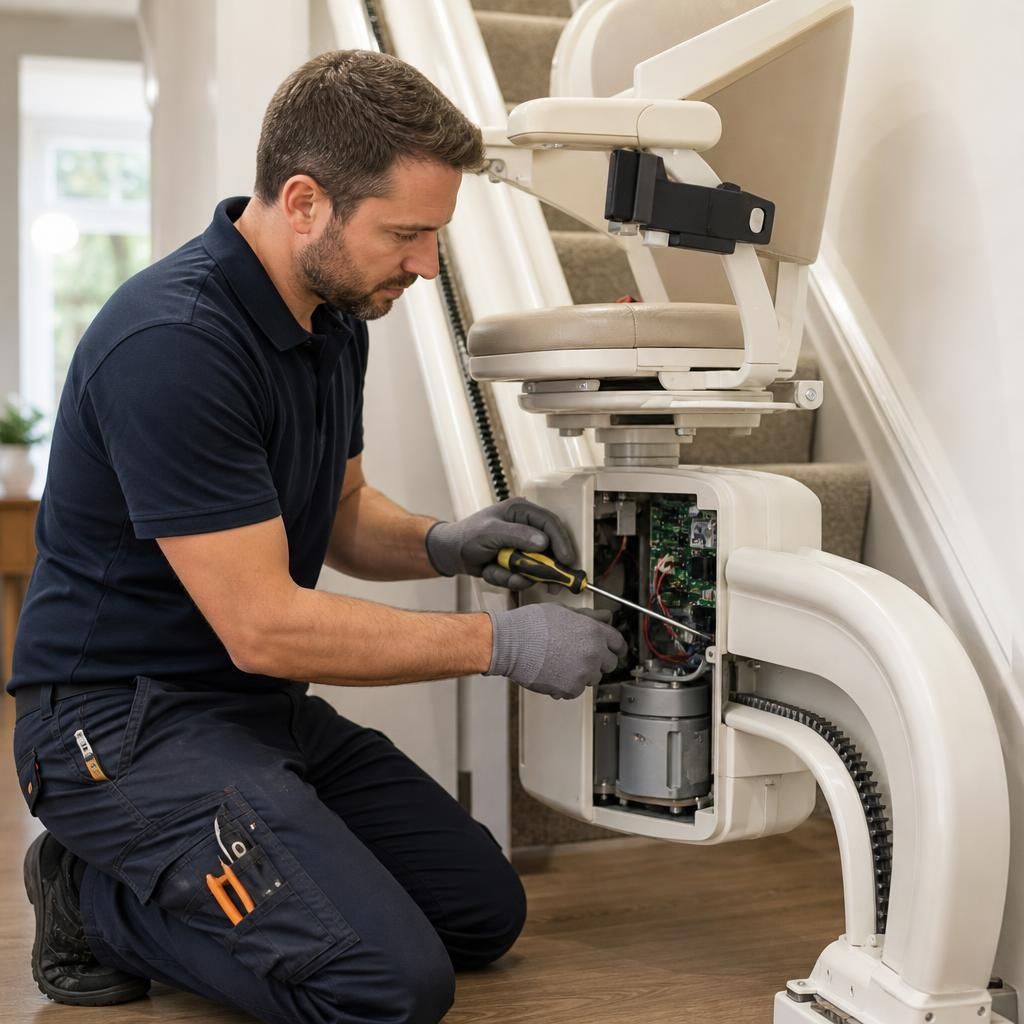
Arrange routine professional servicing. A service visit allows the technician to inspect the rail, drive system, seat, controls, sensors, batteries and safety features. They can check that the lift is travelling correctly around bends and landings, examine fixings and wiring, test the charging system and identify wear before it causes a breakdown. Use the servicing interval recommended for your particular model and contact us if you are unsure when the next service is due.
Do not attempt to adjust the rail, alter the drive mechanism or bypass a safety switch yourself. Curved rails are made to suit the staircase, so even a small adjustment can affect alignment, braking or safe operation. Repairs, battery changes and electrical checks should be completed by a qualified engineer using suitable parts.
Keep the rail and surrounding area clean. Dust, grit, pet hair and other debris can collect on the rail or around the drive unit. Wipe accessible surfaces with a soft, dry or lightly damp cloth, following the cleaning guidance for your model. Keep liquids away from electrical parts, controls and charging points. Never use abrasive products or spray cleaner directly onto the lift.
Check the rail and steps regularly for obstructions. Furniture, rugs, trailing cables, clothing and stored items can interfere with travel or trigger the lift’s safety sensors. Keep the areas at the top and bottom of the staircase clear, and make sure nothing can catch on the footrest or seat as it moves.
Use the charging points correctly. When the stairlift is not in use, park it at the designated charging position unless your model’s instructions state otherwise. Check that the charging points are clean and that the power supply has not been switched off. If the lift repeatedly reports a low battery, stops short of its charging point or fails to charge, arrange an inspection rather than repeatedly using it until the battery is flat.
Rechargeable batteries gradually lose capacity through normal use. Warning tones, slower travel, difficulty completing a journey or frequent low-battery messages can indicate that the batteries need testing or replacing. Battery replacement should be handled by a technician, who can also check the charger and connections to establish the cause.
Pay attention to changes in operation. Contact us or your service provider if you notice:
- new grinding, clicking, squeaking or other unusual noises;
- jerky, hesitant or unusually slow travel;
- the lift stopping unexpectedly or failing to complete its route;
- repeated warning tones, fault lights or error messages;
- movement in the seat, armrests, footrest or rail fixings;
- difficulty using the swivel seat, seat belt, controls or safety sensors; or
- damage, corrosion or an obstruction on the rail.
Stop using the stairlift if it becomes unsafe, gives a persistent fault indication, emits a burning smell or shows signs of electrical damage. Switch it off only if this can be done safely and follow the instructions supplied with the lift. Do not force the controls or continue travelling to see whether the problem clears.
Carry out simple user checks. Before travelling, make sure the seat is correctly positioned, the seat belt is fastened and the footrest and armrests are secure. Keep weight within the lift’s stated capacity and use the controls as instructed. Avoid carrying loose items that could fall onto the stairs or become caught in the mechanism. If other people use the lift, ensure they understand the basic operating and safety instructions.
Where appropriate, keep a note of services, reported faults and repairs. This gives the engineer useful information, particularly if a noise or intermittent fault is not present during the visit. Keep the operating manual and service details available, and tell us about any changes to the staircase or surrounding area that could affect the lift.
Good maintenance cannot prevent every fault, but it reduces avoidable wear and helps safety issues to be identified early. Regular servicing, clear rails and charging points, correct use and prompt professional attention will give your bespoke curved stairlift the best chance of providing smooth, reliable travel over time.
Regular professional servicing is essential for keeping a curved stairlift travelling smoothly and safely. A qualified technician can inspect the bespoke rail, drive mechanism, batteries, charging points, seat, sensors and safety controls, including how the lift moves through bends and landings.
Arrange servicing at the interval recommended for your model, and contact us sooner if you notice unusual noises, jerky movement, warning lights, repeated low-battery alerts or difficulty completing the route. Do not adjust the rail, bypass safety features or attempt electrical repairs yourself, as incorrect adjustments can affect alignment and safe operation.
Book your curved stairlift service
Arrange a professional service for your curved stairlift to keep its rail, drive system, batteries and safety features operating correctly. Contact Independent Stairlifts to book a service or discuss any changes in performance.